Macroeconomic Policies in times of COVID-19 in Emerging Markets: Early Lessons

December 9, 2020

Moderator: Andrés Schipani, East and Central Africa Correspondent, Financial Times Speakers: - Otaviano Canuto, Senior Fellow, Policy Center for the New South - Karim El Aynaoui, President, Policy Center for the New South, Dean, Faculty of Governance, Economics and Social Sciences, Mohammed VI Polytechnic University - Célestin Monga, Professor of Public Policy, Harvard Kennedy School

Speakers
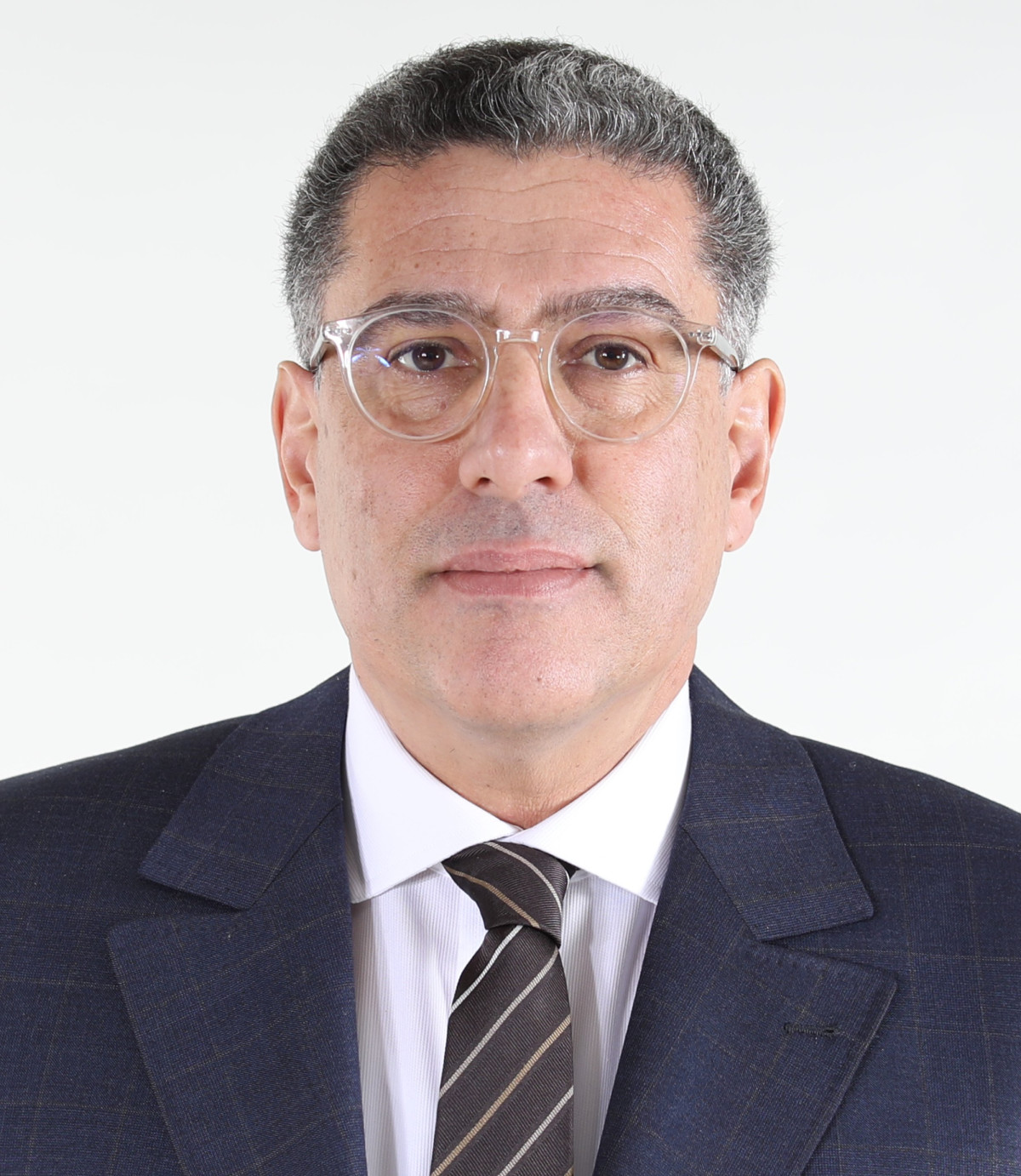
Karim El Aynaoui
Executive President
Karim El Aynaoui is Executive President of the Policy Center for the New South. He is also Executive Vice-President of Mohammed VI Polytechnic University and Dean of its Humanities, Economics and Social Sciences Cluster.  Karim El Aynaoui is an economist. From 2005 to 2012, he worked at the Central Bank of Morocco where he held the position of Director of Economics, Statistics, and International Relations. At the Central Bank of Morocco, he was in charge of the Research Department and equally a member of the Governor’s Cabinet. Previously, he worked for eight years at the World Bank as an Economist for its regional units of the Middle East and North Africa and Africa. Karim El Aynaoui has published books and journal articles on macroeconomic issues in developing ...
Otaviano Canuto
Senior Fellow
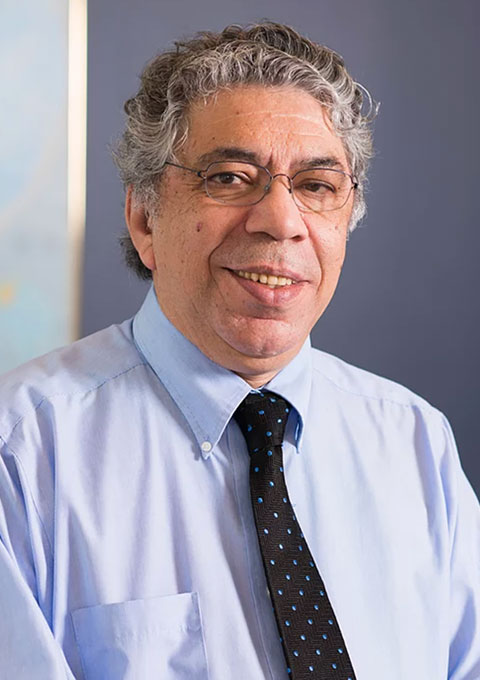
Senior Fellow at the Policy Center for the New South, Affiliate Professor at Mohammed VI Polytechnic University and Non-Resident Senior Fellow at Brookings Institute. Former Vice President and Executive Director at the World Bank, Executive Director at the International Monetary Fund (IMF) and Vice President at the Inter-American Development Bank. ...

RELATED CONTENT

  • Authors
    January 14, 2019
    Last week Jim Yong Kim, president of the World Bank, unexpectedly announced his resignation, effective as soon as next month and three and a half years prior to the end of his second mandate. Given the current environment of challenged and weakened multilateralism, the aftermath of his succession has a relevance that transcends the limits of that institution. While an analyst has alluded to President Kim as “voting with his feet” on the World Bank's loss of significance i ...
  • January 1, 2019
    Le Maroc a initié une première étape vers l’adoption d’un régime de change flexible, en élargissant les bandes de fluctuations à +/- 2,5% par rapport à un cours central. Cette transition permettrait à l’économie marocaine de se doter, à terme, d’un instrument macroéconomique qui joue le rôle d’amortisseur de choc et qui favorise un ajustement rapide et à moindre coût. A défaut de ce mécanisme, l’ajustement aux chocs macroéconomiques a, parfois, nécessité une contraction de la demand ...
  • January 1, 2019
    Morocco has moved towards a more flexible exchange rate system, by widening its currency fluctuation bands to +/- 2.5% around a central price. This transition will, in time, equip the Moroccan economy with a macroeconomic instrument acting as a shock absorber and facilitating rapid adjustment at lower costs. In the absence of such a mechanism, adjustment to macroeconomic shocks at times requires a contraction in demand and thereby a cyclical downturn in growth to restore external ba ...
  • December 15, 2018
    Moderator UDUAK AMIMO, CONSULTANT, UDUAK AMIMO CONSULTING (KENYA) Speakers André Caillé, Board Member, Junex R. Andreas Kraemer, Founder & Chairman, Ecologic Institute Josefa Sacko, Commissioner, Rural Economy and Agriculture, African Union Commission Teburoro Tito, Extraordinary an...
  • December 15, 2018
    Moderator Richard Lui, Anchor, MSNBC / NBC News Speakers Laura Albornoz, Senior Fellow at the Adrienne Arsht Latin America Center, Former Minister of Women's Affairs, Chile Geraldo Alckmin, Governor of São Paulo, Brazil Alfredo G. A. Valladão, Professor at Sciences PO Paris, Senior Fell...
  • December 15, 2018
    Moderator UDUAK AMIMO, CONSULTANT, UDUAK AMIMO CONSULTING (KENYA) Speakers André Caillé, Board Member, Junex R. Andreas Kraemer, Founder & Chairman, Ecologic Institute Josefa Sacko, Commissioner, Rural Economy and Agriculture, African Union Commission Teburoro Tito, Extraordinary an...
  • December 15, 2018
    Moderator Richard Lui, Anchor, MSNBC / NBC News Speakers Laura Albornoz, Senior Fellow at the Adrienne Arsht Latin America Center, Former Minister of Women's Affairs, Chile Geraldo Alckmin, Governor of São Paulo, Brazil Alfredo G. A. Valladão, Professor at Sciences PO Paris, Senior Fell...
  • Authors
    Axel Berger
    Andreas Freytag
    Simon J. Evenett
    Christian von Haldenwang
    Ricardo Meléndez-Ortiz
    Raul Ochoa
    Agustin Redonda
    Karl P. Sauvant
    November 26, 2018
    *The recommendations put forth below have been published, both print and online, in the Financial Times.  The leaders of the G20 will meet on 30 November and 1 December in Buenos Aires for their annual summit. They need to acknowledge that the last two years have been characterized by strong headwinds for the world economy. This time, however, it is not a mixture of poor macroeconomic policies and bad business decisions – as in 2008 when they met in Washing ...