The Future of Central Banking: Crypto, AI, and Monetary Policies

January 13, 2026

Central banks are facing a new era where crypto and AI are reshaping how money is managed. Traditional monetary policies are evolving to meet these technological and financial challenges. This episode explores the risks, opportunities, and innovations redefining the future of finance. Discover how technology is transforming the heart of global economic decision-making.

Speakers
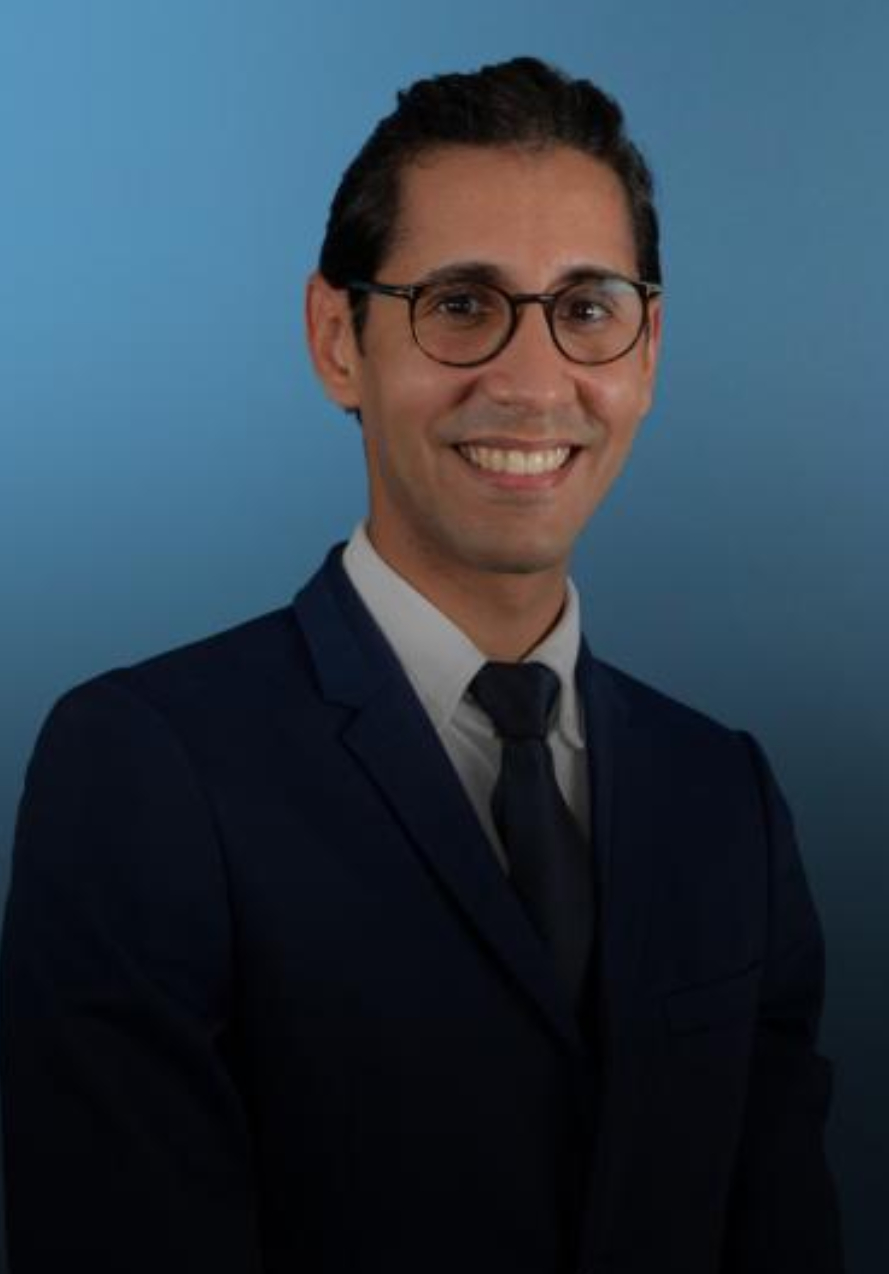
Ahmed Ouhnini
Economist, Policy Center for the New South
Ahmed Ouhnini is an Economist at the Policy Center for the New South. His research area covers agricultural economics, human and social development. Previously, he has worked as a researcher at the Paris School of Economics (PSE) and has also a record of working in consulting services in Morocco. Ahmed holds an engineering Diploma in Agriculture and Rural Development from the National School of Agriculture of Meknes and a Master’s Degree in Law, Economics and Management from the Paris 1 Pantheon Sorbonne Institute of Development. ...
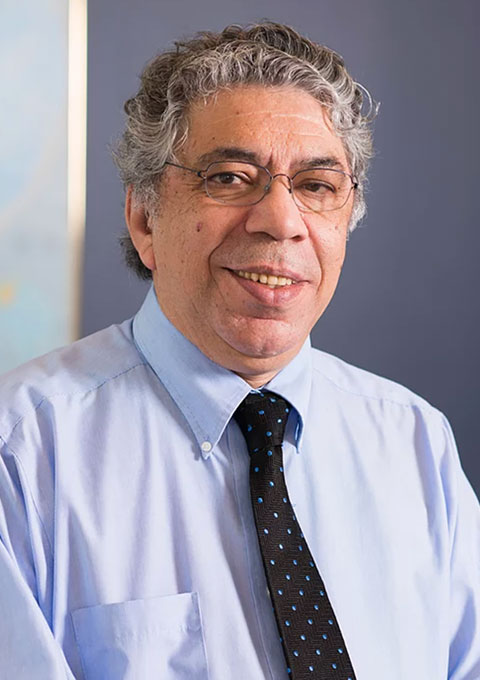
Otaviano Canuto
Senior Fellow
Senior Fellow at the Policy Center for the New South, Affiliate Professor at Mohammed VI Polytechnic University and Non-Resident Senior Fellow at Brookings Institute. Former Vice President and Executive Director at the World Bank, Executive Director at the International Monetary Fund (IMF) and Vice President at the Inter-American Development Bank. ...
Ala’a Kolkaila
Alumni ADEL
document.location = 'https://www.policycenter.ma/adelcommunity/alaa-kolkaila' ...

RELATED CONTENT

  • Authors
    Taoufik Abbad
    July 5, 2017
    The continuous and reinforced process of accumulating physical capital, in which Morocco has embarked since the early 2000s, has helped to preserve the stability of the fundamental equilibrium and cushion the economy from various external and exogenous shocks. However, these accumulation efforts have not led to a significant increase in productivity gains or to an accelerated transformation of the productive base. This Policy Brief aims to describe the underpinnings of the capital a ...
  • Authors
    Taoufik Abbad
    July 5, 2017
    Le processus continu et renforcé de l’accumulation du capital physique, dans lequel s’est engagé le Maroc depuis le début des années 2000, a permis de préserver la stabilité des équilibres fondamentaux et d’amortir les différents chocs exogènes, aussi bien internes qu’externes. Cependant, cet effort d’accumulation n’a pas permis d’insuffler un accroissement significatif des gains de productivité et d’accélérer la transformation de la base productive. Ce Policy Brief propose de décri ...
  • June 21, 2017
    Ce podcast est présenté par Moubarack Lo. Il y analyse l’apport de l’adhésion marocaine à la CEDEAO suite à l’accord de principe donné par ses membres au 51e sommet de Monrovia le 4 juin ...
  • Authors
    Fernanda De Negri
    June 20, 2017
    Brazil’s labor and total-factor productivity (TFP) have featured anemic increases in the last decades (Canuto, 2016). As we illustrate here, contrary to common view, sector structures of the Brazilian GDP and employment cannot be singled out as major determinants of productivity performance. Horizontal, cross-sector factors hampering productivity increases seem to carry more weight. Brazil’s productivity performance has been dismal Since the end of the 1970s, the Brazilian la ...
  • Authors
    Eliot Pence
    May 19, 2017
    U.S. Africa policy has tended to shift over time and has lacked a clear overarching strategic vision. The Trump administration’s approach in Africa should articulate a limited set of principles that clarifies and solidifies a more sustainable framework that is better suited to address fundamental drivers of Africa’s future. These principles include prioritizing key countries and rationalizing resources, creating an “Investment- First” policy in Africa, and more clearly communicating ...
  • April 24, 2017
    This podcast is performed by Mr. Otaviano Canuto. Central banks of large advanced and many emerging market economies have recently gone through a period of extraordinary expansion of bala ...
  • Authors
    Onasis Tharcisse A. Guedegbe
    December 23, 2016
    L'intégration commerciale est une condition de réussite de tout projet d’intégration économique. Les facteurs entravant cette intégration commerciale sont donc un goulot d’étranglement au projet d’intégration économique des pays de la Communauté Economique des Etats de l’Afrique de l’Ouest (CEDEAO), projet qui constitue un moyen efficace de faire face à la forte expansion de la demande alimentaire sous régionale. Cet article vise à mettre en lumière les facteurs contraignant la flui ...
  • Authors
    Edité par
    Idriss El Abbassi
    Lahcen Oulhaj
    Aziz Ragbi
    November 28, 2016
    Le présent ouvrage se propose d’apporter quelques éléments d’appui supplémentaires aux policy-makers pour une meilleure identification des défaillances des marchés au Maroc et une mise en place d’une stratégie de diversification et une politique industrielle efficientes, sans toutefois tomber dans la situation inverse où une stratégie mal définie et des outils mal choisis peuvent se traduire par une défaillance des politiques publiques. L’appréhension des difficultés qu’éprouve l’é ...
  • Authors
    Karim EL Mokri
    October 13, 2016
    Le Maroc est actuellement plus que jamais menacé par le piège des économies à revenu intermédiaire. Il se retrouve pris entre, d'une part, la concurrence accrue exercée par des pays à faible revenu sur les secteurs à faible productivité et intensifs en main d'œuvre et, d'autre part, la difficulté d'accélérer son rythme de transformation structurelle vers des activités à plus forte valeur ajoutée et à contenu technologique plus élevé. L'expérience internationale nous montre que rares ...