The Future of Central Banking: Crypto, AI, and Monetary Policies

January 13, 2026

Central banks are facing a new era where crypto and AI are reshaping how money is managed. Traditional monetary policies are evolving to meet these technological and financial challenges. This episode explores the risks, opportunities, and innovations redefining the future of finance. Discover how technology is transforming the heart of global economic decision-making.

Speakers

Ahmed Ouhnini
Economist, Policy Center for the New South
Ahmed Ouhnini is an Economist at the Policy Center for the New South. His research area covers agricultural economics, human and social development. Previously, he has worked as a researcher at the Paris School of Economics (PSE) and has also a record of working in consulting services in Morocco. Ahmed holds an engineering Diploma in Agriculture and Rural Development from the National School of Agriculture of Meknes and a Master’s Degree in Law, Economics and Management from the Paris 1 Pantheon Sorbonne Institute of Development. ...
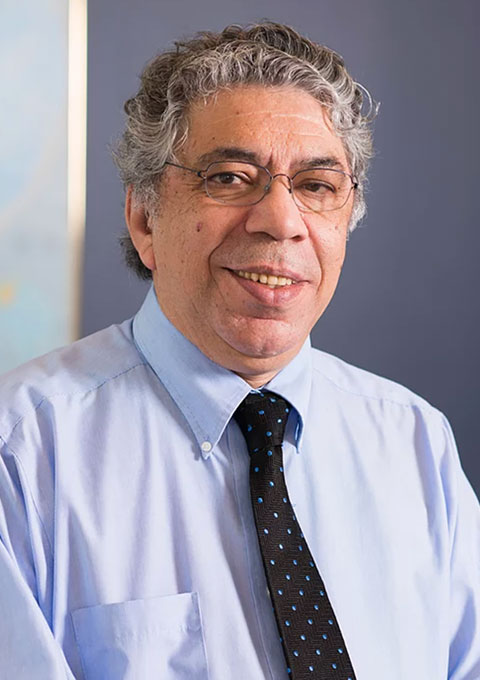
Otaviano Canuto
Senior Fellow
Senior Fellow at the Policy Center for the New South, Affiliate Professor at Mohammed VI Polytechnic University and Non-Resident Senior Fellow at Brookings Institute. Former Vice President and Executive Director at the World Bank, Executive Director at the International Monetary Fund (IMF) and Vice President at the Inter-American Development Bank. ...
Ala’a Kolkaila
Alumni ADEL
document.location = 'https://www.policycenter.ma/adelcommunity/alaa-kolkaila' ...

RELATED CONTENT

  • Authors
    Karim EL Mokri
    October 13, 2016
    Morocco is now more than ever threatened by the trap of middle-income economies. On one hand, it is caught between increased competition from low-income countries in low productivity and labor-intensive sectors and, on the other hand, the difficulty of accelerating its pace of structural transformation towards activities with higher value added and higher technological content. International experience shows that few countries have managed to climb to the status of an advanced econo ...
  • Authors
    Michael L. Lahr
    Dina N. Elshahawany
    Moisés Vassallo
    October 13, 2016
    We develop an interregional computable general equilibrium model to help assess the ex ante impact of transportation infrastructure policies in Egypt. The model is integrated with a GIS network. We illustrate the analytical capabilities of the model by looking at the domestic integration of the country. Improvements of transportation costs among Egyptian governorates and of their links to the broader world economy are considered in stylized simulations. The results provide quantitat ...
  • Authors
    October 4, 2016
    Brazil has been suffering from anemic productivity growth. This is a major challenge because in the long run, sustained productivity increases are necessary to underpin inclusive economic growth. Without them, increases in real labor earnings tend to conflict with global competitiveness; collecting taxes in order to fund government expenditures on infrastructure and social policies becomes a heavy burden; returns to private investment becomes harder to achieve; and ultimately c ...
  • Authors
    Karim EL Mokri
    September 29, 2016
    L’objectif de ce travail est d’aborder la problématique de la transformation structurelle à travers une analyse par le concept de la complexité économique de Hausmann et Hidalgo, en se focalisant davantage sur les pays à revenu intermédiaire. Dans un premier temps, des régressions en données de panel utilisant la méthode des GMM en système, afin d’éviter les problèmes d’endogeneité, ont permis de mettre en évidence un lien empirique positif et significatif entre la complexité économ ...
  • Authors
    July 21, 2016
    The pace of global growth has tapered off since the crisis and the ensuing rebound. The concept of ‘secular stagnation’ was first used in 1938 by Alvin Hanson in reference to the American economy during the Great Depression. It refers to a situation where growth is slow over a protracted period, underemployment prevails and inflation is low. In such situations, the propensity to save tends to increase as a result of uncertainty and pessimism, and liquidity – which depends on interba ...
  • Authors
    Under the Supervision of
    Philippe Chalmin
    July 4, 2016
    Guinea’s bauxite, Moroccan phosphates, Nigerian Bonny Light, Zambian copper, Côte d'Ivoire’s cocoa, Ethiopian coffee or Madagascar’s vanilla: all are examples demonstrating that raw materials have a dimension that is as global as it is local. Global by the markets on which they are traded, local by their quality, a key element of their price, and their macroeconomic impact, particularly for Africa. In line with the 2016 CyclOpe report, which celebrates three decades of existence thi ...