( FR ) Plenary III: Energy and Climate

December 13, 2019

Moderator Uduak Amimo, Uduak Amimo Coaching and Consulting Speakers André Caillé, Senior Strategic Advisor, Junex R. Andreas Kraemer, Founder and Director Emeritus, Ecologic Institute Thione Niang, Co-Founder and Co-CEO, Akon Lighting Africa Francis Perrin, Senior Fellow, Policy Center for the New South

Speakers
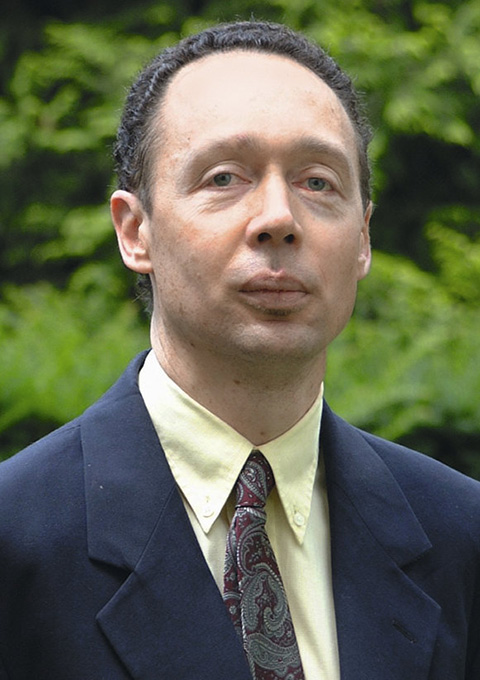
Francis Perrin
Senior Fellow
Francis Perrin is a Senior Fellow at the Policy Center for the New South who focuses on energy.  Following studies in economics and political science at the University Pierre Mendès France (UPMF – today University Grenoble Alpes) at Grenoble (France), Francis Perrin worked for several years as a journalist and freelance consultant on energy and mining resources before joining in 1991 the Paris-based Arab Petroleum Research Center (APRC). He was editor in chief of Arab Oil & Gas (AOG) and Pétrole et Gaz Arabes (PGA) between 1991 and 2000 and editorial manager of the publications of the APRC from 2001 to the end of 2011. Francis Perrin set up at the beginning of 2012 Stratégies et Politiques Energétiques (SPE) and later Energy Industries Strategies Information (EISI).& ...

  • January 23, 2026
    The post-1945 international order, an architecture born of war-weariness and colonial twilight, is now a majestic but empty shell. Its foundational promise—a universal system of rules administered impartially—has been hollowed out by decades of selective enforcement, instrumentalized law, and a chasm between the rhetorical ideals of its custodians and their geopolitical practice. This is not a temporary dysfunction, but a systemic failure of legitimacy. From the invasion of Iraq und ...
  • Authors
    January 23, 2026
    Introduction: COP30 as a Test of Reality, Not AmbitionCOP30 in Belém was never going to be a breakthrough. In a world marked by fiscal exhaustion, geopolitical rivalry, and eroding trust in multilateralism, expecting transformational climate cooperation bordered on denial. The choice of the Amazon as host carried symbolic weight, but symbolism does not override power, interests, or institutional capacity.The outcome of COP30 confirms a deeper truth: the global climate regime has ent ...
  • Authors
    January 21, 2026
    In response to developing countries’ dissatisfaction with the New Collective Quantified Goal (NCQG) of $300 billion, which was decided at the Twenty-Ninth Conference Of the Parties (COP29) to the United Nations Framework Convention on Climate Change, in 2024 in Baku, Azerbaijan, the COP29 and COP30 presidencies promised to develop a roadmap to achieve $1.3 trillion in external climate finance that developing countries need, and to present it at COP30 in Belém, Brazil[1]. The two pre ...
  • January 20, 2026
    The episode explores the global push to move beyond fossil fuels amid climate urgency, geopolitical tensions, and energy security shocks. It highlights how the energy transition is advancing unevenly, with advanced economies decarbonizing faster than many Global South countries constrai...
  • Authors
    January 13, 2026
    This policy brief was originally published on : euromesco.net This paper examines the nexus between governance structures, digital transformation, sustainability, and port service efficiency through an international comparative lens, with a specific focus on the Tanger Med–Algeciras corridor in the strait of Gibraltar. Using global best practices—from Singapore to Busan and Kaohsiung—it explores how public-private coordination, digital innovation, and green transition policies ...
  • January 2, 2026
    Ce Policy Paper analyse les enjeux politiques, économiques et opérationnels du Fonds pour les pertes et dommages, créé pour répondre aux impacts climatiques irréversibles subis par les pays les plus vulnérables. Il clarifie d’abord la notion de pertes et dommages, qui mêle effets économiques et non économiques, et souligne les défis d’attribution liés à la superposition entre chocs climatiques et fragilités structurelles. L’analyse met ensuite en lumière les tensions d’économie poli ...
  • Authors
    Edited by
    Paolo Magri
    Samir Saran
    December 14, 2025
    In 2025, the global landscape became increasingly fragmented and uncertain. Great power competition intensified, regional conflicts became protracted and exacerbated, while economic nationalism reshaped the rules of trade and development. The mechanisms for conflict resolution and cooperation that have long provided a foundation for international cooperation are now under strain due to polarization and mistrust. Even longstanding alliances, bilateral and collective security architec ...
  • Authors
    November 14, 2025
    Dix ans après l’Accord de Paris, la trajectoire mondiale semble s’orienter vers un réchauffement de +2,8°C d’ici la fin du siècle, si les politiques actuelles ne sont pas renforcées en termes d’engagements climatiques. Pourtant, la prise de conscience collective face aux enjeux climatiques est globalement affirmée, appelant à la nécessité de transformer nos modes de consommation, de production et de mobilité vers des solutions à plus faible empreinte carbone. ...