Publications /
Policy Paper
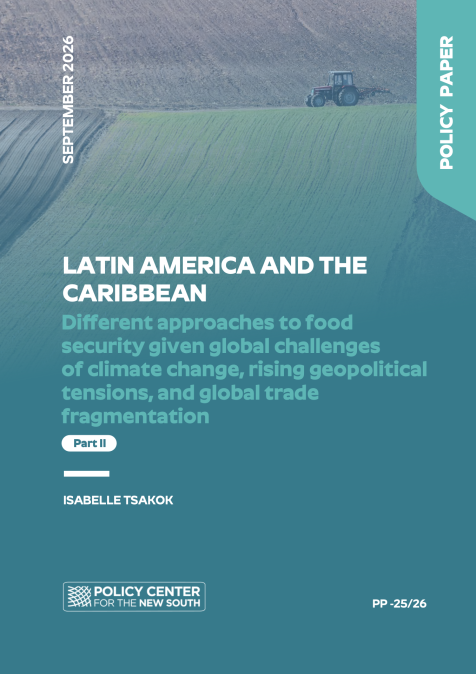
The Latin America and Caribbean region has made considerable progress in poverty reduction and improving food security since COVID-19. However, the improvements have not been driven by inclusive growth.
A characteristic feature of the LAC experience is that major disparities in economic performance, poverty reduction, and food security exist, e.g., among regions; between rural and urban areas; between genders. In addition to these disparities, large farmers, the minority in dualistic agricultural systems, have secure land tenure rights, while small farmers, the majority, do not. Argentina has an added constraint: the recurrent, high volatility and instability of its macroeconomy, which inevitably undermines economy-wide growth. The challenging environment of climate change exacerbates all the negative consequences of the above disparities.
Thus, despite having well-endowed agricultural sectors and developed human capital, these disparities undermine agricultural productivity and TFP growth, which in turn constrain high-productivity and inclusive growth, and therefore poverty reduction and food security.
The recommendation of the Mo-Ibrahim Forum (2025) for “Financing the Africa We Want” to prioritize governance, the rule of law and security is fully applicable to LAC as well. (See Part I on Africa). In the case of LAC, good governance must include prioritizing inclusive economic growth by reducing and eliminating the many disparities that crisscross LAC. If this priority is applied consistently for at least a decade, it would be a major political-economic achievement, furthering food security for all.