Publications /
Opinion
As El Niño intensifies it generates apprehension among us all. The slow pace of the energy transition and continued carbon emissions have already put us on a trajectory toward an average air temperature rise of 2.8°C above pre-industrial levels (1850)—far exceeding the 1.5°C limit set by the 2015 Paris Agreement.
The recent rate of increase has surpassed all projections made in the middle of the last decade. We have gone from 300 ppm (parts per million of CO2)—a level that remained stable for the 800,000 years prior to the Industrial Revolution—to 430 ppm in 2026. This level is similar to that of the Pliocene era, between 3 and 4.5 million years ago, when global temperatures were around 4°C higher than pre-industrial levels.
Key global climate drivers are also intensifying, heightening the likelihood of a "Super El Niño"—with Pacific temperatures projected to rise 2°C or more above average—and triggering extreme events such as intense heatwaves, storms, and torrential rains worldwide.
Such warming drives extreme hydroclimatic volatility, increasing the intensity and frequency of extreme weather events. Between 1970 and 1980, there were about 100 such events annually worldwide; from 2020 to 2025, that figure reached approximately 400. Now, as Europe suffers through successive record-breaking heatwaves, tropical countries like Brazil—which saw a 223% increase in extreme events between 2020 and 2023 compared to the entire 1990s—must prepare, given their heightened vulnerability due to geographic location.
To protect the global population, ecosystems, and the economy, simply promoting environmental regeneration and the energy transition is no longer enough. Of course, we still need to put an end to deforestation and accelerate the shift from oil extraction and use to renewable energy, especially. Technological development and learning have already made renewable energy cheaper to produce.
Solar energy has attracted more private investment than fossil fuels since 2023. The climate crisis is not only the greatest existential risk in human history but also makes for terrible business due to the use of costlier energy sources that inflict trillions of dollars in economic damage—specifically, around USD 18.5 trillion since 2000, with projections reaching USD 32 trillion by 2050. However, simply generating energy is not enough to drive transformation. The transition requires massive, complementary investments in infrastructure—particularly in transmission grids, the modernization of electrical systems, digitalization, operational flexibility, and energy storage.
The key point here is the need to simultaneously work intensively on adaptation—building resilience to the new climate—while making decisive progress in the energy transition toward clean energy. We also need to continue environmental restoration efforts, primarily to rebalance ecosystems, which is crucial. However, to halt and subsequently reduce the concentration of greenhouse gases (GHGs), only the energy transition currently yields real results; this is due to ecosystem degradation, where—in many cases—ecosystems now emit more carbon than they absorb, as observed in the eastern Amazon region. The consequences of the climate crisis and its interaction with phenomena such as El Niño have already become our new reality.
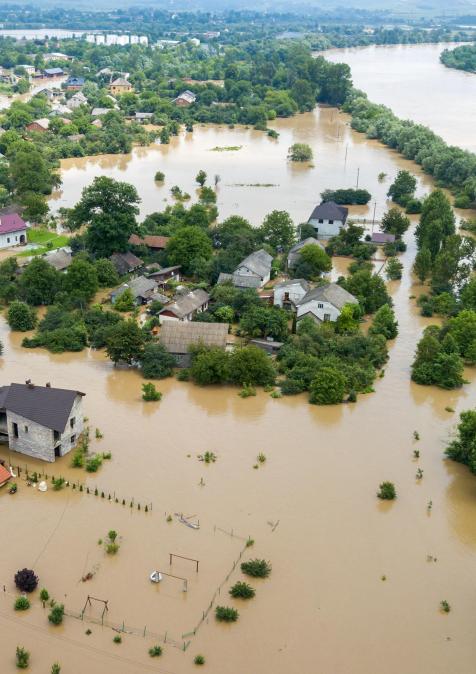
Developing countries are particularly vulnerable due to their predominantly tropical locations; they contain areas where fluctuations in water availability cause severe disruptions to urban and industrial supplies, agriculture, and hydroelectric power generation—the latter being critical for nations like Brazil, Peru, and Ecuador in South America. In cities—where the majority of the global population now lives, for the first time in history—the climate crisis is already a full-blown reality. Between 2015 and 2024, over 70% of these cities were struck by extreme events, experiencing a rapid succession of floods, storms, droughts, and heatwaves—a phenomenon known as "climate whiplash."
Consequently, the climate crisis is intensifying through extreme weather events that devastate lives when they strike unprepared regions—a pattern seen everywhere from the Amazon to the catastrophe in Rio Grande do Sul, a temperate zone in southern Brazil. During the 2024 El Niño phenomenon—which carried an estimated global cost of US$ 3 trillion and a cost of between US$ 300 billion and US$ 500 billion for Brazil—Amazonian cities (home to 78.5% of the region's population) saw their water and sanitation systems damaged and communities isolated as rivers dried up. River-based logistics collapsed, halting the delivery of food, medicine, and drinking water; this affected 770,000 people and caused R$ 3.2 billion in losses in the state of Amazonas alone. Air quality in the region and beyond deteriorated due to wildfires, leading to a rise in respiratory illnesses. Meanwhile, the state of Rio Grande do Sul faced historic torrential rains that displaced 155,000 people and affected 1.3 million inhabitants across 388 municipalities—representing 78% of the state's total—thereby demonstrating the vulnerability of public authorities in the face of potential systemic collapse.
Like the rest of the country, cities in the South and the Amazon must urgently abandon their current reactive mindset and shift toward a stance of anticipation, adaptation, and resilience through climate-responsive urbanism. This interdisciplinary strategy integrates predictive hydroclimatic models—ranging from satellite scales down to the cubic-meter level—into digital twin models. These allow for 4D scenario modeling (x, y, z, and t for time) to both assess risks and test resilience projects that operate in tandem with new governance systems and inclusive public policies. This approach offers a cost-benefit ratio five to seven times higher, as it combines gray infrastructure with nature-based solutions and smart urban management; it uses meteorological data to coordinate water management alongside vegetation for drainage and thermal comfort, while also incorporating clean energy generation into its multifunctional structures. We cannot face the climate challenges of the 21st century with 20th-century urbanism and infrastructure and 19th-century institutions.
Although this major urban and structural transformation aimed at adaptation and resilience is a matter of survival—and far more economically advantageous than the cost of inaction-- it will undoubtedly place considerable fiscal pressure on governments at all levels. This will require not only the intensive use of 4D modeling to test designs and execute precise interventions—thereby reducing margins of error in project performance—but also economic policies capable of funding this unprecedented global effort through adequate and timely investment.
The transition from fossil fuels to renewable energy is being hampered by policy reversals in an economy as large as that of the United States. We hope this setback proves temporary and that the world avoids fragmenting into "fossil-fuel economies" versus "solar-wind economies." There is a potential "Thucydides Trap"—a concept described by the Greek philosopher of the same name in the 5th century BCE while analyzing the Peloponnesian War between Sparta and Athens—in which a dominant power and a rising power go to war for geopolitical supremacy; this pattern has been observed in most historical cases since the 16th century. We must ensure our survival through functional governance of the global commons. This issue is decisive for the future of humanity from the 21st century onwards.
The "Super El Niño" currently forming offers a vivid sample of the growing severity of our new climate reality. The urgency of the inevitable challenge of adaptation and resilience is existential in nature, yet it also presents an opportunity to change course and overcome the climate crisis by linking the energy transition to the necessary urban and structural transformation, all while pursuing environmental restoration. Such strategic decision regarding this intergenerational legacy has the potential to open new frontiers and generate "smart power" for geopolitical leadership and the trade of green products and services—the world's third-fastest-growing industry—while serving as a decisive driver for a transformative “green development”.
To survive by creating a better world, doing good for nature and the climate, all while becoming wealthier must be our common goal. We cannot wait; more than ever, the future is now.
______________________________________________________
Pedro Henrique de Christo is a climate urbanist, polymath, and holds a Master’s degree in Public Policy from Harvard University (2011); where his thesis on state-building starting from the most vulnerable areas—specifically Rio de Janeiro’s *favelas*—was developed into a course (2012). A pioneer of climate urbanism and 4D hydro-climatic modeling technology with digital twins, he is the author of *Climate Urbanism* (IDB, 2025) and *Digital Agora: A Physical-Digital Space for Participatory Democracy* (AIA, 2016). He is the president of NAVE (Brazilian New Green Deal) and the founder of the interdisciplinary firm +D—with projects across five continents—as well as the company 4D.
Otaviano Canuto, Senior Fellow at the Policy Center for the New South, Affiliate Professor at Mohammed VI Polytechnic University and Non-Resident Senior Fellow at Brookings Institute. Former Vice President and Executive Director at the World Bank, Executive Director at the International Monetary Fund (IMF) and Vice President at the Inter-American Development Bank.