Publications /
Opinion
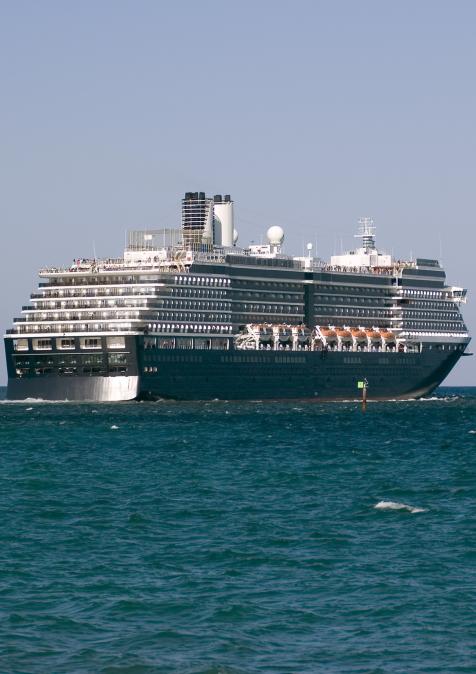
Aircraft carriers are massive and menacing, carrying dozens of aircraft and thousands of naval personnel, supported by an escort of warships and supply vessels. Ships such as the USS Gerald R. Ford are formidable symbols of military power. Yet even these giants can be surpassed in length by the largest cruise ships, including Royal Caribbean’s Legend of the Seas, introduced in 2026.
The 365-meter Legend is approximately 32 meters longer than the Gerald R. Ford and can accommodate nearly 10,000 passengers and crew. These vessels resemble floating cities, offering extraordinary leisure experiences while placing considerable pressure on the environment. The global cruise industry continues to expand: the Cruise Lines International Association (CLIA) reported 37.2 million passengers in 2025. That growth comes with serious environmental costs.
A June 2023 report by the environmental organization Transport & Environment estimated that 218 cruise ships operating in European waters produced more than four times the sulfur oxide emissions of Europe’s passenger cars in 2022. This comparison concerns sulfur oxides, not total pollution or carbon emissions. The International Maritime Organization’s global sulfur limit, introduced in 2020, was expected to reduce shipping-related sulfur oxide emissions by 77%. Nevertheless, cruise ship emissions remain a concern for coastal communities. Sulfur and nitrogen oxides contribute to acid deposition, which can harm aquatic ecosystems and forests. Wastewater poses a further challenge: the US Environmental Protection Agency identifies sewage, graywater, oily bilge water, solid waste, and hazardous waste as major cruise ship waste streams.
Wastewater treatment and transparency
Modern cruise ships use onboard treatment systems to reduce pollutants in wastewater before discharge. Blackwater comes from toilets, while graywater comes from showers, sinks, laundries, and galleys. Treatment does not necessarily eliminate every contaminant, and discharge quality depends on the system and how it is operated. Friends of the Earth’s 2024 Cruise Ship Report Card assessed 21 major cruise lines and 243 ships against separate criteria for sewage treatment, air pollution, water quality, and transparency. A lack of public disclosure should not be confused with proof that treatment systems perform poorly, but it does make independent scrutiny more difficult. Inadequately treated sewage can introduce pathogens and nutrients into coastal waters, while organic matter in wastewater can deplete dissolved oxygen as it breaks down.
Cruise ships rely heavily on fossil fuels, releasing carbon dioxide and other pollutants. Soot, including black carbon, is particularly damaging when deposited on snow and ice because it accelerates melting. This is an acute concern in the Arctic, where declining sea ice is opening routes to areas that were once difficult to reach. Cruise vessels have operated in Arctic waters for decades, but their presence has grown. In an article published in AJIL Unbound by Cambridge University Press on April 20, 2026, University of Copenhagen researchers A. Stella Ebbersmeyer and Beatriz Martinez Romera examine the environmental challenges of increasing Arctic cruise tourism.
Mounting risks in the Arctic
Cruise routes include waters around Iceland, Norway and Svalbard, Greenland, and Canada. The researchers warn that expanding cruise tourism places pressure on fragile ecosystems and on small, remote communities already coping with climate change. Black carbon darkens snow and ice, reducing their ability to reflect sunlight and accelerating melting. Underwater noise can interfere with marine mammals’ communication, navigation, and ability to locate prey or detect predators. The industry markets access to exceptionally sensitive environments, yet the vessels bringing visitors there can damage the very ecosystems they come to see.
Regulation struggling to keep pace
The authors argue that international regulation has not kept pace with these pressures. Their analysis identifies gaps in binding international rules specifically addressing black carbon and underwater noise. This does not mean Arctic shipping is unregulated: the Polar Code and other maritime instruments already impose requirements. The concern is whether existing rules adequately address these particular impacts, and whether voluntary measures can deliver sufficient protection.
The pressures extend beyond the Arctic. When large cruise ships call at small island destinations such as Mykonos and Santorini, thousands of visitors may arrive within a short period, straining local infrastructure, public spaces, and services. Managing arrivals is therefore essential to protecting residents’ quality of life and the places visitors come to enjoy. Venice illustrates the difficulties of accommodating large vessels near a historic urban center. Cruise ships formerly passed through the Giudecca Canal and the San Marco Basin, while passengers added to the crowds on the city’s streets, bridges, and public transport. Restrictions introduced in 2021 redirected large cruise vessels away from these central waterways, with Porto Marghera used as an alternative. Such measures can reduce pressure on particularly sensitive sites, but they do not remove the wider environmental costs of cruising. Demand remains strong, making the management of visitor flows and port impacts increasingly important.
The industry is responding to these criticisms. CLIA reports investment in more flexible propulsion systems and alternative energy sources, including green methanol, biofuels, hydrogen fuel cells, solar power, and batteries. It also reports that at least 24 ships have participated in biofuel trials and that new vessels are being designed to use alternative fuels. These initiatives deserve scrutiny as well as recognition: a ship’s technical ability to use a cleaner fuel does not guarantee that the fuel will be available or used in routine operations.
CLIA also states that more than 15% of cruise ships entering service over the next five years will be equipped with battery storage to support hybrid power generation. Some operators are turning to liquefied natural gas (LNG). It can reduce sulfur oxide emissions and carbon dioxide emissions at combustion compared with conventional marine fuels. Its overall climate impact, however, depends on the full fuel life cycle, including methane leakage during production and transport and unburned methane released by engines. Methane is a powerful greenhouse gas, with a warming effect roughly 80 times that of carbon dioxide over a 20-year period. Producing, liquefying, transporting, and storing LNG also requires energy and infrastructure. Cleaner-looking exhaust is therefore not enough to demonstrate a lower climate footprint. For vulnerable destinations, from Arctic ecosystems to Mediterranean ports, the test is whether the industry’s growth can be accompanied by measurable reductions in environmental harm.