(FR) Growth–poverty–monetary inequality nexus of Morocco

April 29, 2026

Cet épisode analyse les dynamiques du nexus croissance–pauvreté–inégalités monétaires au Maroc, en mettant en perspective la baisse significative de la pauvreté observée ces dernières années. Il interroge le rôle respectif de la croissance économique et des politiques publiques dans cette évolution. La discussion examine également le paradoxe d’une amélioration des conditions de vie sans réduction marquée des inégalités. Enfin, elle questionne les limites du modèle de croissance marocain et les enjeux d’une transformation structurelle encore inachevée.

Speakers
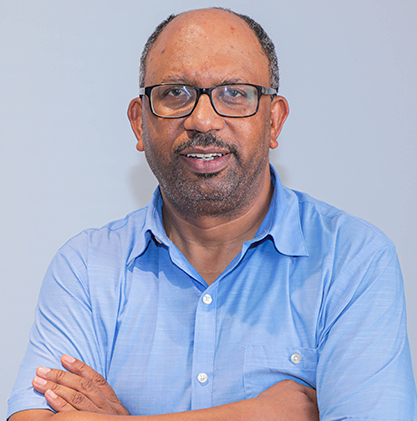
Abdelkhalek Touhami
Full Professor, Mohammed VI Polytechnic University, Rabat
Touhami Abdelkhalek is a Researcher in Applied Economics, specializing in econometrics, development and public policy analysis. Affiliated with the Africa Institute of Research in Economics and Social Sciences (AIRESS) and associated with several international centres (ERF, FEMISE, CRDE, etc.), his work focuses on modelling, economic policy evaluation, poverty, and inequality. He has published several articles in journalssuch as Review of Economics and Statistics and Applied Economics and contributed to the RDH50 report. A professor at the FGSES—UM6P since 2021, after more than 30 years at INSEA, he heads the Master’s and PhD programs in economics. He was awarded the Wissam Al Arch in 2017 and is member of the Competition Council since 2018. ...
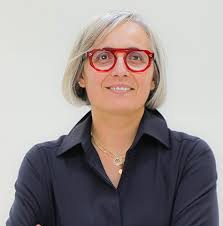
Dorothée Boccanfuso
Full Professor, Mohammed VI Polytechnic University, Rabat
Dorothée Boccanfuso is a Professor and Researcher in Development Economics,specializing in the analysis of welfare, poverty, inequality, and the evaluation of publicpolicies. She has published more than 30 articles in scientific journals such as AppliedEconomics and Revue d’économie du développement. Affiliated with AIRESS, Centreinteruniversitaire de recherche en analyse des organisations (CIRANO), and EconomicResearch Forum (ERF), she has been conducting applied research in Africa and theFrancophone countries for over 25 years. She also chaired the Expert Committee on theGuaranteed Minimum Income in Quebec (2016–2018). Professor at UM6P since 2020, sheis Vice-Dean in charge of the economic pole of the FGSES. ...
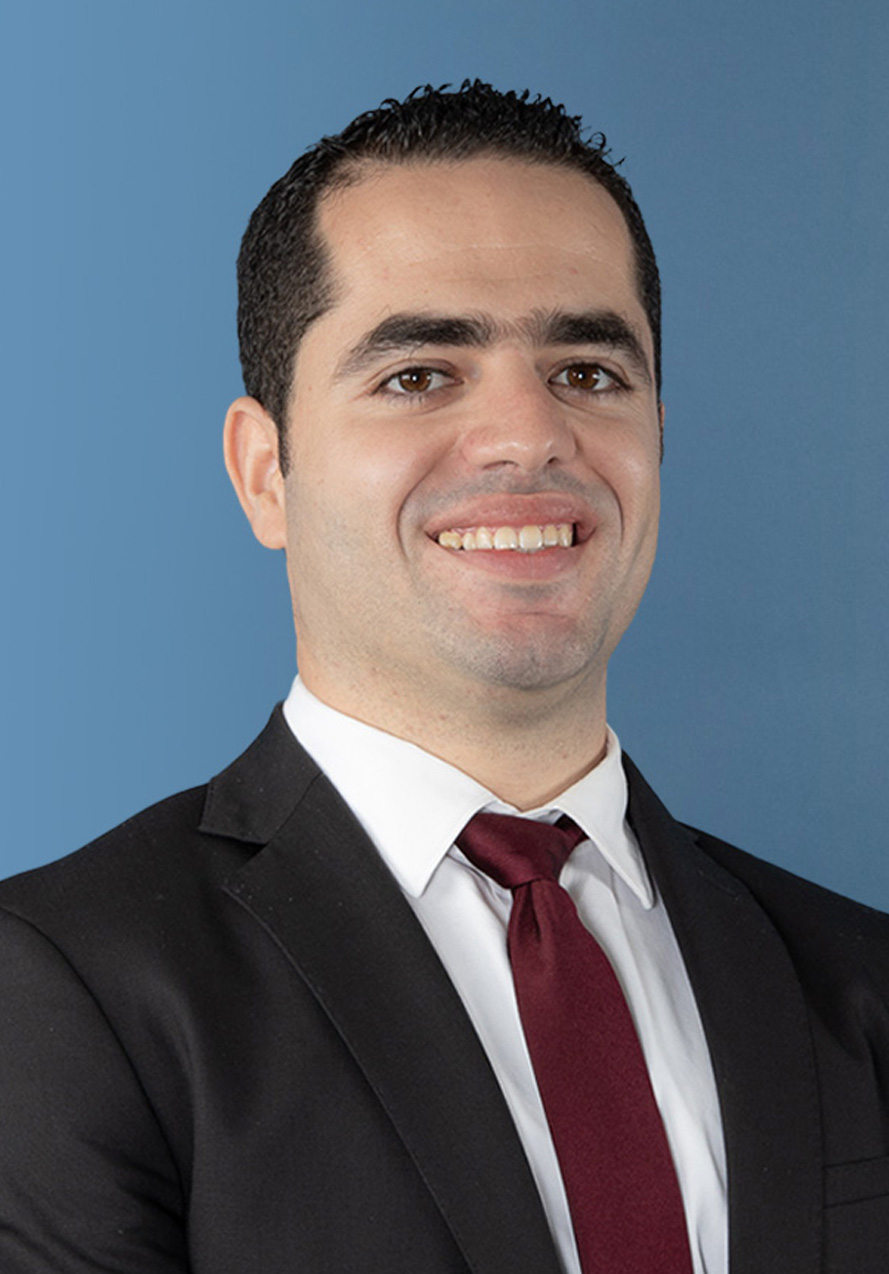
Hamza Saoudi
Senior Economist
Hamza Saoudi is a Senior Economist at the Policy Center for the New South (PCNS).At the PCNS, Hamza Saoudi conducts research on labor market dynamics, social protection systems, and inclusive growth, with a particular focus on Morocco and Africa. He is also interested in macroeconomic stabilization policies, international trade, and long-term economic development.He has contributed to PCNS projects and publications addressing informality, social protection, and inequality in developing economies.He also served as the project coordinator of the Oxford Handbook of the Moroccan Economy, published by Oxford University Press in 2026.Before joining the PCNS in 2017, Hamza Saoudi contributed to the development of quantitative models for bank credit risk management.Hamza Saoudi holds ...
RELATED CONTENT

  • Authors
    Aziz Ajbilou
    April 20, 2020
    La crise du Covid-19 ne cesse d’impacter les économies des pays du monde entier, aussi bien dans les pays développés que dans les pays en voie de développement. La situation serait plus délicate pour les pays pauvres. L’économie de ces pays est moins résiliente aux chocs et fortement tributaire des échanges commerciaux[1]. Les taux de chômage risquent de grimper et probablement pour une période assez longue. Les entreprises ayant pris des mesures pour arrêter totalement leurs activi ...
  • Authors
    Abdessalam JALDI
    March 4, 2020
    When I think about women’s empowerment, I see it as a constant process of attaining milestones in our lives as individuals man and woman, and as society. When I think of women’s empowerment in the context of Morocco, a host of questions come to mind. First, how is the ‘Moroccan woman’? In other words, to what extent are Moroccan women seeking to empower themselves? Does empowerment, mean the same thing to every Moroccan woman? To what extent is it self-empowerment? And what are the ...
  • September 30, 2019
    Notre Senior Fellow a répondu aux questions suivantes : 1/ Dans la région du Moyen-Orient et d’Afrique du Nord, en 2016 la part du revenu global des 1% les plus riches était 2,6 fois plus important que celle des 50% les plus pauvres. Sur quels leviers agir pour réduire les inégalités da...
  • September 1, 2019
    Income inequality is high in Morocco. In 2013, the share of national income1  of the richest 10% in Morocco stood at nearly 32%, 12 times higher than the share of national income of the poorest 10% of the population. This paper argues that, drawing on international experience, there is much more that Morocco’s government can do to reduce inequality while at the same time enhancing growth and – possibly – doing so in a manner that is budget-neutral or even budget-positive. Top o ...
  • August 23, 2019
    Income inequality is high in Morocco. In 2013, the share of national income of the richest 10% in Morocco stood at nearly 32%, 12 times higher than the share of national income of the poorest 10% of the population. High inequality can adversely affect long-term growth as it tends to be associated with underutilization of human potential. This paper argues that, drawing on international experience, there is much more that Morocco’s government can do to reduce inequality while at the ...
  • Authors
    November 5, 2018
    Scholars of social movements and global protest have long neglected social movements in Africa, ostensibly because African societies are too rural, too tradition- or ethnicity-bound, or lacking advanced class formations. Those who have broached the topic tend to focus on South Africa’s labor movement and anti-apartheid struggle. Even less addressed is how social movements in various parts of the continent have affected each other. A continent-wide approach however shows that protest ...
  • Authors
    August 13, 2018
    Depuis la fin de l’année 2017, le président Donald Trump mène plusieurs batailles commerciales, contre différents partenaires, sous prétextes de sauver des emplois industriels américains et de réduire le déficit commercial des États-Unis. S’il est difficile de se prononcer sur les effets des combats commerciaux amorcés par le président Trump, l’importance des opposants et des échanges pour l’économie mondiale en fait une source de risque pour la croissance, les emplois et les prix à ...
  • Authors
    Mokhtar Ghailani
    July 2, 2018
    Le tout dernier ouvrage qui vient d’être publié par l’OCP Policy Center, intitulé « Mutations politiques comparées au Maghreb et au Machrek, 7 ans après le ‘’Printemps arabe’’ », a fait l’objet d’une présentation au public, organisée le 27 juin 2018, à la Faculté des Sciences Juridiques, Economiques et Sociales de l’Université Mohammed V-Agdal- Rabat.  Mr Abdallah Saaf, qui a supervisé l’ouvrage, a ainsi partagé avec l’assistance de l’Amphi I la raison d’être de ...
  • Authors
    Haim Malka
    May 8, 2018
    For decades, the North African Maghreb has been both a source of irregular migration to Europe and a gateway for sub-Saharan Africans transiting to Europe. Now the Maghreb is also emerging as a destination for migration. While Europe remains the preferred destination for most African migrants, reaching Europe is becoming increasingly difficult at precisely the time that migration pressures in Africa are mounting. Africa’s massive migration is just getting started—and this presents ...