Financing the Green Future: How Emerging Economies Can Lead the Climate Transition

February 6, 2026

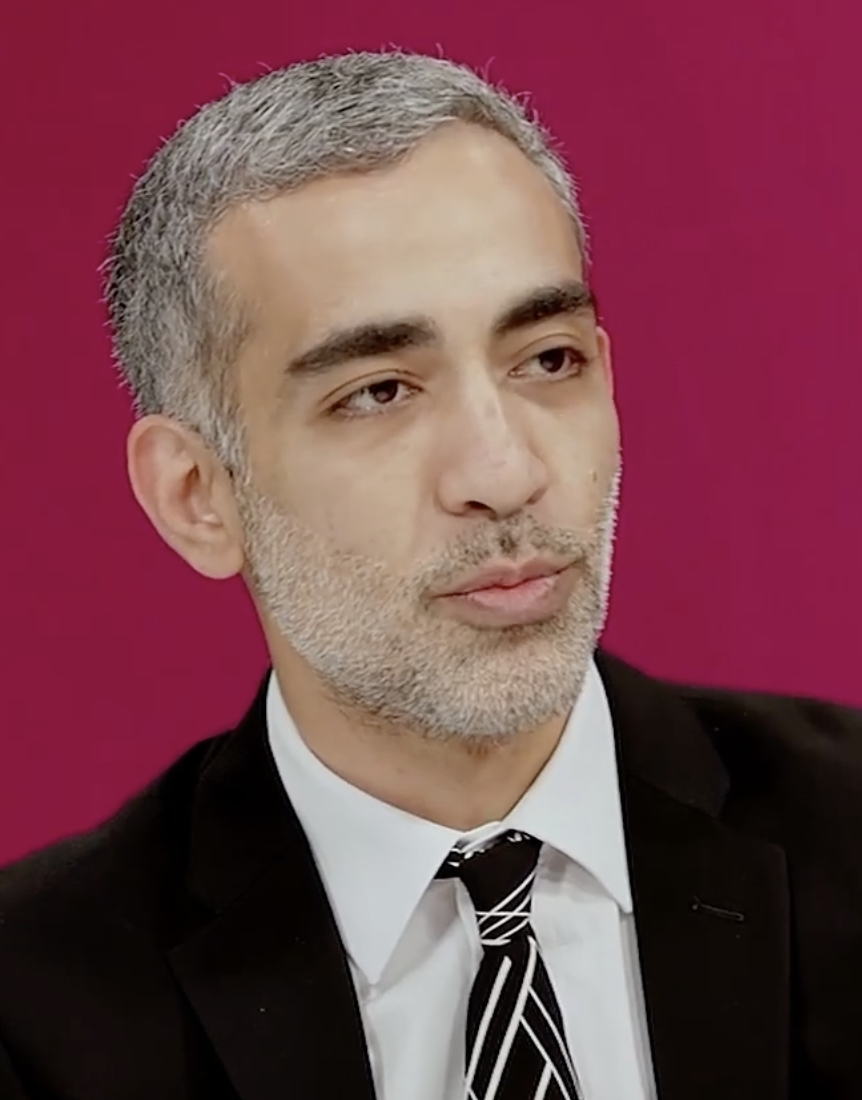
Emerging economies face a critical challenge: how to sustain growth while responding to climate change. In this episode, we explore the role of green finance, from climate bonds and sustainable infrastructure to blended finance, in supporting decarbonization, job creation, and climate-resilient development. Joining us is Mehran Haghirian, Director of Research & Programmes at the Bourse & Bazaar Foundation and an Atlantic Dialogues Emerging Leader, for a timely discussion on how emerging economies can mobilize capital, align policies, and position themselves as leaders in the global climate agenda.

Speakers

RELATED CONTENT

  • July 7, 2021
    The world faces a huge shortfall of infrastructure investment relative to its needs. With a few exceptions, such as China, this shortfall is greatest in emerging and developing countries. The G20 Infrastructure Investors Dialogue estimated the volume of global infrastructure investment needed by 2040 to be $81 trillion, $53 trillion of which will be needed in non-advanced countries. The Dialogue projected a gap—in other words, a shortfall in relation to the investment needs foresee ...
  • Authors
    Chami Abdelilah
    Derj Atar
    Hammi Ibtissem
    Morazzo Mariano
    Naciri Yassine
    with the technical support of AFRY
    June 28, 2021
    During the 2015 Paris Conference of the Parties to the United Nations Framework Convention on Climate Change (UNFCCC), governments pledged to limit the global temperature increase to well below 2°C above pre- industrial levels, to peak emissions as soon as possible, and to achieve carbon neutrality in the second half of the century. Yet, even assuming full implementation of the commitments made by governments in Paris, the global concentration of greenhouse-gas (GHG) emissions will ...
  • Authors
    Chami Abdelilah
    Derj Atar
    Hammi Ibtissem
    Morazzo Mariano
    Naciri Yassine
    with the technical support of AFRY
    June 28, 2021
    Lors de la Conférence des Parties à la Convention-cadre des Nations unies sur les changements climatiques (CCNUCC) qui s'est tenue à Paris en 2015, les gouvernements se sont engagés à limiter l'augmentation de la température mondiale à un niveau bien inférieur à 2°C par rapport aux niveaux préindustriels. Ils se sont également engagés à atteindre, dès que possible, un pic de leurs émissions et à parvenir à la neutralité carbone au cours de la seconde moitié du siècle. Pour autant, m ...
  • Authors
    Nadia Makara
    June 3, 2021
    In an effort to spur economic growth, industrial parks were created to combine industrial activities with infrastructure, service, and commercial activities. These parks involve a collection of businesses, utilizing a combination of heavy and light manufacturing, that are located in a dedicated zone for industrial use to boost efficiency, minimize operational costs, and maximize output. Though industrial parks can contribute to economic growth and social development in a region, the ...
  • Authors
    February 17, 2020
    - There are three possible justifications for central banks to engage with climate change issues: financial risks, macroeconomic impacts, and mitigation/adaptation policies. - Regardless of the extent to which individual central banks take action in each of the three areas, they can no longer ignore climate change. Last year, extreme weather events associated with climate change – floods, violent storms, droughts, and forest fires –occurred on all inhabited continents. In at least ...
  • Authors
    Sabine Cessou
    May 17, 2019
    Sur quelles contraintes faut-il anticiper lorsqu’on évoque la croissance de l’Afrique? Comment guider les décideurs politiques dans les priorités à définir pour piloter l’économie et arriver à bon port dans le monde qui vient? Le séminaire organisé le 11 avril à Paris par le PCNS et le Centre de développement de l’OCDE a apporté des éléments de réponse. La discussion s’est ouverte en prenant appui sur le rapport de référence publié en 2018 par l’Union africaine et l’OCDE ...
  • Authors
    Manfred Hafner
    Simone Tagliapietra
    Lucia de Strasser
    October 4, 2018
    This blog post summarizes the key findings of the new book Energy in Africa: Challenges and Opportunities, co-authored by Manfred Hafner, Simone Tagliapietra and Lucia de Strasser of the Italian think-tank, Fondazione Eni Enrico Mattei. The book, published by Springer, is freely available online. The book presents a picture of the current energy challenges on the African continent- the Sub-Saharan region in particular- and proposes pathways to an accelerated energy t ...