Financing the Green Future: How Emerging Economies Can Lead the Climate Transition

February 6, 2026

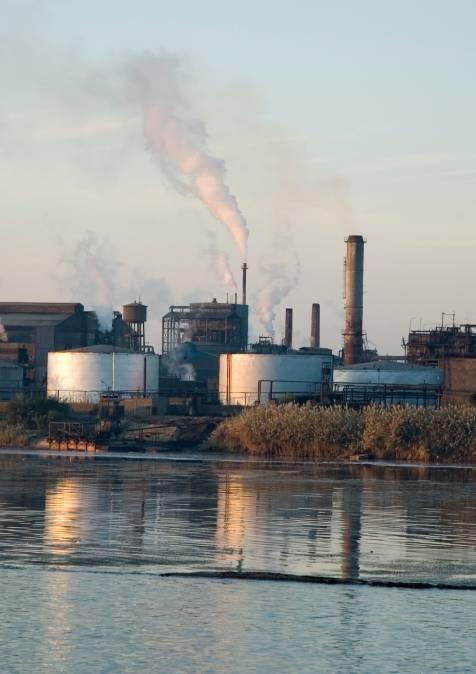
Emerging economies face a critical challenge: how to sustain growth while responding to climate change. In this episode, we explore the role of green finance, from climate bonds and sustainable infrastructure to blended finance, in supporting decarbonization, job creation, and climate-resilient development. Joining us is Mehran Haghirian, Director of Research & Programmes at the Bourse & Bazaar Foundation and an Atlantic Dialogues Emerging Leader, for a timely discussion on how emerging economies can mobilize capital, align policies, and position themselves as leaders in the global climate agenda.

Speakers

RELATED CONTENT

  • July 2, 2025
    Dans un contexte devenu plus incertain et plus compliqué à la suite des décisions de la nouvelle administration américaine, les impératifs de la lutte contre le changement climatique et de la transition énergétique et écologique demeurent.Les banques centrales peuvent et doivent apporter leur contribution à cette transition, en « verdissant », dans une proportion à définir, la politique monétaire qu’elles mènent. Concrètement, cela veut dire compléter la palette des object ...
  • Authors
    Antonio Jorge Martins
    October 9, 2024
    The road to decarbonizing the planet runs through the energy transition, which includes the shift from fossil-fueled cars to renewable energy vehicles. This automotive transition is unfolding as a true revolution in the industry. The evolution toward electric and hybrid vehicles has come in tandem with the ascent of Chinese producers. In the current context of geopolitical and technological rivalries, the automotive transition has been marked by an intense trade war, with implicati ...
  • Authors
    November 2, 2023
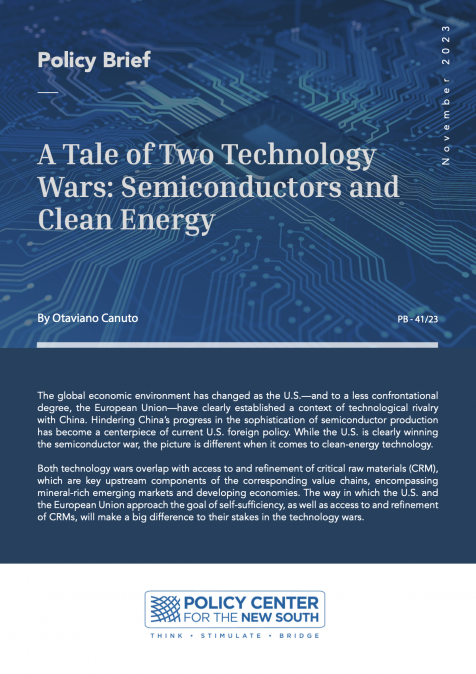
    The global economic environment has changed as the U.S.—and to a less confrontational degree, the European Union—have clearly established a context of technological rivalry with China. Hindering China’s progress in the sophistication of semiconductor production has become a centerpiece of current U.S. foreign policy. While the U.S. is clearly winning the semiconductor war, the picture is different when it comes to clean-energy technology. Both technology wars overlap with access to ...
  • Authors
    Abdelmonim AMACHRAA
    May 17, 2023
    Nothing better illustrates the positive contribution of the integration of national economies into global value chains than the fact that in the 1990s, the automotive sector barely existed in Morocco. Now, it is the leading export sector, with a production and assembly capacity of 700,000 vehicles, making it an attractive and competitive hub linking Africa and Europe in the automotive value chain. However, the automotive industry is on the cusp of change, with advances in electric a ...
  • Authors
    Sous la direction de Larabi Jaïdi
    September 29, 2022
    La succession des chocs pandémique, climatique et géopolitique a éprouvé les économies africaines. Les liens commerciaux et financiers avec le monde ne sont plus seulement considérés comme des moteurs de performance, mais aussi comme des sources potentielles de vulnérabilité. La défiance à l’égard de la mondialisation s’est accrue. Parce qu’elle est venue souligner la dépendance du continent, le dérèglement de ses rapports à la nature et sa vulnérabilité face aux tensions géopolitiq ...
  • July 6, 2022
    Le Policy Center for the New South et Enel Green Power Maroc co-organisent un webinaire sur "la tarification du carbone et le développement économique". Cette rencontre permettra de débattre des défis, des avantages et des limites des mécanismes de tarification du carbone et de leur imp...
  • March 1, 2022
    Known for being a climate change hotspot, Morocco is at the forefront of a climate disaster. Consequences are already being felt, whether in the form of increasing temperature or a downward trend in precipitations, which directly threaten the water security and, by extension, the social-ecological systems of the country. The systems by which food, energy, and water are produced, distributed, and consumed heavily depend on one another. Their implicit feedbacks and links are not linea ...
  • Authors
    February 9, 2022
    Energy markets have experienced significant disruptions since the outbreak of COVID-19. In late 2021, soaring natural gas prices triggered a new crisis, leading to risks of energy supply shortages worldwide and propelling the issue of energy security to the forefront. Africa will not be spared the repercussions of this crisis, which could further increase energy inequality, which is in turn linked to other forms of inequality. Indeed, in a context of persistent inflation, the lack o ...