Emerging Powers and the Remaking of Global Order

October 15, 2026

The Policy Center for the New South, in partnership with The Asian Network, is organizing a webinar titled “Emerging Powers and the Remaking of Global Order” to examine the growing role of emerging powers and the Global South at a time of profound transformation in the international system.

As power becomes more diffuse, economic gravity shifts, multilateralism comes under pressure, and strategic competition intensifies, countries across Asia, Africa, the Gulf, and Latin America are seeking greater strategic autonomy, strengthening South-South trade and investment, advancing digital and green transitions, and calling for greater representation in global governance.

These ambitions, however, unfold against significant challenges, including debt vulnerabilities, climate exposure, geopolitical pressures, technological dependencies, and gaps in institutional reform.

Against this backdrop, the webinar will explore how emerging powers and countries of the Global South are navigating these transformations and contributing to the next phase of global governance. It will also examine the opportunities and constraints shaping their growing role and the forms of cooperation and institutional adaptation that could emerge as the international order continues to evolve.
Speakers
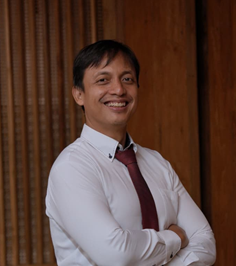
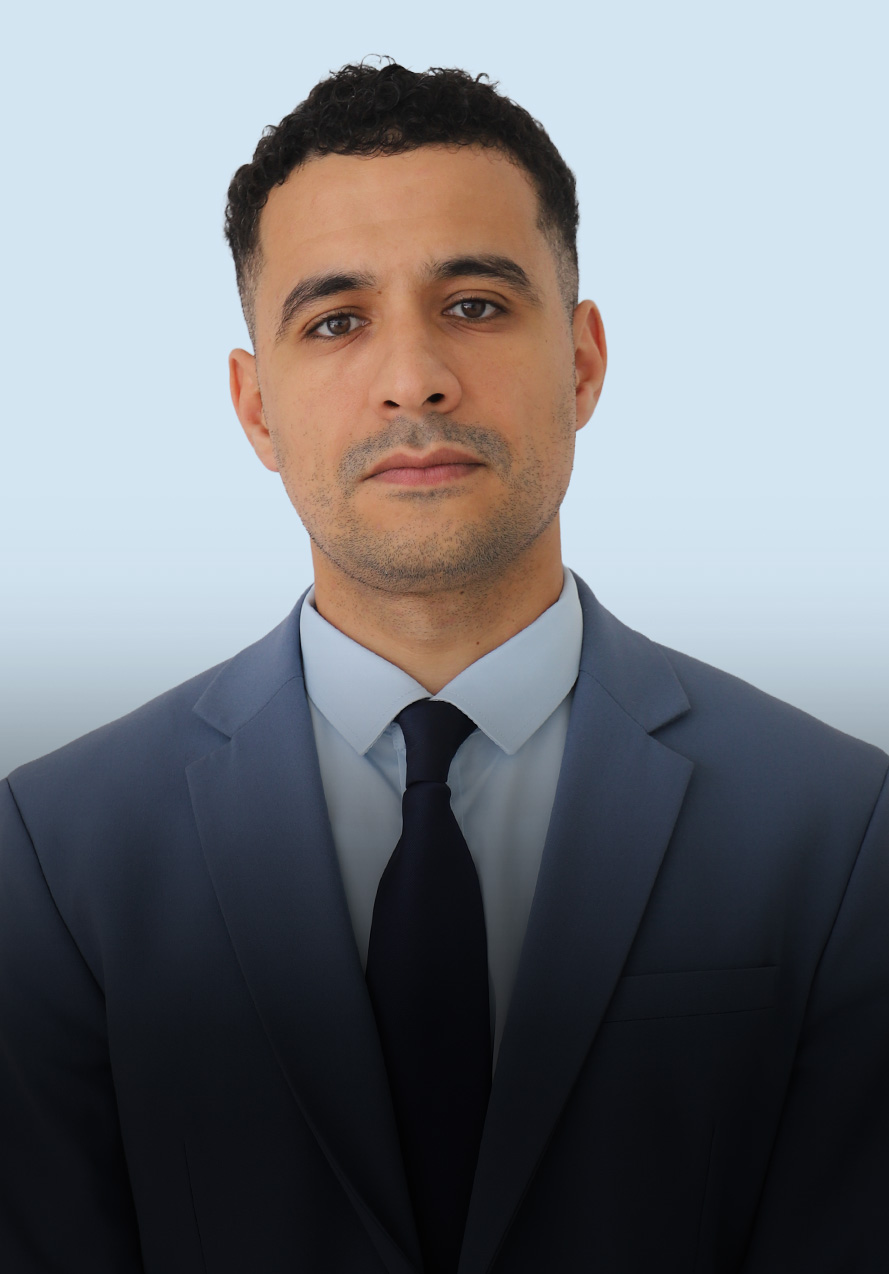
Bilal Mahli
International Relations Specialist
Bilal Mahli is an International Relations Specialist at the Strategic Analysis & Monitoring Unit of the Policy Center for the New South. His research focuses on Europe and the Middle East, analyzing geopolitical dynamics, policy development, and governance in these regions. Bilal holds a bachelor’s degree in International Relations from the Rhine-Waal University of Applied Sciences in Kleve, Germany, and a master’s degree in Political Science from the University of Cologne, Germany. He has previously worked in national public institutions in Germany, contributing to policy analysis and development. ...
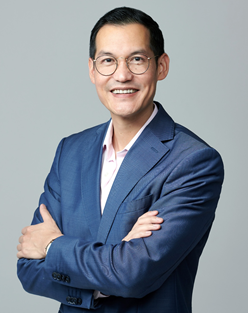
Otaviano Canuto
Senior Fellow
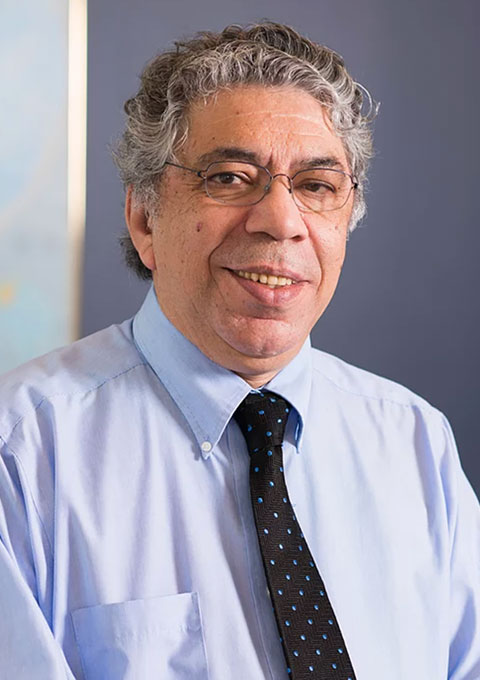
Senior Fellow at the Policy Center for the New South, Affiliate Professor at Mohammed VI Polytechnic University and Non-Resident Senior Fellow at Brookings Institute. Former Vice President and Executive Director at the World Bank, Executive Director at the International Monetary Fund (IMF) and Vice President at the Inter-American Development Bank. ...
Shofwan Al Banna
Associate Professor at the Department of International Relations, Universitas Indonesia
...

RELATED CONTENT

  • Authors
    May 29, 2020
    Brazil’s president Jair Bolsonaro is almost a mirror image of U.S. president Donald Trump. They have  considered COVID-19 a “hoax, ”, ( Trump), or a “fantasy” (Bolsonaro). They both believe a potentially toxic drug, hydroxychloroquine, which was developed to fight malaria, to be the miracle cure for the virus. They have refused to wear facemasks. They have both pushed back against lockdown rules. Bolsonaro even issued a presidential decree that exempted churches ...
  • Authors
    May 27, 2020
    Les tensions dans les relations entre les Etats-Unis et la Chine sont un sujet de préoccupation pour le monde. En dépit des quelques ouvertures éphémères, qui donnent parfois espoir à la détente, la tendance de ces derniers temps est plutôt vers l’escalade. Il ne se passe pas un mois, voire une semaine sans qu’actions, déclarations ou positions de l’un des deux pays contre l’autre ne fasse la Une de l’actualité. Des incidents les plus dangereux en Mer de Chine méridionale, aux mesur ...
  • Authors
    May 22, 2020
    On February 3, 2003, Colin Powell, U.S. President George Bush’s Secretary of State, informed the United Nations Security Council about secret information collected by the U.S. about Iraq’s weapons of mass destructions. “Every statement I make today is backed up by sources, solid sources. These are not assertions,” he said. There was “no doubt in my mind” that Saddam Hussein had a nuclear weapons program, and the invasion of Iraq was urgent and justified, because& ...
  • January 17, 2020
    The drone strike that claimed the life of Iranian general Qasem Soleimani unmasks the limits of so-called "hybrid" – or "asymmetric" – strategies. These low-intensity military operations, conducted through unofficial paramilitary forces, are supposed to allow a weaker state to gain geopolitical advantages without risking an open war with a stronger one. The idea is to gradually accumulate small tactical victories by capitalizing on more powerful states’ lack of appetite for distant ...
  • December 14, 2019
    Moderator John Yearwood, President and CEO, Yearwood Media Group Speakers Uri Dadush, Senior Fellow, Policy Center for the New South Matthias Fekl, Former Minister for Foreign Trade, France Renato Flôres, Director, International Intelligence Unit, Fundação Getulio Vargas ...
  • December 14, 2019
    Moderator Uduak Amimo, Uduak Amimo Coaching and Consulting Speakers Maged Abdelaziz, Permanent Observer of the League of Arab States to the United Nations Bineta Diop, Special Envoy on Women, Peace, and Security, African Union Commission Mohamed Znagui Sid' Ahmed Ely, Brigadier General,...
  • December 14, 2019
    Moderator Uduak Amimo, Uduak Amimo Coaching and Consulting Speakers Maged Abdelaziz, Permanent Observer of the League of Arab States to the United Nations Bineta Diop, Special Envoy on Women, Peace, and Security, African Union Commission Mohamed Znagui Sid' Ahmed Ely, Brigadier General,...
  • December 14, 2019
    Moderator Uduak Amimo, Uduak Amimo Coaching and Consulting Speakers Maged Abdelaziz, Permanent Observer of the League of Arab States to the United Nations Bineta Diop, Special Envoy on Women, Peace, and Security, African Union Commission Mohamed Znagui Sid' Ahmed Ely, Brigadier General,...
  • Authors
    Osama El Mourabit
    November 29, 2019
    During the past few years, the different global ongoing events have left us baffled and astonished. Given the decreasing ability to understand and assimilate the amount of changes, mutations, and crises, one would wonder: what happened to the global order? How has -in this short period of time- the power of its values and institutions that much decreased? What are the causes for these protectionist and massive populist waves? Why are we witnessing an increasing settlement of conflic ...
  • Authors
    November 26, 2019
    Beyond the verbal anarchy celebrated by President Donald Trump, or the annihilation of abandoned Kurdish allies of the United States, the never ending destruction of Yemen, the threatening warfare against Iran, a massacre by Iraqi forces to intimidate protesters against a failing government, more gas and ammunition fired in Hong Kong to oppress untamable activist fearing their loss of freedom, Britain crashing out of the European Union, abandoning common sense and democratic dignity ...