( FR ) Plenary VIII: Will the Rules-Based Trading System Survive?

December 14, 2019

Moderator John Yearwood, President and CEO, Yearwood Media Group Speakers Uri Dadush, Senior Fellow, Policy Center for the New South Matthias Fekl, Former Minister for Foreign Trade, France Renato Flôres, Director, International Intelligence Unit, Fundação Getulio Vargas

Speakers
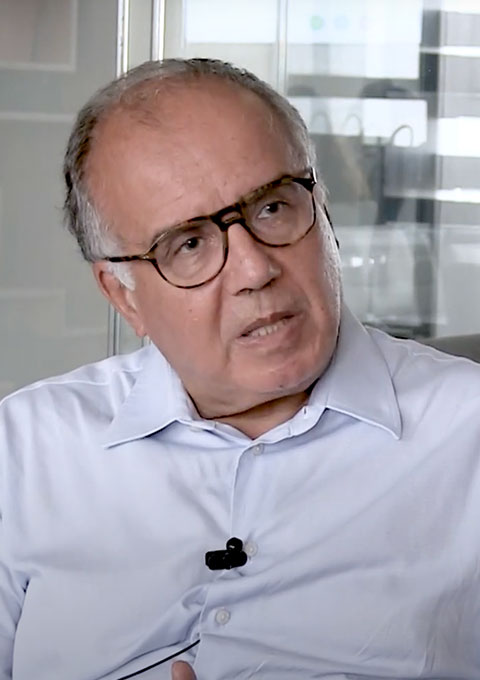
Uri Dadush
Non-Resident Senior Fellow
Uri Dadush was a Senior Fellow at the Policy Center for the New South, where he served as Senior Fellow from its founding in 2014 until 2022. He is Research Professor at the School of Public Policy, University of Maryland and a non-resident scholar at Bruegel. He is based in Washington, DC, and is Principal of Economic Policy International, LLC, providing consulting services to the World Bank and to other international organizations as well as corporations. Previously, he served as Director of the International Economics Program at the Carnegie Endowment for International Peace and, at the World Bank, was Director of the International Trade, Economic Policy, and Development Prospects Departments. In the private sector before that he was President of the Economist Intelligence ...
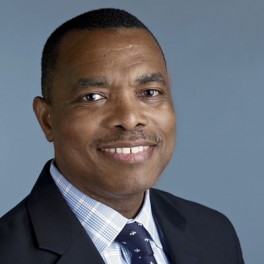
John Yearwood
President and CEO, Yearwood Media Group
An award-winning multimedia journalist, John Yearwood is President and CEO of Yearwood Media Group, a global consulting and content creation firm. In his role as President/CEO of Yearwood Media, he advises companies seeking to do business in emerging markets, with a particular focus on Africa and Asia. In 2019, he was appointed honorary chair of the the National Association of Black Journalists annual convention, which convened 4,100 black journalists in Miami. He sits on several boards, including the Austria-based International Press Institute, where he is the former chairman. Former world editor of the Miami Herald. The World Desk won numerous awards under his leadership, including two McClatchy Company President’s Awards and the Arthur Ross Award for best coverage of Latin ...

RELATED CONTENT

  • Authors
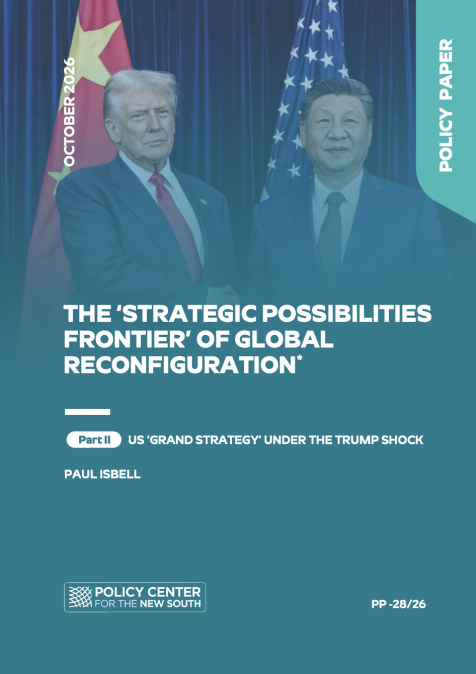
    Paul Isbell
    October 9, 2026
    In the first seven Policy Briefs of this ongoing series of analysis on Pan-Atlanticism: The Atlantic Basin in a Multipolar-Transnational World, we developed the argument that the strategic significance of the Atlantic Basin is on the rise for a range of international actors (states, regions and non-state agents) and from distinct political or ideological perspectives. In addition, in the most recently published Policy Brief -- “The U.S. and the Current International Reconfiguration: ...
  • October 7, 2026
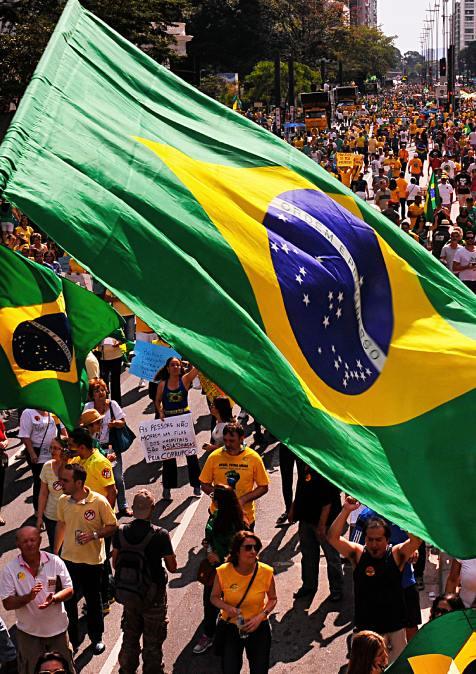
    Brazil's election poses a question that extends well beyond Latin America: how much freedom does a country retain to define its international role when external pressure collides with domestic political exhaustion? For the Global South, the answer matters more than any foreign government's preference regarding the next occupant of the presidential palace. Strategic autonomy remains fragile if every change of government puts a country's freedom of action back up for negotiation. ...
  • October 02, 2026
    Building on his Policy Brief "Latin America, World Politics and the Great Powers", Nizar Messari examines how recent developments are reshaping U.S. influence in the region and affecting ...
  • Authors
    September 30, 2026
    You can imagine how often I've been asked to comment on where the Brazilian economy is headed after the election. With polls pointing to a runoff on October 25 and currently showing a statistical tie between Luiz Inácio Lula da Silva and Flávio Bolsonaro in vote simulations, I'm naturally asked about their economic programs and about the country's relations with the United States. ...
  • August 3, 2026
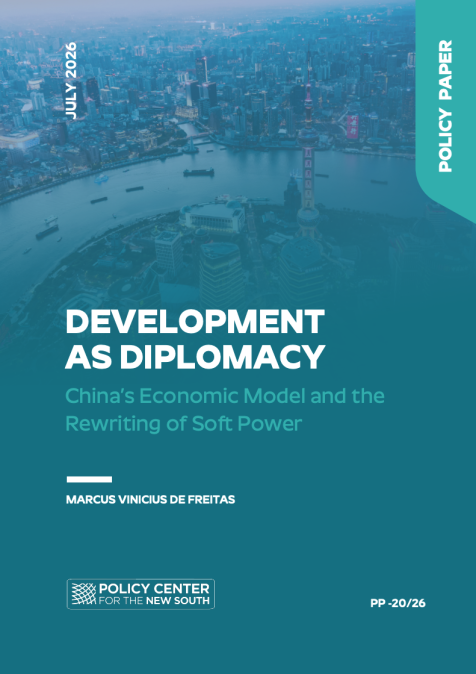
    This policy paper explores how China’s economic development model—rooted in pragmatism, long-term planning, and civilizational renewal—has become its most compelling soft power asset, particularly in the eyes of the Global South. While critically engaging with Joseph Nye’s original conception of soft power as a primarily cultural and normative force, the paper argues that China’s ability to transform itself from an impoverished postimperial state into the world’s largest trading nat ...
  • Authors
    Jorge Arbache
    October 9, 2025
    Conventional wisdom holds that the United States has undergone massive deindustrialization in recent decades, with the country's manufacturing sector supposedly withering as it lost ground to China. This narrative has fueled debates about industrial policy, economic nationalism, and the reshoring of manufacturing production. But what if this story is only partially true? What if, instead of disappearing, American industry simply changed its address?  ...
  • September 28, 2022
    Despite the United States' disastrous record in both Iraq and Afghanistan, President Joe Biden is right in asserting that the world faces a confrontation between autocracy and freedom. And that a choice will ultimately have to be made. This makes people cringe, particularly in Europe, which remains polarized on the subject. ...
  • September 7, 2022
    Le président des États-Unis, Joe Biden, malgré les états de service catastrophiques de son pays en Irak ou en Afghanistan, n’a pas tort d’affirmer que le monde va vers un affrontement entre l’autocratie et la liberté. Et, qu’en fin de compte, il va falloir choisir. Cela fait grincer des dents, surtout en Europe qui est divisée sur le sujet. ...
  • Authors
    March 2, 2022
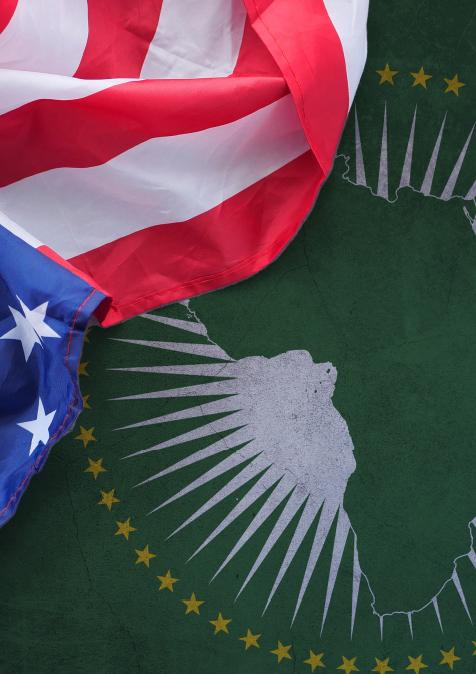
    The White House  classified the speech as “remarks by President Obama to the People of Africa”, their representatives gathered at Mandela Hall, Addis Ababa,  Ethiopia, July 28, 2015. It was the first address by a US-President to the African Union. He was standing before the audience as “a proud American” and “the son of an African”. His father, Barack Hussein Obama, who grew up near a small village in Nyanza Province, Kenya, won a scholarship to study economics and made h ...