COMEXI-PCNS Webinar Series 2026: Protecting Migrants’ Rights under Externalized Migration Control: A Comparative Dialogue between Morocco and Mexico

June 16, 2026

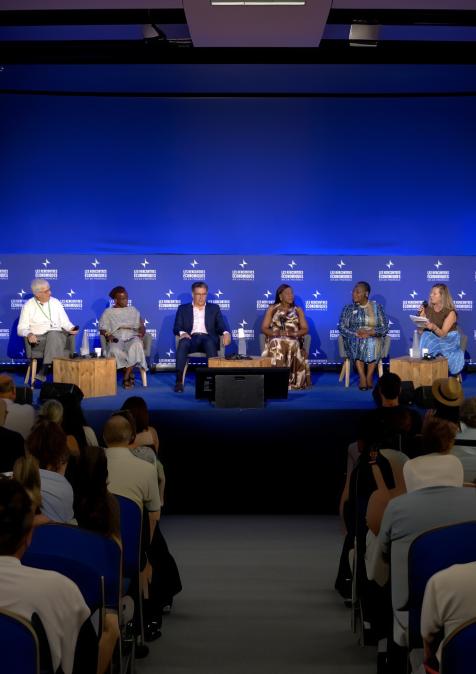
The Policy Center for the New South (PCNS) and the Mexican Council on Foreign Relations (COMEXI) organized a joint webinar under the theme “Protecting Migrants’ Rights under Externalized Migration Control: A Comparative Dialogue between Morocco and Mexico” on June 4, 2026.

Migration governance increasingly unfolds under strong external pressures that reshape national protection systems. The European Union’s growing reliance on the extension of the safe third country concept places Morocco at the center of a strategy that seeks to manage asylum claims beyond EU territory. This approach affects access to international protection, procedural guarantees, and the effective enjoyment of migrants’ rights along North African migration routes. Mexico faces a parallel dynamic under sustained pressure from the United States to contain migration flows toward the northern border. Through bilateral arrangements, enforcement cooperation, and expanded migration control responsibilities, Mexico increasingly operates as a buffer state. These pressures directly influence asylum processing, migrant reception conditions, and the treatment of people in transit, particularly those from Central America and the Caribbean. 

Despite their different regional settings, Morocco and Mexico confront structurally comparable challenges. Both countries navigate complex roles as origin, transit, destination, and return spaces while responding to powerful external actors that shape their migration policies. This convergence creates a strong analytical case for comparison. A comparative perspective allows a clearer understanding of how externalization strategies affect migrants’ rights across regions, how national institutions respond under constraint, and where policy space remains for rights-based approaches.

By bringing together perspectives from North Africa and Latin America, the webinar analyzed how externalized migration governance reshaped the protection of migrants’ rights in key transit contexts. It compared how Morocco and Mexico responded to growing responsibilities imposed by powerful destination regions, particularly through the expansion of the safe third country logic in Europe and intensified migration control cooperation with the United States. The discussion identified policy approaches aimed at preserving protection standards while managing complex migration flows and highlighted institutional practices offering concrete pathways for rights-based governance. By connecting African and Latin American perspectives, the webinar also contributed to strengthening cross-regional academic and policy dialogue on migrant protection.


Speakers
Myriam Cherti
Chargée de l’Axe Gouvernance, Données et Recherches au sein de l’Organisation de la Migration International (OIM) au Maroc
Myriam est Chargée de l’Axe Gouvernance, Données et Recherches au sein de l’Organisation de la Migration International (OIM) au Maroc. Elle a aussi travaillé pour l'OIM Londres où elle était chargée de l’axe Migration et Développement. Myriam a aussi travaillé à l’OIM Rabat en 2018 quand elle était détachée auprès du MDCMREAM pour les soutenir durant cette année ou le Maroc a co-présidé le GFMD et organisé l’adoption du Pacte Mondial des Migrations. Auparavant, elle était chercheuse Senior au COMPAS de l'Université d'Oxford. Ses domaines d'expertise incluent la migration irrégulière, l'intégration et réintégration des migrants, la politique de la diaspora et la migration marocaine. Myriam a également travaillé en tant que consultante et chercheuse indépendante sur pl ...
Paola Suárez
Senior Fellow for the Mexicans Abroad Working Group, COMEXI
...
Carlos Heredia
Member, COMEXI
Dr. Heredia has been since 2009 an Associate Professor in the Department of International Studies at the Center for Research and Teaching in Economics (CIDE), Mexico City, where he is also part of the Interdisciplinary Program for Studies on Migration (CIDE-Mig).  His research focuses on the political economy of Mexican and Central American migrants to the U.S., Latino communities, as well as the domestic drivers of Washington's foreign policy. He was a Member of Mexico’s 57th Congress from 1997 to 2000. He has held various positions in the Ministry of Finance, and the State Governments of Michoacán and of Mexico City.  He was the spokesman for international and economic affairs during the presidential campaign of Cuauhtémoc Cárdenas in 2000. He has worked for 30 ...
Iván Martín
Senior Fellow
Iván Martín is Senior Fellow at the Policy Center for the New South, Adjunct Professor at the Faculty of Governance, Economic and Social Sciences of the Mohammed VI Polytechnic University (UM6P), and Associate Researcher at the Interdisciplinary Research Group on Immigration (GRITIM) at the Universitat Pompeu Fabra in Barcelona. Between 2013 and 2016 he was Part-time Professor at the Migration Policy Centre (MPC) of the European University Institute in Florence, as well as member of the Expert Group on Economic Migration of the European Commission and Key Expert on Labour Migration providing External Technical Expertise on Migration to DG DEVCO of the European Commission (ETEM V Project). Formerly, he has been Senior Research Fellow at the Barcelona Centre for International A ...

RELATED CONTENT

  • March 18, 2026
    Le premier sommet des BRICS, tenu à l’initiative de la Russie en 2009, sera suivi de 16 autres, le dernier étant celui de Rio dont les travaux se sont déroulés les 6 et 7 juillet 2025. Jusqu’en 2022, un seul élargissement est intervenu, celui accueillant l’Afrique du Sud, transformant les BRIC en BRICS. À partir de 2023, en revanche, trois sommets, ceux de 2023, 2024 et 2025, vont se solder par la transformation des BRICS en BRICS+5, accueillant 5 nouveaux pays membres, en ...
  • February 19, 2026
    This Africafe's episode examines Brazil-Africa relations: historical ties shaped by the slave trade and diaspora, Lula’s trade expansion, and competition with China/EU. It explores South-South diplomacy’s potential to reshape global institutions, the role of “South Atlanticism,” and fut...
  • Authors
    Gabriela Keseberg Dávalos
    January 26, 2026
    This Opinion was originally published by the Hanns Seidel Stiftung on January 19th, 2026. The author of this opinion, Gabriela Keseberg Dávalos, is a 2013 alumna of the Atlantic Dialogues Emerging Leaders Program. The signing of the EU–Mercosur agreement is a small geopolitical miracle. Signed on 17 January 2026 in Paraguay, it arrives at a moment when Europe is unmistakably being cast aside by the United States. Meanwhile Latin America, and with it, the Mer ...
  • Authors
    Marianna Albuquerque
    Santiago Theoduloz
    October 3, 2023
    Marianna Albuquerque and Santiago Theoduloz are 2022 alumni of Atlantic Dialogues Emerging Leaders program. Learn more about Marianna here and Santiago here.  From our experience of participating in the ADEL Program and the Atlantic Dialogues in 2022, we learned that the Atlantic countries have the potential to improve their economies through regional coordination. This led us to reflect on how many opportunities the countries from the wider Atlantic missed ...
  • September 01, 2023
    In this podcast, we are joined by Dr. Len Ishmael, editor and co-author of the book “Aftermath of War in Europe: The West VS. the Global South?”. Dr. Ishmael delves into the groundbreakin ...
  • Authors
    Ahmed Rachid El-Khattabi
    Alessandro Minuto-Rizzo
    Amaye Sy
    Hamza Rkha Chaham
    Ian O. Lesser
    Jorge Castañeda
    Moubarack Lo
    Umberto Profazio
    December 14, 2022
    This ninth edition of “Atlantic Currents” appears in an international context marked predominantly by a ten month-war between Russia and Nato members that began February 2022. The war is affecting not only the European and American member States directly and actively involved in an unprecedented manner, but more importantly the countries of the global South that have suffered collateral damage. Indeed, the nations of the world were barely out of the most painful and costly phase o ...