Africafé: La régulation de l’intelligence artificielle en Afrique

February 22, 2024

La révolution intelligence artificielle submerge l’Afrique, en proie à d’importantes transitions. Reposant sur un processus d’imitation de l’intelligence humaine qui se base sur la création et l’application d’algorithmes, l’intelligence artificielle qui constitue le pilier de la quatrième révolution industrielle, est en mesure d’assoir l’émergence de l’Afrique, tout en accélérant la transformation de nombreux secteurs dont dépendra le futur du continent, notamment l’économie, l’agriculture, la santé, l’éducation et les services financiers. Cependant, bien que l’intelligence artificielle prend une place de plus en plus importante dans l’économie et les sociétés africaines, ses applications diverses, balbutiantes ou bien installées dans des secteurs d’activités variés, rendent sa régulation difficile au regard des enjeux industriels et éthiques qui l’accompagnent. La régulation de l’intelligence artificielle en Afrique qui consiste à encadrer le développement des technologies de l’IA, tout en favorisant l’innovation technologique, est dès lors indispensable pour éviter toute forme de dérive juridique. Si les Etats-Unis et l’UE ont un temps d’avance dans le domaine de la régulation de l’IA l’intelligence artificielle, l’Afrique compte bien rattraper son retard 

Speakers
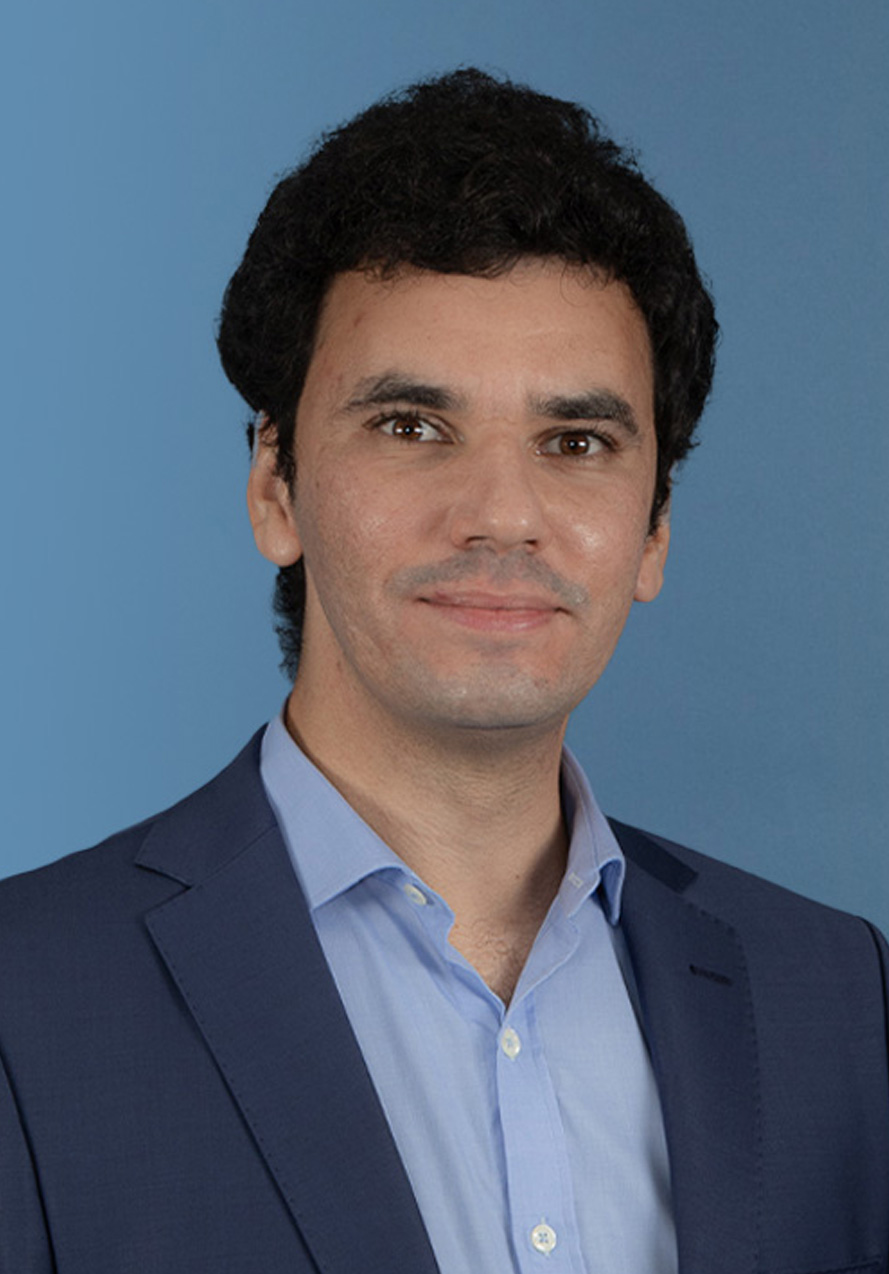
Abdessalam Saad Jaldi
Senior International Relations Specialist
Abdessalam Saad Jaldi is a Senior International Relations Specialist at the Policy Center for the New South (PCNS).He is also an Affiliate Professor of Digital Law and Emerging Technologies at University Mohammed VI Polytechnic (UM6P)At the PCNS, Jaldi conducts research encompassing the Maghreb, the European Union (EU), India, and the evolving landscape of international law, with a particular focus on artificial intelligence (AI) and maritime lawHe notably represented the PCNS as a member of the T20 Brasil task force 6 (TF 06) on “Strengthening Multilateralism and Global Governance”.Abdessalam Saad Jaldi holds a PhD in Law from the University of Strasbourg, as well as two master’s degrees: One in Public and Private International Law from the University of Strasbourg, and anoth ...

RELATED CONTENT

  • Authors
    Elouardighi Imane
    Zakaria Elouaourti
    January 23, 2025
    This paper was originaly published on tandfonline.com   While Marie Curie’s unique presence among 29 male scientists at the 1927 Solvay Conference underscores the historical gender gap in science, the persistent underrepresentation of women in authorship of scientific publications – particularly in Africa and the Global South – highlights the enduring challenge of achieving gender equality in the scientific community. African women scientists represent 31.1% of the scientific ...
  • Authors
    Boglarka Bozsogi
    January 10, 2025
    The Lake Chad Basin and the Sahel regions have faced multidimensional conflict since 2011. Violence, attributed mostly to violent extremist organizations (VEOs) affiliated to al-Qaeda and the Islamic State, has put both regions on the global map of the deadliest armed conflicts and worst humanitarian crises. Since 2012, tens of thousands of people have been killed, while at least six million people have been displaced in the two regions combined. Simultaneously, floods since August ...
  • Authors
    December 24, 2024
    Over the past 50 years, international law relevant to the Sahara Issue has evolved significantly. Yet, even recent developments, such as a decision by the EU court and a proposal by the Secretary-General’s Personal Envoy to partition the Saharan provinces, have not adequately accounted for these advancements. Actions by a state that may not have been scrutinized in 1975 could now face condemnation under contemporary legal standards. Notably, the right to self-determination must not ...
  • December 20, 2024
    Ce papier a été initialement publié sur legrandcontinent.eu   À bas bruit, plusieurs pays africains sont en train de monter dans la chaîne de valeur des véhicules électriques. Terrain de bataille de la rivalité sino-américaine sur les matières critiques, l’Afrique pourrait trouver dans la nouvelle fragmentation mondiale des chaînes d’approvisionnement une opportunité. Étude de cas depuis la République démocratique du Congo. Les perturbations successives des chaînes d’ ...
  • December 20, 2024
    Este artículo se publicó originalmente en legrandcontinent.eu   Varios países africanos están ascendiendo silenciosamente en la cadena de valor de los vehículos eléctricos. Campo de batalla de la rivalidad sino-estadounidense por los materiales críticos, África podría encontrar una oportunidad en la nueva fragmentación mundial de las cadenas de suministro. Estudio de caso de la República Democrática del Congo. Las sucesivas perturbaciones de las cadenas de suministro ...
  • Authors
    Boglarka Bozsogi
    December 6, 2024
    Communities around the Lake Chad Basin (LCB) rely on three major economic activities: farming, fishing, and livestock herding. The floods that began in August 2024 damaged and destroyed hundreds of thousands of hectares of farmland, killed thousands of livestock, and rendered fishing unsafe for fishermen. This climate shock caused families dependent on these activities to lose their primary sources of income. Worse still, these economic activities also serve as the main source of da ...
  • Authors
    November 29, 2024
    After the European Parliament cleared the 26 candidates proposed by Member States to form the European Commission for 2024-2029, the new European super-ministers will take up their functions on 1 December, with a revised portfolio structure. Where does Africa fit into this new organizational chart of the European Commission? Jozef Síkela, a Czech banker with a professional career in Austria, Slovenia and Ukraine, lately serving as his country’s Ministry of Industry, has been appoin ...
  • November 21, 2024
    In this episode of Africafé, Dr. Marcus Vinicius de Freitas, Senior Fellow at the Policy Center for the New South, examines the evolution of transatlantic relations over the past three decades. From NATO's strategic role to the impact of Russia and China's global ambitions, the dis...
  • Authors
    Boglarka Bozsogi
    November 20, 2024
    The Lake Chad Basin is home to over 3 million internally displaced persons (IDPs),[1] a number expected to rise due to the recent flooding affecting Chad, Niger, Nigeria, and Cameroon since August. While the primary cause of displacement remains the ongoing violent conflict in the region, the climate crisis is exacerbating existing vulnerabilities and, in the short-term, spurring new waves of displacement in areas already hosting large populations displaced by conflict and insecurit ...