Africafé : Beyond Remittances: The Contribution of Intra-African Diasporas?

October 9, 2026

How do intra-African diasporas contribute to the continent’s development? This Africafé episode discusses their role in remittances, entrepreneurship, and skills circulation. The conversation addresses the administrative, financial, and institutional barriers that limit their contribution, alongside opportunities for South-South cooperation to strengthen their participation in Africa’s economic integration.

Speakers
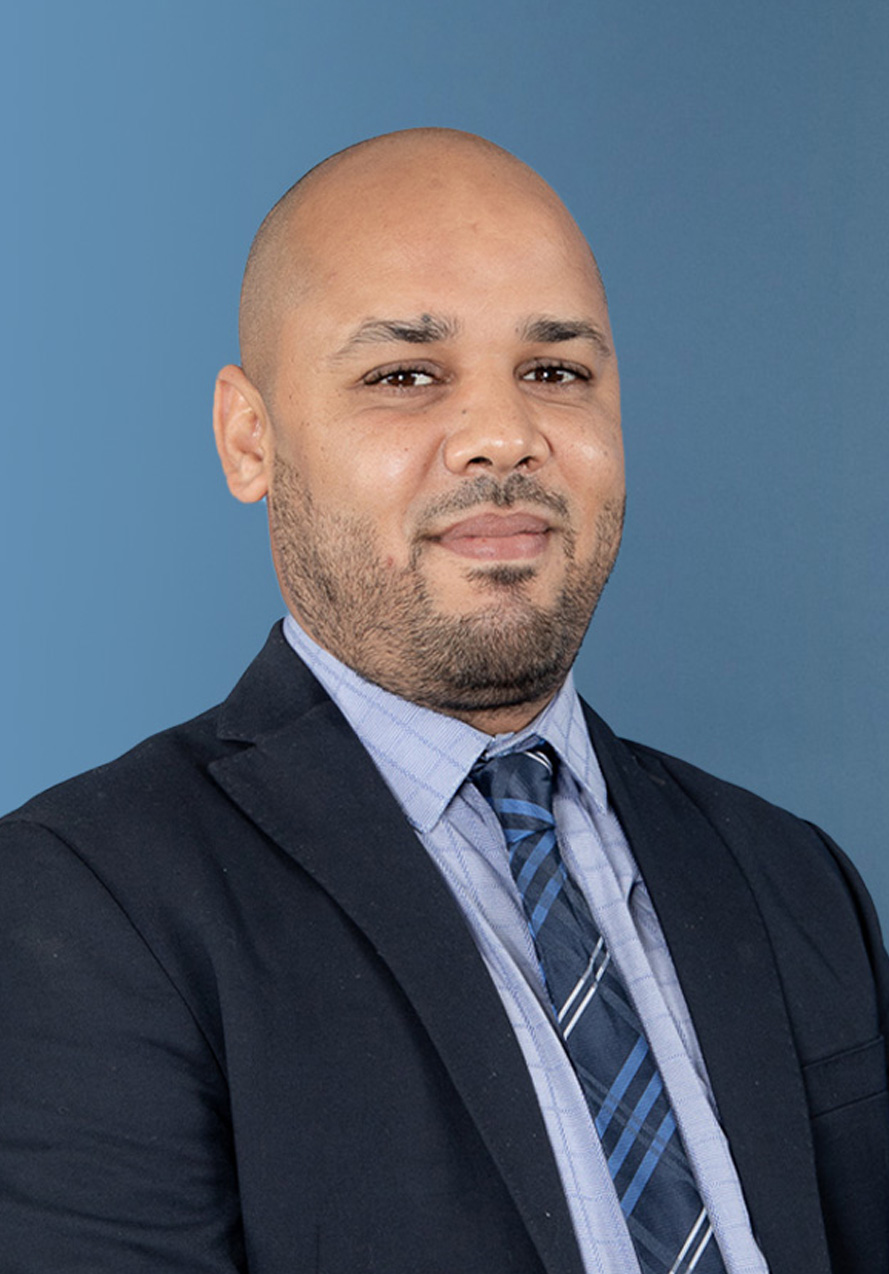
Tayeb Ghazi
Principal Economist
Tayeb Ghazi is Principal Economist at the Policy Center for the New South (PCNS). He is also a member of the Social and Solidarity Economy Research Group at Cadi Ayyad University and holds a master's degree in applied finance from the same university. He is currently working on topics related to labour market, education, migration and some aspects of international trade in developing countries. ...

Iván Martín
Senior Fellow
Iván Martín is Senior Fellow at the Policy Center for the New South, Adjunct Professor at the Faculty of Governance, Economic and Social Sciences of the Mohammed VI Polytechnic University (UM6P), and Associate Researcher at the Interdisciplinary Research Group on Immigration (GRITIM) at the Universitat Pompeu Fabra in Barcelona. Between 2013 and 2016 he was Part-time Professor at the Migration Policy Centre (MPC) of the European University Institute in Florence, as well as member of the Expert Group on Economic Migration of the European Commission and Key Expert on Labour Migration providing External Technical Expertise on Migration to DG DEVCO of the European Commission (ETEM V Project). Formerly, he has been Senior Research Fellow at the Barcelona Centre for International A ...

Fatim Zohra Azouzou
Junior Analyst - International Relations - Policy Center for the New South
...

RELATED CONTENT

  • Authors
    Khalid R. Temsamani
    February 26, 2026
    The multiplication of systemic crises on a global scale - whether environmental, health-related, energy-related or linked to global security issues - calls for a profound change in diplomatic modes of action. In this context, the structured integration of scientific knowledge into international relations appears to be a decisive condition for the formulation of effective and legitimate collective responses. Science diplomacy is thus a strategic field of intervention, at the interfac ...
  • January 5, 2026
    This Paper was originally published on sciencedirect.com This study provides an original and significant contribution to evaluating educational service quality in Morocco by leveraging, for the first time, microdata from the Service Delivery Indicators (SDI) survey. The survey covers a nationally representative sample of 300 public and private primary schools across rural and urban areas. The use of SDI data represents a major methodological advancement, shifting away from perc ...
  • September 19, 2025
    Pierre Nguimkeu, Director of the Africa Growth Initiative at Brookings, examines Africa’s digital transformation and its impact on work, education, and the economy. From mobile technology ...
  • September 16, 2025
    مع انطلاق الموسم الدراسي 2025، تواجه المدرسة المغربية تحديات جديدة تتعلق بتحسين جودة التعليم وتوسيع فرص التلاميذ في مختلف المناطق، وسط جهود مستمرة لتنفيذ الإصلاحات التربوية. في حلقة اليوم، نستضيف الأستاذ عبد اللطيف اليوسفي، خبير التعليم والمدير السابق للأكاديمية الجهوية لجهة الغرب الشرا...
  • Authors
    September 16, 2025
    Les questions des inégalités sociales et des inégalités territoriales sont profondément liées.  Les politiques publiques ne peuvent réduire l’une sans s’attaquer à l’autre.  Le phénomène des inégalités peut s’accentuer avec la fragilité de la situation socio-économique de certains territoires d’autant que le développement territorial n’est pas spontanément équitable. La réduction de ces inégalités, un des enjeux majeurs des politiques publiques, oblige à con ...
  • Authors
    Soukaina Raoui
    September 12, 2025
    This Paper was originally published on springer.com This paper provides an in-depth analysis of socio-economic convergence across communes in Morocco, focusing on monetary poverty and educational inequalities. This research investigates the impact of the well-known territorial and inclusive development policies of the National Initiative for Human Development on the catch-up process. We explore the data from the last two general population and housing censuses (2004 and 20 ...
  • September 11, 2025
    Ce travail apporte un éclairage critique sur l'alignement des dispositifs publics d'orientation des étudiants marocains à l'étranger avec les ambitions de développement du pays. Il interroge la capacité de ces mécanismes à transformer la mobilité étudiante d'une potentielle "fuite des cerveaux" en un véritable "gain de cerveaux". S'appuyant sur une étude de cas qualitative, nous avons mené une analyse de contenu systématique (cartographie) de 204 programmes promus par le ministère d ...
  • August 28, 2025
    This Paper was originally published on tandfonline.com The gender gap in education remains a concern for Moroccan policymakers and researchers, yet it is rarely measured quantitatively. This study examines differences in reading and mathematics performance between girls and boys, both at the national level and by place of residence, using PIRLS (2016, 2021) and TIMSS (2015, 2019) data covering 21,129 students. The Blinder-Oaxaca decomposition method is applied to distingui ...
  • Authors
    Zakaria Elouaourti
    August 7, 2025
    This paper was originally published on tandfonline.comYouth’s life paths have become increasingly challenging, especially for those classified as ‘Not in Education, Employment, or Training’ (NEET), who comprise 31.2% of North Africa’s youth population. This paper contributes to the growing discourse on the NEET phenomenon by exploring its structural and psychosocial dimensions in North Africa, with a specific focus on gender. Using a rich micro-level dataset of 7,815 individuals age ...
  • October 3, 2024
    Ce rapport explore en profondeur le rôle stratégique de la formation professionnelle au Maroc dans le contexte de l’éducation nationale et du développement socio-économique. Il examine les missions et les objectifs du département de la Formation professionnelle (DFP), en mettant l’accent sur l’alignement des compétences individuelles avec les besoins dynamiques du marché du travail. À travers une analyse détaillée, le rapport décrit l’organisation du système de formatio ...