Africafé : Beyond Remittances: The Contribution of Intra-African Diasporas?

October 9, 2026

How do intra-African diasporas contribute to the continent’s development? This Africafé episode discusses their role in remittances, entrepreneurship, and skills circulation. The conversation addresses the administrative, financial, and institutional barriers that limit their contribution, alongside opportunities for South-South cooperation to strengthen their participation in Africa’s economic integration.

Speakers
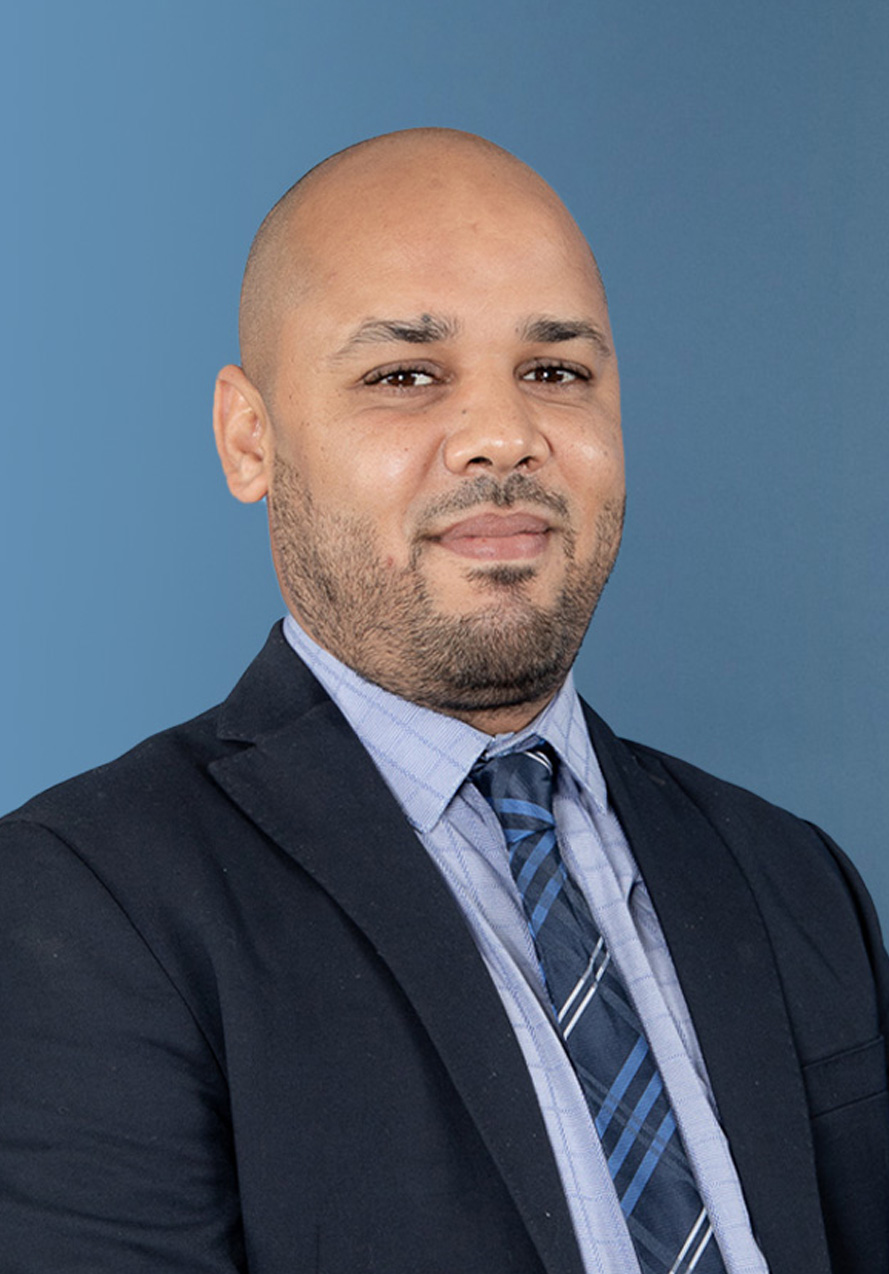
Tayeb Ghazi
Principal Economist
Tayeb Ghazi is Principal Economist at the Policy Center for the New South (PCNS). He is also a member of the Social and Solidarity Economy Research Group at Cadi Ayyad University and holds a master's degree in applied finance from the same university. He is currently working on topics related to labour market, education, migration and some aspects of international trade in developing countries. ...

Iván Martín
Senior Fellow
Iván Martín is Senior Fellow at the Policy Center for the New South, Adjunct Professor at the Faculty of Governance, Economic and Social Sciences of the Mohammed VI Polytechnic University (UM6P), and Associate Researcher at the Interdisciplinary Research Group on Immigration (GRITIM) at the Universitat Pompeu Fabra in Barcelona. Between 2013 and 2016 he was Part-time Professor at the Migration Policy Centre (MPC) of the European University Institute in Florence, as well as member of the Expert Group on Economic Migration of the European Commission and Key Expert on Labour Migration providing External Technical Expertise on Migration to DG DEVCO of the European Commission (ETEM V Project). Formerly, he has been Senior Research Fellow at the Barcelona Centre for International A ...

Fatim Zohra Azouzou
Junior Analyst - International Relations - Policy Center for the New South
...

RELATED CONTENT

  • June 30, 2026
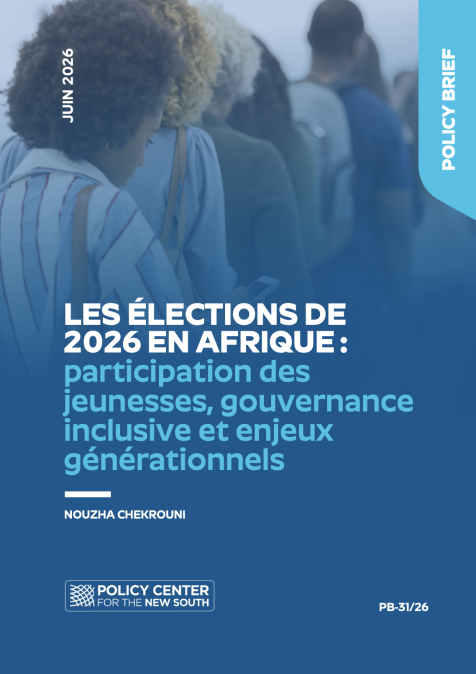
    À l'échelle mondiale, les politiques publiques de jeunesse sont confrontées à un double enjeu : répondre à des défis socio-économiques structurels; chômage, précarité, fractures territoriales, tout en intégrant une demande croissante de participation citoyenne effective. (OIT, 2023 ; Nations Unies, 2020) En Afrique, ce défi revêt une dimension singulière compte tenu du poids démographique de la jeunesse et des fragilités persistantes des démocraties locales. (BAD, 2020 ; Mo Ibrahim ...
  • June 26, 2026
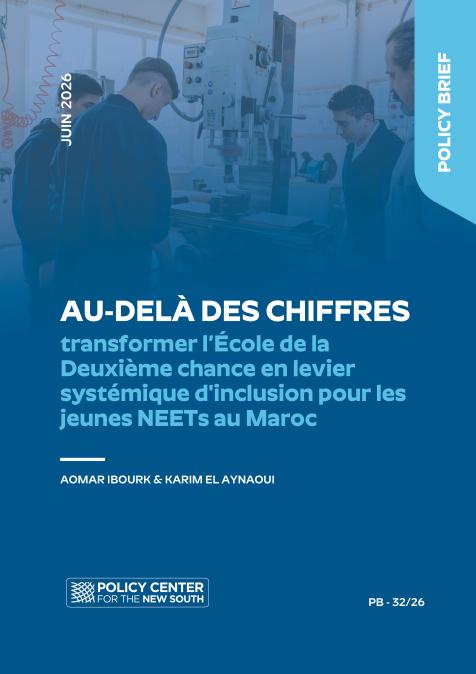
    In Morocco, the issue of young NEETs (Not in Employment, Education, or Training) is a national emergency, fueled by 300,000 students dropping out of school each year. In response to this challenge, the “New Generation Second Chance School” (E2C-NG) model has proven its effectiveness by achieving an exceptional employment rate of 81%.However, this institutional success rests entirely on a local network of organizations that is now under strain. A previously unpublished analysis of da ...
  • June 26, 2026
    Au Maroc, la problématique des jeunes NEETs (Ni en emploi, ni en études, ni en formation) constitue une urgence nationale, alimentée par 300 000 abandons scolaires annuels. Face à ce défi, le modèle de l'École de la Deuxième chance nouvelle génération (E2C-NG) a démontré sa pertinence en affichant un taux d'insertion exceptionnel de 81 %.Cependant, ce succès institutionnel repose intégralement sur un tissu associatif local aujourd'hui fragilisé. L'analyse inédite des donné ...
  • June 15, 2026
    Ce papier a été initialement publié dans la revue Carrefours de l'éducation n°61 L’écart entre les sexes en matière de réussite éducative demeure une préoccupation majeure au Maroc. Cette étude analyse les disparités de genre en lecture et en mathématiques aux niveaux national, urbain et rural, en exploitant des données individuelles issues de l’évaluation PIRLS 2021 (7 017 élèves) et de TIMSS 2019 (13 536 élèves), toutes deux menées auprès d’élèves de 4e année du primaire. En ...
  • Authors
    Karim El Mokri
    Idriss El Abbassi
    June 8, 2026
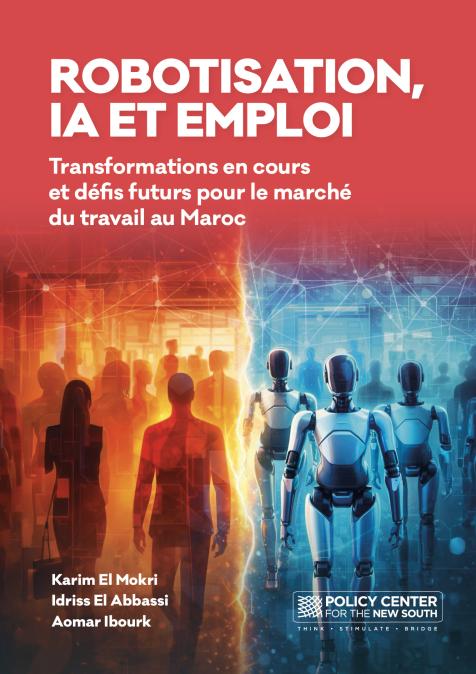
    Le monde du travail est engagé dans un processus de mutation sans précédent. La quatrième révolution industrielle, portée par l’intelligence artificielle (IA) et la robotisation, a été le point de commencement d’une ère nouvelle où les repères économiques et sociaux se redéfinissent à une vitesse inédite. Ces technologies suscitent un engouement légitime et offrent des perspectives prometteuses, mais requièrent une vigilance accrue face aux incertitudes qui les entourent.Bien que, à ...
  • April 14, 2026
    في هذه الحلقة يتم تناول دور الجامعات المغربية في تعزيز الدبلوماسية العلمية للمغرب على المستويين الإقليمي والدولي، وإمكانية تحولها إلى فاعل أساسي في القوة الناعمة الوطنية، كما يناقش أهمية الشراكات الأكاديمية والبحثية الدولية في تعزيز الإشعاع العلمي ونقل المعرفة، ويتطرق كذلك إلى أبرز التح...
  • Authors
    Khalid R. Temsamani
    February 26, 2026
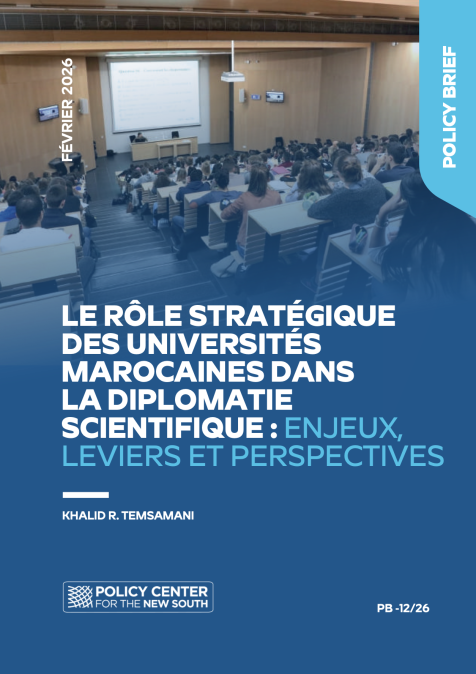
    La multiplication des crises systémiques à l’échelle mondiale – qu’elles soient environnementales, sanitaires, énergétiques ou liées aux enjeux de sécurité globale – impose une évolution profonde des modes d’action diplomatique. Dans ce contexte, l’intégration structurée des connaissances scientifiques dans les relations internationales apparaît comme une condition déterminante pour la formulation de réponses collectives efficaces et légitimes. La diplomatie scientifique s’inscrit a ...
  • Authors
    Khalid R. Temsamani
    February 26, 2026
    The multiplication of systemic crises on a global scale - whether environmental, health-related, energy-related or linked to global security issues - calls for a profound change in diplomatic modes of action. In this context, the structured integration of scientific knowledge into international relations appears to be a decisive condition for the formulation of effective and legitimate collective responses. Science diplomacy is thus a strategic field of intervention, at the interfac ...
  • January 5, 2026
    This Paper was originally published on sciencedirect.com This study provides an original and significant contribution to evaluating educational service quality in Morocco by leveraging, for the first time, microdata from the Service Delivery Indicators (SDI) survey. The survey covers a nationally representative sample of 300 public and private primary schools across rural and urban areas. The use of SDI data represents a major methodological advancement, shifting away from perc ...
  • September 19, 2025
    Pierre Nguimkeu, Director of the Africa Growth Initiative at Brookings, examines Africa’s digital transformation and its impact on work, education, and the economy. From mobile technology ...