
RELATED CONTENT
-
 November 28, 2019Le préalable et la première démarche d’une bonne évaluation de la marche du Maroc vers l’émergence consistent à bien clarifier ce concept. C’est le seul moyen d’apprécier convenablement, à terme, si le Maroc a atteint ou non l’objectif ainsi désiré. Selon le dictionnaire Le Robert, « émerger » se dit d’un phénomène « qui s’impose à l’attention par sa valeur ». Subséquemment, on peut considérer qu’un pays, anciennement pauvre, émerge lorsqu’il suscite l’intérêt et se démarque de la m ...
 -
 November 25, 2019Le prix du meilleur roman africain de science-fiction au titre de l’année 2017 a été remporté par Tade Thompson pour son livre intitulé “Rosewater” qui aborde la lutte contre les cyber-fraudes au Nigéria en 2066. Cette référence à un roman de science-fiction n’est pas fortuite dans la mesure où le mot “cyberespace”, inspiré du mot “cybernétique”, fut utilisé, pour la première fois, en 1984, par l’auteur de romans de science-fiction William Gibson, pour désigner “Une hallucination co ...
 -
 November 22, 2019Le rêve d’un monde en développement qui voit ses inégalités se réduire, la condition de vie de ses populations s’améliorer significativement, tout en profitant du bonheur procuré par une population jeune, reste à portée de main. Les macro-économistes ne diront certainement pas le contraire quand on soutient que la plus grande invention de Robert Mundell a sans doute été l’idée du triangle d’incompatibilité. Le concept de Mundell consiste en l’impossibilité de voir coexister de faço ...
 -
 November 14, 2019Created as a State-owned company in the late 1960s, Embraer was privatized in the mid- 1990s and became the main Brazilian company producing and exporting high-technology goods. The company diversified its operations within the aircraft business and added to its portfolio goods and services associated to its core activities. ...
 -
November 1, 2019The author is an alumnus of the Atlantic Dialogues Emeging Leaders Program 2014. The discussion on industry 4.0 (also often referred to as smart manufacturing or industrial internet of things – which is the term mostly used in the United States of America) has graduated from being a niche topic discussed (and implemented) by engineers in the world’s richest economies. If industry 4.0 has not physically arrived everywhere, it is at least in the minds of some: industry 4.0 in&nb ...
-
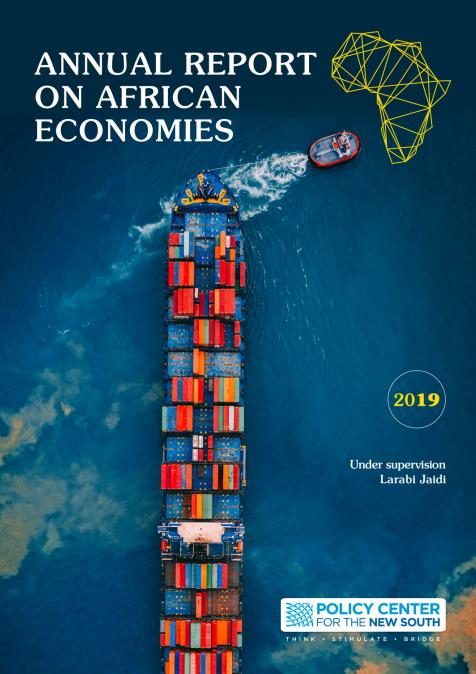 October 2, 2019Africa is an economic region which holds great potential despite the risks associated with its development. Indeed, many experts agree that Africa is emerging as the new frontier for global growth. Boosted by its abundant natural resources, a young and vibrant population, strong urbanization, more stable macroeconomic conditions, more stringent economic policies, a constantly improving business climate and improving governance, Africa is on track for a structural transformation that ...
 -
 September 24, 2019En pleine transition ordonnée de son régime de change, sous l'autorité bienveillante du Fonds monétaire international (FMI), le Royaume du Maroc est un exemple très concret des avantages et des inconvénients des deux régimes de change dominants ces dernières décennies/change fixe et change flottant /. L’objet de cette note est de rappeler, tout d'abord, les fondamentaux économiques des deux systèmes et leur environnement historique (I). Ensuite, à la lumière de ces fondamentaux, pré ...
 -
 July 19, 2019Les recherches sur les sources de croissance de long terme des économies montrent qu’elle dépend plus de la croissance de la productivité que de la croissance des volumes des inputs accumulés. Au Maroc, les résultats disponibles fournissent des évidences sur le rythme très lent de la croissance de la productivité mesurée par la PTF ou le rapport production-travail. Des simulations montrent que seule une augmentation de la PTF permettra d’atteindre une croissance suffisamment élevée. ...
 -
 July 17, 2019Despite considerable effort from the South African government to drive innovation, the investments to date have not reaped the fruits expected by both government and the private sector. I believe that if we are to realise ‘the new dawn’ in economic growth and transformation the state needs to reorganise itself to be an ‘entrepreneurial state’. This paper will proceed firstly by outlining current government action to support innovation, followed by a summary of the overarching recomm ...
 -
 July 15, 2019Senior fellow, Larabi Jaidi, nous fait part de sa perception du projet de la Zone de Libre-Echange du Continent Africain. A ce titre, il répond à un certain nombre de question, dont : Dans quelle mesure la ZLECAF pourrait-elle booster le commerce intra-africain et faire augmenter le PIB...

