AD 2021: The Future of Europe in the Post-Covid Geopolitical Arena

November 30, 2021

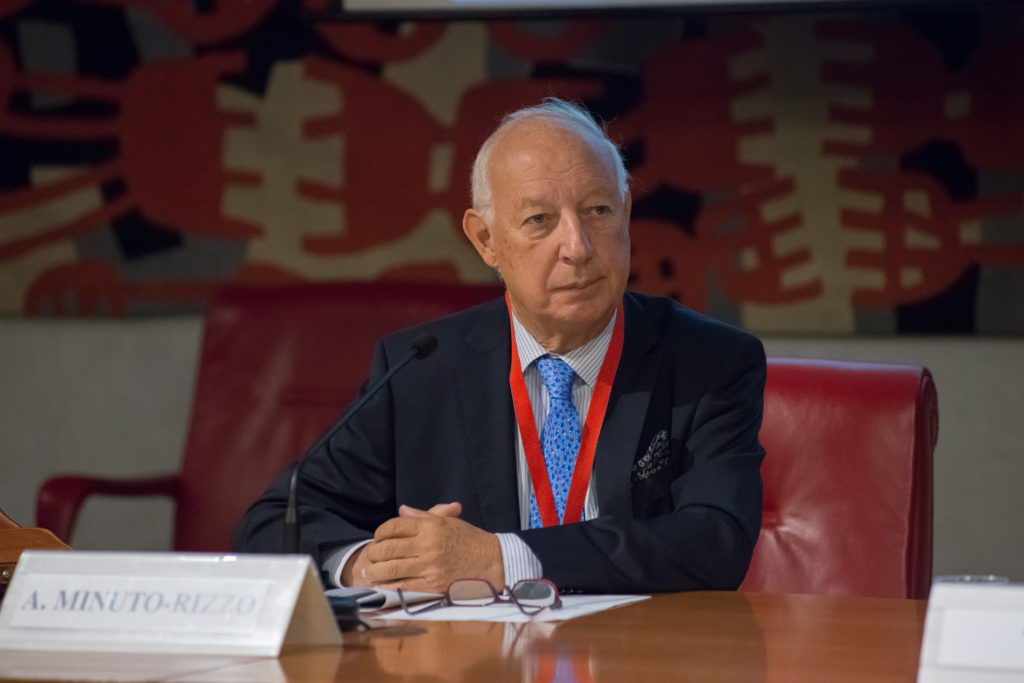
When assuming office in 2019, Ursula von der Leyen vowed to be the leader of a “geopolitical commission”, hence apparently marking a turn in the way the European Union (EU) was presenting itself to the rest of the world. Indeed, putting geopolitics at the center of the European Commission’s agenda implied endorsing the role of global player in an international arena marked by intensified competition between rival power centers. The von der Leyen commission thus affirmed its desire to see the EU act both as an innovative and competitive economic actor with a particular emphasis on the green and digital “twin transformations” and as a more active and responsible geopolitical agent willing to engage with the global South, particularly in the Mediterranean and Africa, and supporting a rules-based multinational order to tackle common issues of global relevance. These ambitions were regularly stated in the communications and strategies produced by the Commission and the European External Action Service (EEAS). About two years after covid-19 first erupted, this session will aim at evaluating the von der Leyen’s performance as a “geopolitical commission”. Has Europe achieved to be rebalance its relations with China, for instance in terms of better protecting its companies’ intellectual property and ensuring better access to Chinese public markets? How probable is it that Europe will manage to enforce common industrial, innovation and digital strategies to reinforce its position worldwide in these matters? How likely is it that the EU can achieve the “strategic autonomy” that it has been seeking these past few years, notably in view of the United States’ and NATO’s preeminence in strategic and military issues? In light of the divisions pitting EU Member States against each other, has the EU actually managed to be perceived as a serious geopolitical actor by other power centers (in Africa, Asia and the Middle East)? Can the current Commission succeed where the previous ones seem to have largely failed in the Neighborhood and Africa? How successful has the Commission been as a promoter of multilateralism worldwide? Moderator: Ivan Martin, Senior Fellow, Policy Center for the New South Speakers: - Thomas Gomart, Director, French Institute of International Relations (Ifri), France - Alessandro Minuto-Rizzo, President, NATO Defense College Foundation, Italy


Speakers
Iván Martín
Senior Fellow
Iván Martín is Senior Fellow at the Policy Center for the New South, Adjunct Professor at the Faculty of Governance, Economic and Social Sciences of the Mohammed VI Polytechnic University (UM6P), and Associate Researcher at the Interdisciplinary Research Group on Immigration (GRITIM) at the Universitat Pompeu Fabra in Barcelona. Between 2013 and 2016 he was Part-time Professor at the Migration Policy Centre (MPC) of the European University Institute in Florence, as well as member of the Expert Group on Economic Migration of the European Commission and Key Expert on Labour Migration providing External Technical Expertise on Migration to DG DEVCO of the European Commission (ETEM V Project). Formerly, he has been Senior Research Fellow at the Barcelona Centre for International A ...
Thomas Gomart
Directeur de l’Institut Français des Relations Internationales
Directeur de l’Institut Français des Relations Internationales, Thomas Gomart était aussi Marie Curie Fellow au Department of War Studies du King’s College (2003-2004), Visiting Fellow à l’Institut d’études de sécurité de l’Union européenne (2003), chercheur associé à l’Ifri (2002-2003), Lavoisier Fellow à l’Institut d’Etat des relations internationales de Moscou (2001). Thomas Gomart est docteur en histoire des relations internationales (Paris I Panthéon-Sorbonne) et diplômé EMBA (HEC Paris). Il a été directeur du développement stratégique de l'Ifri de septembre 2010 à mars 2015 et a créé le Centre Russie/NEI dont il a été le directeur de 2004 à 2013. ...

RELATED CONTENT

  • Authors
    February 12, 2026
    Divergent regulatory regimes for data, driven by different motivations, ranging from privacy protection in the European Union to information control in China, could eventually produce distinctively different, and possibly contradictory, bodies of data. Artificial-intelligence models trained on those datasets could produce differing and possibly even conflicting outputs. To the extent that AI outputs start to shape human perception and to influence decisions, in governments and ...
  • January 30, 2026
    En 2019, Donald Trump a proposé d’acheter le Groenland, déclenchant un refus catégorique du Danemark et une tension diplomatique transatlantique. Cette initiative reflétait l’intérêt stratégique et économique des États-Unis pour l’Arctique et ses ressources. L’épisode a mis en lumière l...
  • Authors
    December 18, 2025
    The return of President Donald Trump to the White House at the start of 2025 was expected to signal an American retreat from international engagement, especially in regions of traditional security interest, such as southern Europe, North Africa, and the Middle East. To the surprise of many observers around the Mediterranean, and perhaps to the dismay of some in the Trump administration’s ideological orbit, this has not happened. If anything, the second half of 2025 has seen a high d ...
  • Authors
    December 16, 2025
    An unusual gesture indeed—the dictator, more often than not a recluse, withdrawn behind his fortress and protected by 1.2 million armed soldiers, finally admitted what had long been seen on the battlefield in Ukraine and by spy satellites far above. North Korean soldiers—possibly 12,000 of them—are fighting on front lines alongside Russian troops, and they are falling or being wounded; some 4,000 men so far, by current estimates.  ...
  • October 23, 2025
    Depuis plus de trente ans, les relations entre le Maroc et l’Union européenne (UE) se caractérisent par un équilibre entre pragmatisme politique, ouverture économique et convergence stratégique. Le processus de Barcelone de 1995 a marqué le début d’une coopération euro-méditerranéenne renforcée, consolidée par l’Accord du Statut avancé en 2008 et le Partenariat euro-marocain de prospérité partagée, faisant de l’UE le principal partenaire économique du Royaume. Dans un contexte régio ...
  • Authors
    Niagalé Bagayoko
    Eugène Berg
    Christophe Chabert
    Thierry Garcin
    Alain Oudot de Dainville
    Florent Parmentier
    Anne Sophie Raujol
    Hassan Saoudi
    October 23, 2025
    Prochainement disponible sur Livremoi & Amazon. Les Dialogues Stratégiques, fruit d'une collaboration entre le HEC Center for Geopolitics et le Policy Center for the New South, constituent une plateforme d'échanges biannuelle dédiée à l'analyse des grandes tendances mondiales et des problématiques régionalesqui lient l'Europe et l'Afrique. Réunissant praticiens, décideurs, universitaires et représentants desmédias, cet espace de réflexion permet de décoder les transfor ...
  • October 23, 2025
    The UN’s funding crisis, fueled by unpaid contributions and expanding mandates, is worsening as U.S. disengagement strains peacekeeping and development efforts, particularly in Africa. This shift also strengthens rivals like China and Russia and raises deeper questions about the legitim...