AD 2021: The Future of Europe in the Post-Covid Geopolitical Arena

November 30, 2021

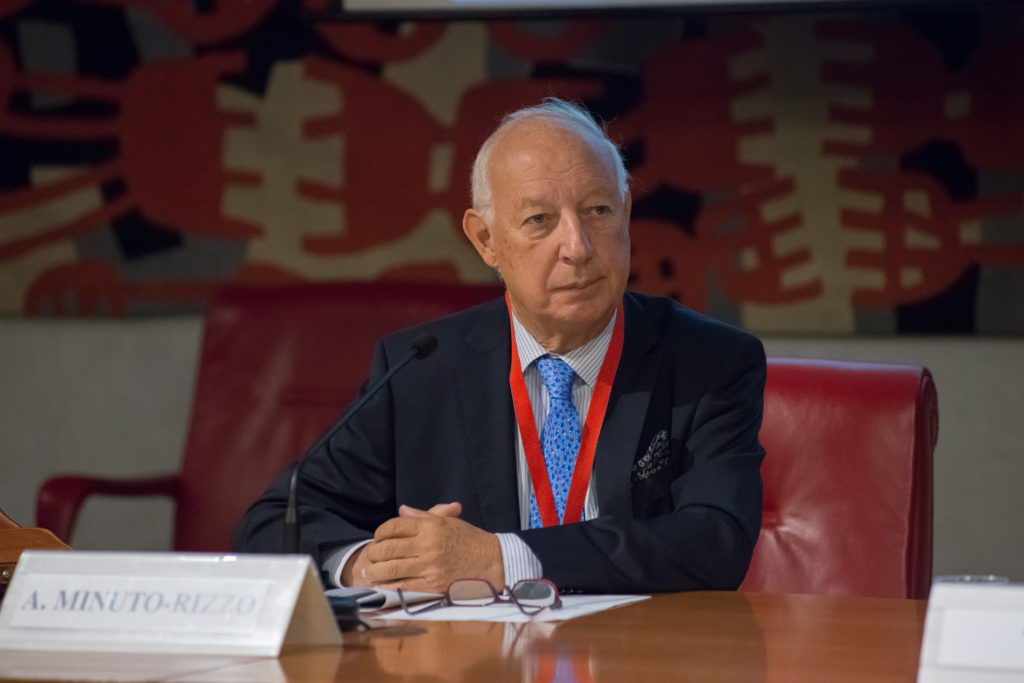
When assuming office in 2019, Ursula von der Leyen vowed to be the leader of a “geopolitical commission”, hence apparently marking a turn in the way the European Union (EU) was presenting itself to the rest of the world. Indeed, putting geopolitics at the center of the European Commission’s agenda implied endorsing the role of global player in an international arena marked by intensified competition between rival power centers. The von der Leyen commission thus affirmed its desire to see the EU act both as an innovative and competitive economic actor with a particular emphasis on the green and digital “twin transformations” and as a more active and responsible geopolitical agent willing to engage with the global South, particularly in the Mediterranean and Africa, and supporting a rules-based multinational order to tackle common issues of global relevance. These ambitions were regularly stated in the communications and strategies produced by the Commission and the European External Action Service (EEAS). About two years after covid-19 first erupted, this session will aim at evaluating the von der Leyen’s performance as a “geopolitical commission”. Has Europe achieved to be rebalance its relations with China, for instance in terms of better protecting its companies’ intellectual property and ensuring better access to Chinese public markets? How probable is it that Europe will manage to enforce common industrial, innovation and digital strategies to reinforce its position worldwide in these matters? How likely is it that the EU can achieve the “strategic autonomy” that it has been seeking these past few years, notably in view of the United States’ and NATO’s preeminence in strategic and military issues? In light of the divisions pitting EU Member States against each other, has the EU actually managed to be perceived as a serious geopolitical actor by other power centers (in Africa, Asia and the Middle East)? Can the current Commission succeed where the previous ones seem to have largely failed in the Neighborhood and Africa? How successful has the Commission been as a promoter of multilateralism worldwide? Moderator: Ivan Martin, Senior Fellow, Policy Center for the New South Speakers: - Thomas Gomart, Director, French Institute of International Relations (Ifri), France - Alessandro Minuto-Rizzo, President, NATO Defense College Foundation, Italy


Speakers
Iván Martín
Senior Fellow
Iván Martín is Senior Fellow at the Policy Center for the New South, Adjunct Professor at the Faculty of Governance, Economic and Social Sciences of the Mohammed VI Polytechnic University (UM6P), and Associate Researcher at the Interdisciplinary Research Group on Immigration (GRITIM) at the Universitat Pompeu Fabra in Barcelona. Between 2013 and 2016 he was Part-time Professor at the Migration Policy Centre (MPC) of the European University Institute in Florence, as well as member of the Expert Group on Economic Migration of the European Commission and Key Expert on Labour Migration providing External Technical Expertise on Migration to DG DEVCO of the European Commission (ETEM V Project). Formerly, he has been Senior Research Fellow at the Barcelona Centre for International A ...
Thomas Gomart
Directeur de l’Institut Français des Relations Internationales
Directeur de l’Institut Français des Relations Internationales, Thomas Gomart était aussi Marie Curie Fellow au Department of War Studies du King’s College (2003-2004), Visiting Fellow à l’Institut d’études de sécurité de l’Union européenne (2003), chercheur associé à l’Ifri (2002-2003), Lavoisier Fellow à l’Institut d’Etat des relations internationales de Moscou (2001). Thomas Gomart est docteur en histoire des relations internationales (Paris I Panthéon-Sorbonne) et diplômé EMBA (HEC Paris). Il a été directeur du développement stratégique de l'Ifri de septembre 2010 à mars 2015 et a créé le Centre Russie/NEI dont il a été le directeur de 2004 à 2013. ...

RELATED CONTENT

  • Authors
    August 13, 2026
    The Resolution adopted by an overwhelming majority of elected European officials in Strasbourg on June 10, 2021, on "the violation of the UN Convention on the Rights of the Child and the exploitation of minors by the authorities in the migration crisis in Ceuta" (2021/2747/RSP), could not fail to leave its mark.Decoding the ResolutionThe Resolution shocked Moroccans to such an extent that it was quickly set aside at the time, as if there were a wish to forget it as fast as possible. ...
  • Authors
    August 13, 2026
    Cuando estalla una crisis, esta da lugar a la activación de reflejos para su gestión y la limitación de sus efectos. Comienzan, entonces, los análisis y las suposiciones sobre las disfunciones, los incumplimientos y las fallas que la ocasionaron. En algunos casos, la teoría de la conspiración se inmiscuye y las hipótesis buscan a los autores que provocaron la crisis, sus designios y sus objetivos. Sin embargo, la teoría de la gestión de crisis nos enseña que una crisis surge según ...
  • Authors
    August 12, 2026
    When a crisis erupts, it sets crisis-management reflexes in motion and prompts efforts to contain its effects. Analysts then begin looking for the malfunctions, oversights, and failures that caused it. In some cases, conspiracy theories creep in, and speculation turns to who engineered the crisis, and to what end. Crisis-management theory teaches us, however, that a crisis unfolds under conditions that favor its emergence. Crises take shape in an environment where latent vulnerabil ...
  • Authors
    August 11, 2026
    Lorsqu’une crise éclate, elle donne lieu à l’actionnement des réflexes pour sa gestion et la limitation de ses effets. Commencent, alors, les analyses et les suppositions sur les dysfonctionnements, les manquements et les défaillances ayant entrainé ladite crise. Dans certains cas, la théorie du complot s’ingère et les hypothèses cherchent les auteurs ayant provoqué la crise, leurs desseins et leurs buts.Cependant, la théorie de gestion des crises nous apprend qu’une crise inte ...
  • Authors
    August 6, 2026
    With America's 250th anniversary, there will be many analyses of the country's history from domestic and international perspectives. But the meaning of the American story should also be assessed in key regional settings, from Asia to Latin America, and in transatlantic terms. In this vein, it is worth exploring the U.S. engagement in and with the Mediterranean world, one of the first places of U.S. international activism, and a setting where diverse aspects of U.S. foreign policy ha ...
  • August 4, 2026
     Cet article a initialement été publié sur la plateforme confrontations.org Février 2022 : face à un nouveau contexte international, les Européens se rallient aux idées de souveraineté européenne et d’autonomie stratégique, brisant ainsi un tabou. Octobre 2025 : après cinquante ans de contentieux, le Conseil de sécurité ouvre la porte à une reconnaissance officielle de la souveraineté marocaine au Sahara occidental.Apparemment sans rapport, ces deux évènements sont reliés ...
  • Authors
    July 27, 2026
    Is Europe Prepared for War?European public opinion is moving from treating a major conflict as unthinkable to regarding it as a possibility for which governments must prepare. Attention is increasingly focused on Russian hybrid operations, vulnerabilities in critical infrastructure and the risk of fragmentation within NATO. European defence policy is consequently undergoing a rapid transition from post-Cold War complacency towards preparations for high-intensity warfare. Recent ...
  • Authors
    July 15, 2026
    We Are Watching You In April 2026, the UK Ministry of Defence revealed that it had tracked a covert Russian submarine operation apparently intended to map critical undersea cables and pipelines in the North Atlantic and the North Sea. A Russian attack submarine and two specialised intelligence vessels operated by the Main Directorate of Deep-Sea Research, commonly known as GUGI, were reportedly monitored for four weeks by the Royal Navy, including HMS St Albans and P-8 Poseidon ...
  • Authors
    July 13, 2026
    On “marinetraffic.com”, thousands of triangles fill a map of the world’s ports and oceans, each representing the active location and destination of a ship, reported the “McGill International Review” (April 16, 2026) adding,” suspicious tankers are plentiful among them.” One of these vessels, marked by a red triangle, appears, zoomed, as “Monique”, a twenty-year-old vessel, aka Tokyo, Phuket and Elysia. Its old age and the frequent name change, suspects reporter Julnar Alzuki, “indic ...