Publications /
Policy Brief
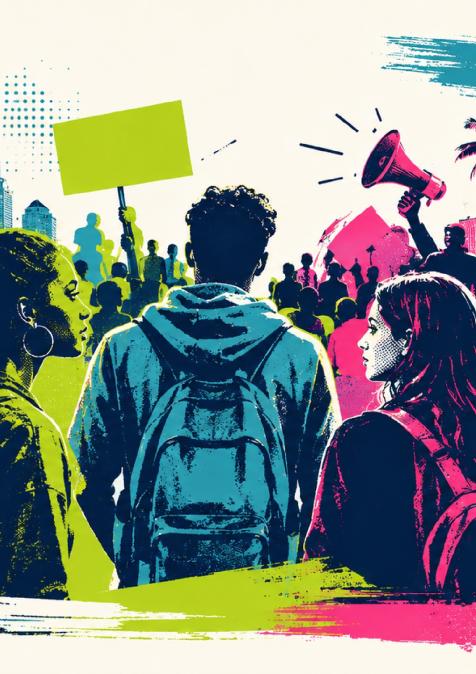
Amid overlapping health, geopolitical, economic, technological and climate crises, young people in the North and South are evolving in distinct environments that are progressively converging toward a shared set of concerns. Despite differing levels of development and historical trajectories, they face similar challenges: growing uncertainty about the future, difficulties entering the labor market, complex access to housing, fragile mental health, territorial inequalities and ecological anxiety. These developments are fueling a questioning of the traditional frameworks for social advancement and the promises of mobility associated with education, work and progress.
Through a comparative analysis of the dynamics observed in countries of the North and South, this Policy Brief highlights the emergence of a common generational experience rooted in a heightened aspiration for participation, recognition and the search for meaning. It also shows that public responses cannot be limited to sectoral policies but must be part of a broader reflection on renewing the social contract.
The paper therefore makes the case for more inclusive, territorially grounded and intergenerational development models capable of turning young people's aspirations into levers for cohesion, innovation and collective prosperity in a world undergoing profound change.
I. FROM GLOBAL CRISES TO THE EMERGENCE OF A COMMON GENERATIONAL EXPERIENCE
The world before us is no longer shaped by isolated crises, but by their overlap and interaction. Since the Covid-19 pandemic, economies, societies and institutions have been living under a regime of permanent instability in which health, inflationary, geopolitical, humanitarian and climate shocks reinforce one another. The World Bank (WB) points out that the reduction of global poverty has slowed sharply under the combined effect of weak growth, debt, conflict and extreme climate events; the International Monetary Fund (IMF), for its part, describes stable but insufficient global growth, with prospects below pre-crisis averages. Added to this are two shifts: technological acceleration, which is reshaping work, information and power, and the demographic shift, which is concentrating a massive demand for education, employment and representation.
In countries of the North, this instability is fueling a deep crisis of confidence. Growth remains weak, particularly in Europe, while recent inflation has eroded purchasing power and the middle classes' sense of material security. The Organisation for Economic Co-operation and Development (OECD) speaks of a middle class “under pressure,” confronted with rising housing costs, growing job insecurity, and a perceived decline in social status. The war in Ukraine has ended the illusion of lasting peace on the European continent and accelerated the questioning of the international order built after 1945. In this context, the rise of populism reflects less a political accident than a symptom: a demand for protection, sovereignty and meaning in the face of institutions seen as powerless.
In countries of the South, the challenge is different but closely linked. The urgency is not only to preserve existing gains, but to build, on a large scale, the conditions for development. Many countries are experiencing genuine development trajectories, but these remain marked by strong inequalities, persistent informality and a shortage of economic opportunities. The demographic dividend, often presented as a promise, can become a major source of social tension if educational, productive and institutional systems fail to create decent jobs quickly enough. The International Labour Organization (ILO) notes that more than one in five young people worldwide is not in employment, education or training. For these countries, growth ambitions are therefore inseparable from demands for justice, inclusion and social mobility.
It is at this intersection of global crises, Northern fragilities and Southern expectations that youth are positioned. The plural is essential: there is no single, homogeneous youth, but rather youths shaped by very different social, territorial and cultural conditions. They nonetheless share a common generational experience: growing up psychologically, socially and politically in a world defined by crisis. The so-called “Gen Z” mobilizations, from Kenya to Bangladesh, from Madagascar to Nepal, illustrate this diffuse unease, amplified and organized on social media. These spaces have become sites of expression, politicization and mobilization to action alike. The question is thus no longer whether young people will take part in change, but whether institutions will be able to recognize it, listen to it and offer it credible prospects. This article argues that, despite differing historical and economic trajectories, young people of the North and South are progressively converging toward a shared set of concerns related to uncertainty, participation and the search for meaning.
II. CONVERGING CONCERNS: NEW DIVIDES AMONG YOUNG PEOPLE
A shared sense of unease is felt among young people living in very different circumstances. In both the North and the South, the causes are never identical, but they converge around the same feeling: the traditional frameworks for advancement (school, work, place, housing, community, progress) no longer guarantee a clear path forward. In advanced economies, this unease takes the form of doubt about the stability once offered to previous generations. In emerging countries, it is expressed as frustration over opportunities that are insufficient, poorly distributed or too slow to materialize. The difference in context should not obscure how close these expectations actually are: to be usefully trained, to work with dignity, to build an independent life, to belong to a community, to take part in collective decision-making and to imagine themselves as part of a viable future. It is this convergence that gives youth such central political significance.
The mismatch between education and the labor market fuels a crisis of confidence in education itself. In countries of the North, many young people remain penalized by inadequate career guidance: they have limited knowledge of the range of training options, occupations and economic opportunities available. In countries of the South, the difficulty is more structural: a shortage of quality training, a limited range of professional opportunities, dependence on emigration to access certain paths of excellence, and weak links between education, digital technology and productive needs. Artificial intelligence is heightening this uncertainty. It promises new occupations, but it is destabilizing the benchmarks for which skills to acquire, which jobs are at risk and whether educational credentials will retain their value. When public discourse swings between technological optimism and social alarmism, many young people doubt institutions' ability to prepare them effectively.
The promise of social advancement through work looks increasingly less credible. In advanced economies, some young people are not only challenging the difficulty of finding a job; they are questioning the very meaning of a social contract in which work no longer guarantees security, housing, recognition, or a better future than that of their parents. This questioning fuels a critical view of business, of performance and of the social value of many occupations. In countries of the South, the frustration is of a different nature but leads to the same diagnosis: the fruits of growth and economic progress are not perceived as being shared equitably. Young people see infrastructure improving, cities transforming, and macroeconomic indicators sometimes getting better, without always seeing an improvement in their own job prospects and social mobility.
Territorial inequality is one of the most visible markers of this generation. Young people compare the resources available in major cities (universities, transport, public services, culture, professional networks, connectivity) with those of peripheral, rural or secondary areas, which are often less well-equipped and less attractive. This gap fuels a sense of geographic confinement: being born or growing up far from urban centers can still reduce access to opportunity. The paradox is striking: young people are connected to globalized imaginaries, yet they demand local responses to their needs. They do not simply want to move to the capital; they want development to be better distributed, for services to return (or finally arrive), and for small towns and regions to once again become viable places to live. This territorial unease reflects a demand for proximity, spatial equity and local dignity.
Housing crystallizes the difficulty young people face in becoming adults. In countries of the North, urban saturation, land scarcity, building regulations, the appeal of major cities and the financialization of real estate have made access to affordable housing harder. In countries of the South, rapid urbanization, irregular incomes, insufficient access to credit and high land costs produce forms of residential exclusion. In both cases, housing is not a sectoral issue; it shapes autonomy, household formation, career mobility, mental health and one's sense of dignity. When a middle-income young person cannot access decent housing without prolonged dependence on family or excessive trade-offs, the entire promise of individual emancipation is weakened.
The rise of loneliness highlights the paradox of hyperconnectivity. Young people have never had so many tools for exchanging, posting, following, commenting or joining virtual communities. Yet many describe a weakening of immediate ties: less structuring family relationships, a less present sense of neighborhood, more fragmented friendships, and more unstable professional communities. This loneliness is not merely the absence of contact; it points to the difficulty of finding stable, meaningful relationships on which to build trust in the world. It combines with high levels of anxiety, depression and psychological fatigue, but also with a positive shift: young people are more willing to name these struggles, refuse to see them trivialized, and are calling for mental health to be recognized as a public, educational and social issue rather than an individual weakness.
Ecological anxiety situates young people's unease within a planetary timeframe. Young people are not only worried about entering the workforce; they are questioning the very conditions of future life itself. Global warming, extreme weather events, droughts, rising sea levels, biodiversity loss and health risks fuel deep concern, reinforced by the sense that public responses remain inadequate. This concern is not uniform, but it spans continents because it touches on the very possibility of planning ahead, living somewhere, starting a family and believing in progress. For some young people, ecology is therefore no longer just one cause among others: it has become the overarching framework within which social justice, institutional responsibility and the legitimacy of development models are being redefined.
III. RESPONDING TO YOUTH: REBUILDING FRAMEWORKS OF TRUST, OPPORTUNITY AND PARTICIPATION IN THE SERVICE OF COLLECTIVE PROGRESS
Responding to young people's aspirations is neither a matter of a single sectoral policy nor an isolated measure. It requires a deeper transformation of the governance, development and participation frameworks on which our societies rest.
Rebuilding the social contract in an era of global transformation. At the international level, this could take the form of a Global Compact for Youth, updating the spirit of the Universal Declaration of Human Rights into a century marked by AI, climate change, migration, conflict and democratic vulnerabilities. The United Nations' adoption of the Pact for the Future, the Global Digital Compact and the Declaration on Future Generations shows that a common language already exists to protect the rights of present and future generations. But we need to go further: spelling out young people's rights to education, decent work, mental health, a viable environment, public participation and digital dignity. At the national level, this contract should become a compass for development strategies, so that every economic, technological or budgetary reform is assessed in light of its effects on future generations.
Turning the artificial intelligence boom into an engine of inclusive growth. Businesses and public authorities share a responsibility here: to make innovation a lever for productivity as well as for spreading opportunity. The IMF notes that generative artificial intelligence can improve productivity and public services, while also increasing the risk of labor market disruption and inequality if fiscal, social and education policies are not adapted accordingly. The priority, then, is not to slow innovation but to steer it. This means investing in skills, lifelong learning, safety nets, digital infrastructure and entrepreneurial ecosystems. It also means better aligning green innovation with competition: supporting low-carbon technologies without creating closed-off rents, encouraging new entrants, opening up access to useful data, and turning the ecological transition into a market of opportunity for young people.
Rethinking development through a horizontal, territorially grounded approach. In spatial terms, this means moving away from a model in which capitals and major cities concentrate jobs, services, universities, culture and the infrastructure of the future. In temporal terms, it means integrating the rights of future generations into decisions on investment, debt, planning and ecological transition. This horizontal approach calls for more distributed governance. The World Bank notes that decentralization can strengthen citizens' voice, bring decisions closer to local needs and improve resource allocation, provided that local authorities have the skills, resources and accountability mechanisms to do so. Transferring development responsibilities to local communities and regions should therefore not be a mere administrative gesture; it must become a demanding pact of trust between the state, local authorities, citizens, businesses and local youth.
Structuring youth participation through new frameworks of engagement. Political parties, unions, associations, universities, local authorities and international organizations must accept that engagement no longer takes only the forms inherited from the twentieth century. Recent work by Chekrouni (2026) shows that young people now favor more fluid, hybrid forms of engagement, combining digital spaces, citizen action and collective mobilization, which calls for a reinvention of traditional frameworks for political and social participation. Young people inform themselves, debate, create, protest and mobilize in hybrid spaces that are both physical and digital. The United Nations Department of Economic and Social Affairs (UN DESA) points out that digital technologies can strengthen young people's participation in public decision-making and service design, provided inclusion, trust, transparency and the protection of rights are guaranteed. New, more flexible mechanisms must therefore be devised: citizens' youth conventions, territorial participatory budgets, secure deliberative platforms, public-policy labs, youth councils with genuine mandates, civic engagement programs, and alliances between institutions and content creators. Participation must no longer be merely consultative; it must become genuinely co-productive.
Renewing solidarity between generations. Tensions between generations are often described as a conflict of interests over housing, public debt, climate, pensions, jobs and wealth. Yet they can become a powerful lever for cohesion if public policy better organizes transmission, reciprocity and dialogue. Intergenerational solidarity can no longer be limited to family transfers or inherited social systems; it must now also include mentoring, shared housing, local cooperation, professional knowledge-transfer programs, civic third places and forms of mutual support across age groups. The goal is to preserve the values of solidarity, living together and mutual respect, while recognizing that young people are not simply asking for a place at the table: they are asking for a more balanced relationship with those who built today's institutions. This collective goodwill can become a democratic resource, especially when it is backed by concrete, visible and measurable policies.
Reaffirming the strategic role of culture in contemporary societies. Culture connects generations, territories and imaginations. It gives words, narratives and shape to what societies are going through. In times of polarization, culture can enliven democracy by creating spaces for debate, recognition and participation. It is also an economy: the United Nations Conference on Trade and Development (UNCTAD) notes that creative industries contribute to growth, employment, innovation and diversification, while the United Nations Educational, Scientific and Cultural Organization (UNESCO) highlights the role of cultural and creative industries in sustainable development. For young people, culture is at once a language, a possible career, a space for emancipation and a tool for social transformation. Supporting culture is not a luxury. It is an investment in social cohesion, collective imagination and resilience.
IV. YOUNG PEOPLE IN SEARCH OF A FUTURE, SOCIETIES IN SEARCH OF RENEWAL
Youth remains one of the main driving forces of contemporary societies. It is at once a force for social cohesion, innovation and progress. The forms of unease analyzed in this Policy Brief cannot, however, capture the full range of young people's expectations. Behind the global trends identified lie national, territorial and sometimes ultra-local realities that qualify both the diagnosis and the public responses to be built. This is why any reflection on youth must reconcile an understanding of global dynamics with attention to local contexts.
More strikingly still, one of the most remarkable features of today's youth lies in their ability to look beyond their own immediate interests. The mobilizations observed around climate, social justice, mental health and quality of life reflect a growing concern for the common good. After several decades marked by individualism and the pursuit of material success, a new aspiration seems to be emerging: that of a more assertive sense of collective responsibility.
Young people are not simply asking for more opportunities for themselves; they are questioning development models, social balances and the conditions for a shared future. Listening to them, involving them and trusting them is therefore not only a social necessity, it is also a strategic imperative. In a century marked by demographic, technological and ecological transitions, societies' ability to turn the energy of their youth into a collective project will be one of the key determinants of their prosperity and stability.
BIBLIOGRAPHY
World Bank (2025), Community and Local Development, World Bank, Washington, DC, https://www.worldbank.org/ext/en/topic/social-development/community-and-local-development.
World Bank (2025), Country Growth and Jobs Report, World Bank, Washington, DC, https://www.worldbank.org/en/publication/country-growth-and-jobs-report.
World Bank (2013), Decentralization, World Bank, Washington, DC, https://www.worldbank.org/en/topic/communitydrivendevelopment/brief/Decentralization.
World Bank (2025), Poverty, World Bank, Washington, DC, https://www.worldbank.org/ext/en/topic/poverty.
Chekrouni, N. (2026), Les élections de 2026 en Afrique : participation des jeunesses, gouvernance inclusive et enjeux générationnels, Policy Brief PB-31/26, Policy Center for the New South, Rabat, https://www.policycenter.ma/sites/default/files/2026-06/PB_31-26_Nouzha%20Chekrouni.pdf.
Dabla-Norris, E. and R. de Mooij (2024), “Fiscal Policy Can Help Broaden the Gains of AI to Humanity,” IMF Blog, International Monetary Fund, Washington, DC, June 17, 2024, https://www.imf.org/en/blogs/articles/2024/06/17/fiscal-policy-can-help-broaden-the-gains-of-ai-to-humanity.
IMF (2024), Broadening the Gains from Generative AI: The Role of Fiscal Policies, Staff Discussion Note SDN/2024/002, International Monetary Fund, Washington, DC, https://www.imf.org/-/media/files/publications/sdn/2024/english/sdnea2024002.pdf.
IMF (2024), World Economic Outlook: Policy Pivot, Rising Threats, International Monetary Fund, Washington, DC, https://www.imf.org/en/publications/weo/issues/2024/10/22/world-economic-outlook-october-2024.
IPCC (2022), Climate Change 2022: Impacts, Adaptation and Vulnerability – Chapter 7: Health, Wellbeing and the Changing Structure of Communities, Intergovernmental Panel on Climate Change, Geneva, https://www.ipcc.ch/report/ar6/wg2/chapter/chapter-7/.
IPCC (2023), Climate Change 2023: Synthesis Report, Intergovernmental Panel on Climate Change, Geneva, https://www.ipcc.ch/report/ar6/syr.
Hickman, C. et al. (2021), “Climate Anxiety in Children and Young People and Their Beliefs About Government Responses to Climate Change: A Global Survey,” The Lancet Planetary Health, vol. 5, no. 12, DOI: 10.1016/S2542-5196(21)00278-3.
OECD (2025), OECD Skills Outlook 2025, Organisation for Economic Co-operation and Development, Paris, https://www.oecd.org/en/publications/oecd-skills-outlook-2025_26163cd3-en.html.
OECD (2019), Under Pressure: The Squeezed Middle Class, Organisation for Economic Co-operation and Development, Paris, https://www.oecd.org/en/publications/under-pressure-the-squeezed-middle-class_689afed1-en.html.
ILO (2024), Global Employment Trends for Youth 2024: Decent Work, Brighter Futures, International Labour Organization, Geneva, https://www.ilo.org/publications/major-publications/global-employment-trends-youth-2024.
UN (2024), Pact for the Future, Global Digital Compact and Declaration on Future Generations, United Nations, New York, https://www.un.org/en/summit-of-the-future.
UN (2023), UN DESA Policy Brief No. 149: Promoting Youth Participation in Decision-Making and Public Service Delivery through Harnessing Digital Technologies, United Nations Department of Economic and Social Affairs, New York, https://desapublications.un.org/policy-briefs/un-desa-policy-brief-no-149-promoting-youth-participation-decision-making-and-public.
WHO (2025), Mental Health of Adolescents, World Health Organization, Geneva, https://www.who.int/news-room/fact-sheets/detail/adolescent-mental-health.
UNCTAD (2024), Creative Economy Outlook 2024, United Nations Conference on Trade and Development, Geneva, https://digitallibrary.un.org/record/4061670.
UNESCO (2025), Cultural and Creative Industries, United Nations Educational, Scientific and Cultural Organization, Paris, https://www.unesco.org/en/articles/cultural-and-creative-industries-cci.