The Health Sector in Morocco

April 13, 2026

This episode delves into Morocco’s healthcare system, tracing strides in maternal and child health, vaccination, and the quest for universal coverage. Morocco’s COVID-19 response, alongside initiatives like TADAMON and telemedicine, showcases innovation and resilience. Yet, gaps remain, especially between urban and rural areas, highlighting the ongoing challenge of ensuring equitable and sustainable healthcare for all.

Speakers
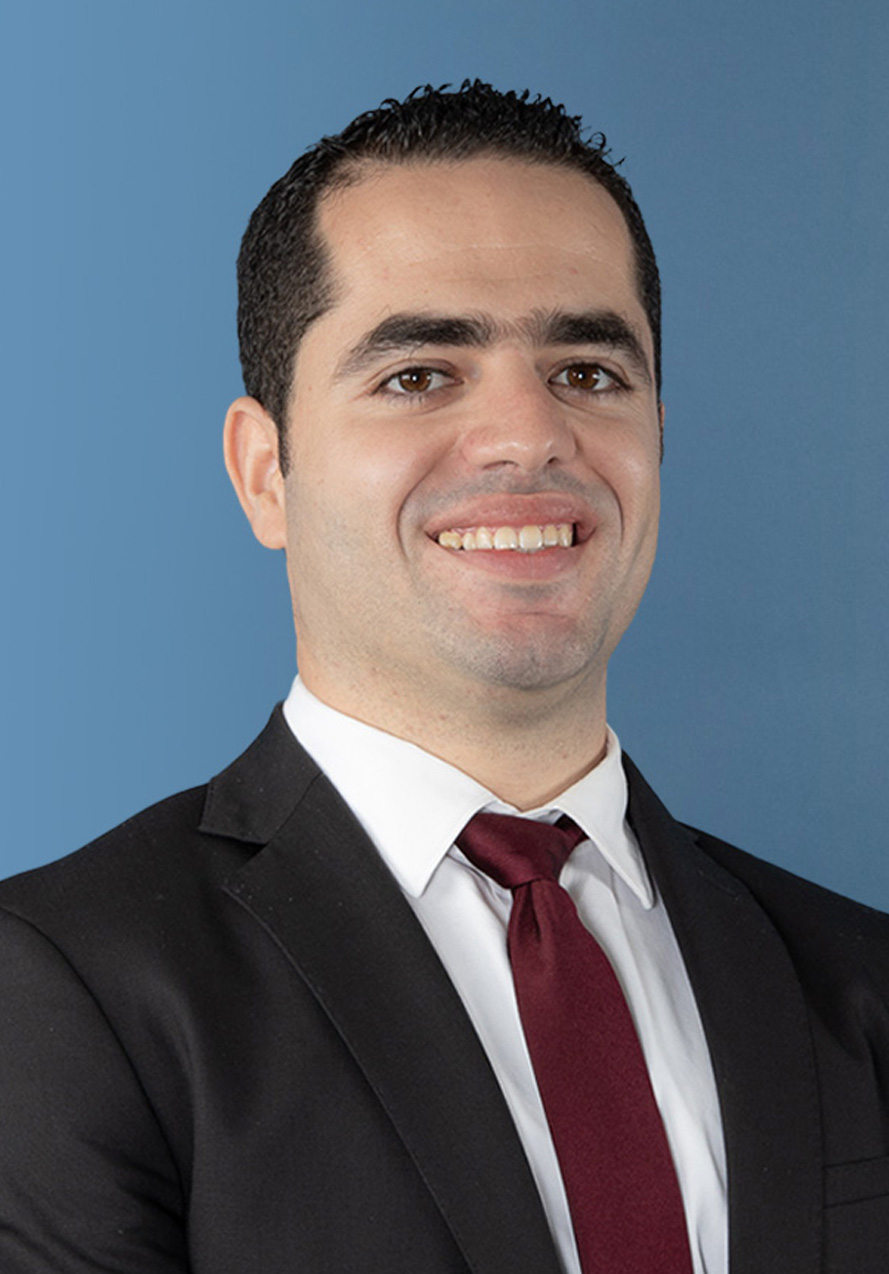
Hamza Saoudi
Senior Economist
Hamza Saoudi is a Senior Economist at the Policy Center for the New South (PCNS).At the PCNS, Hamza Saoudi conducts research on labor market dynamics, social protection systems, and inclusive growth, with a particular focus on Morocco and Africa. He is also interested in macroeconomic stabilization policies, international trade, and long-term economic development.He has contributed to PCNS projects and publications addressing informality, social protection, and inequality in developing economies.He also served as the project coordinator of the Oxford Handbook of the Moroccan Economy, published by Oxford University Press in 2026.Before joining the PCNS in 2017, Hamza Saoudi contributed to the development of quantitative models for bank credit risk management.Hamza Saoudi holds ...

Meriem Oudmane
Professor (HDR), National School of Business and Management, Casablanca
Meriem Oudmane is a Qualified Professor of Econometrics at the National School of Business and Management in Casablanca and an Affiliate Researcher at the Laboratory for Prospective Research in Economics and Management (LARPEG). She also serves as Regional Director at the Centre d’Etudes sur le Développement International et les Mouvements Economiques et Sociaux (CEDIMES), works as a consultant in public policy evaluation, and is a member of the Allied Health, Environment and Development Research Network (AHEAD). She has worked as a researcher in health economics at the Policy Center for the New South. Her research focuses on public health policies, social protection, labour markets, poverty, and inequalities. She holds a PhD in Economics from Hassan II University and an accre ...


RELATED CONTENT

  • From

    15
    6:00 pm July 2022
    L’apparition de de la COVID-19 a engendré une crise sanitaire mondiale, qui s’est rapidement transformé à d’autres crises bouleversant le vécu des humains de par la planète. En ce qui concerne les marchés mondiaux, notamment du travail, les incertitudes ont fortement impacté les comportements des agents. Aussi, les mises sous restrictions, totales ou partielles, des facteurs de production ont eu leur incidence sur l’activité globale -via différents canaux -, y compris celle des acteurs du marché du travail. À court terme, la pandémie est synonyme de fortes perturbations pour les citoyens et les marchés du travail. Celles-là concernent les revenues et les dépenses des particuliers comme elles portent sur l’activité des entreprises et donc les dynamiques de création d’emploi et ...
  • June 10, 2022
    The latest IMF projections indicate that global growth will be 4.4% in 2022 after 5.9% in 2021. These projections make us very optimistic for the future, but they certainly cannot heal th ...
  • May 11, 2022
    Cet atelier a servi de plateforme pour présenter les ouvrages suivants :  - L'édition 2022 du Rapport Annuel sur la Géopolitique de l'Afrique : Ce rapport est publié annuellement par le PCNS et a pour objet de relater, étudier et analyser les faits géopolitiques majeurs qui o...
  • April 25, 2022
    Retrouvez en exclusivité l’interview de Abdelhak Bassou, Senior Fellow au Policy Center for the New South, qui se livre à Helmut Sorge, Columnist au Policy Center for the New South, au sujet des multi-disparités présentes en Afrique. Abdelhak Bassou est l’auteur du Chapitre 5 du rapport...
  • Authors
    Abdelmounaim Fanidi
    April 19, 2022
    Suivant une analyse réaliste des relations internationales, des ‘facteurs objectifs’ ont été longtemps mis en avant pour expliquer le blocage de l’intégration régionale au Maghreb (e.g. le conflit du Sahara). Par une approche constructiviste, cet article a pour vocation d’analyser un facteur subjectif susceptible de freiner ou favoriser l’intégration maghrébine, en l’occurrence les identités nationales. Il se focalisera sur « les discours primordialistes ». Autrement dit, les discou ...
  • Authors
    Sous la direction de: Idriss El Abbassi
    Mariem Liouaeddine
    April 5, 2022
    Ce livre est l’aboutissement d’un appel à communications organisé conjointement par le Policy Center for the New South et le Laboratoire d’Economie appliquée de la Faculté des Sciences juridiques, économiques et sociales (FSJES) Rabat-Agdal. Il s’agit d’un nouveau maillon dans la collaboration entre les deux institutions depuis 2015 qui consacre la volonté et l’engagement du Policy Center for the New South d’entretenir des liens étroits avec le monde académique et d’offrir a ...
  • Authors
    March 11, 2022
    The pros and the cons of regional market integration are well exemplified by the experience of Uruguay, a small, open economy in MERCOSUR, which is a highly protectionist trade bloc, dominated by Argentina and Brazil. With access to such large markets, Uruguay did raise its growth rate during the first decade of MERCOSUR, the 1990s. However, market integration as implemented in MERCOSUR was also problematic in that Uruguay suffered from the high protectionism of Argentina in the for ...
  • Authors
    March 8, 2022
    The contrast between Argentina’s rich natural resource endowment and its poor economic performance has been the focus of much socio-political and economic analysis. When it created MERCOSUR with its immediate neighbors, Brazil, Uruguay, and Paraguay in 1991, it had access to a trading bloc with a combined GDP of US$ 419 trillion (2019), making it the 5th largest economy in the world. Joining the MERCOSUR was a break from its protectionist past. But it did not last. Argentina greatl ...