
Atlantic Currents Podcast : Abdelhak Bassou et l’Afrique des fossés

April 25, 2022

Retrouvez en exclusivité l’interview de Abdelhak Bassou, Senior Fellow au Policy Center for the New South, qui se livre à Helmut Sorge, Columnist au Policy Center for the New South, au sujet des multi-disparités présentes en Afrique. Abdelhak Bassou est l’auteur du Chapitre 5 du rapport annuel Atlantic Currents.

Le rapport Atlantic Currents est la publication phare de la conférence Atlantic Dialogues. La huitième édition de ce rapport se situe dans la perspective d’une sortie de crise sanitaire pleine d’enseignements et d’une relance économique marquée par plusieurs challenges d’ordre social, économique, financier et stratégique. Il tente de cerner les paradigmes produits par la pandémie en matière d'éducation, de santé, de commerce, du respect des droits de l’Homme, de lutte contre le changement climatique… Comme à l'accoutumée, l’Afrique occupe une place de choix dans les analyses et projections formulées par les dix-neuf auteurs qui ont contribué au Rapport, tant en ce qui concerne les dynamiques internes du Continent que les rapports qu’il entretient avec le reste de l’espace atlantique élargi.

A travers cette série d’interviews avec quelques auteurs du rapport, nous vous en disons un peu plus !
Speakers
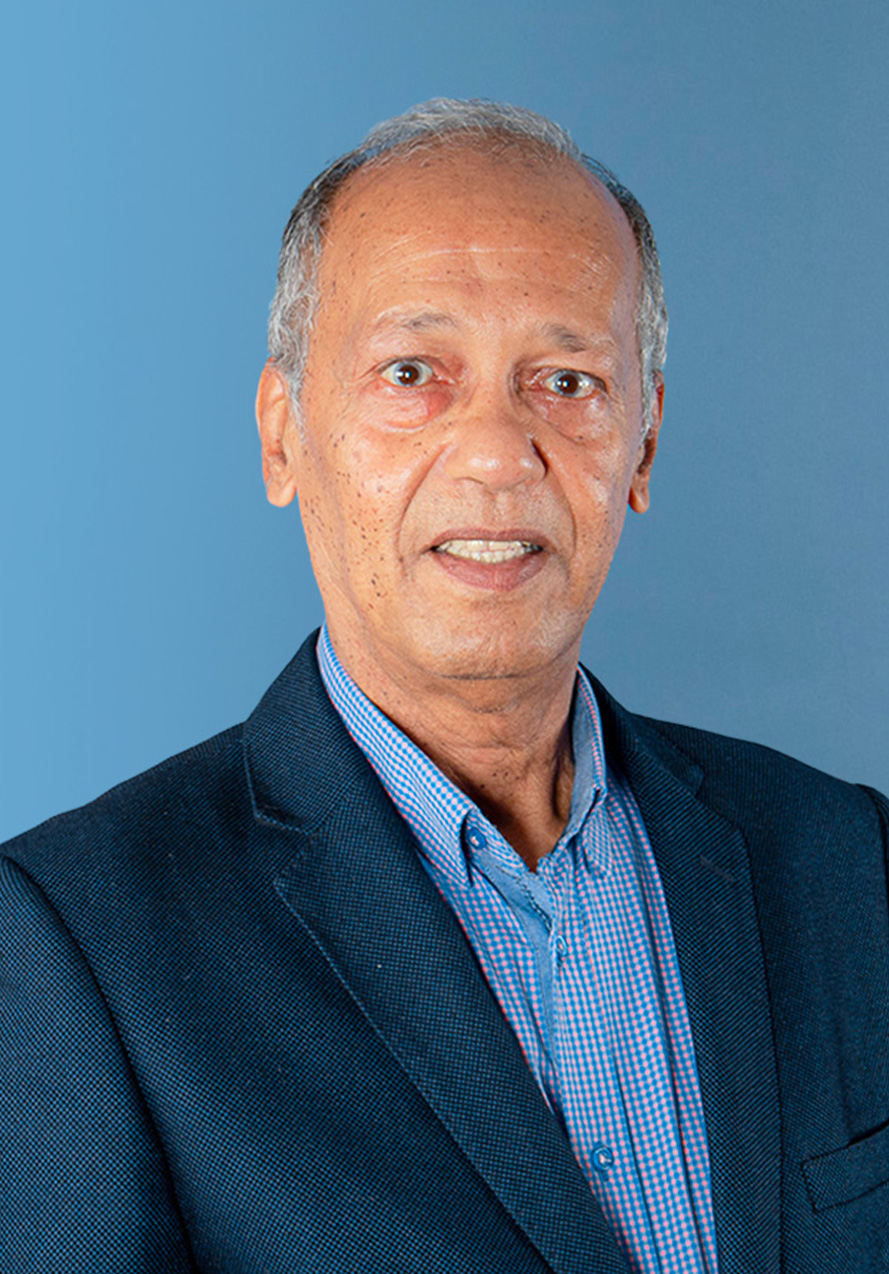
Abdelhak Bassou
Senior Fellow
Abdelhak Bassou is a Senior Fellow at the Policy Center for the New South and a non-resident senior fellow at the Atlantic Council’s Africa Center. He is also an Affiliate Professor at Mohammed VI Polytechnic University. Bassou has had an extensive career in Moroccan National Security, where he served in various capacities including as head of the border division from 1978 to 1993. He was the former director of the Royal Institute of Police in 1998 and served as Head of Regional Security (Errachidia 1999-2003, Sidi Kacem 2003-2005) and as Central Director of General Intelligence from 2006 to 2009.   He holds a master's degree in political science and international studies from the Faculty of Law, Economics, and Social Sciences in Rabat. His academic research delves into ...
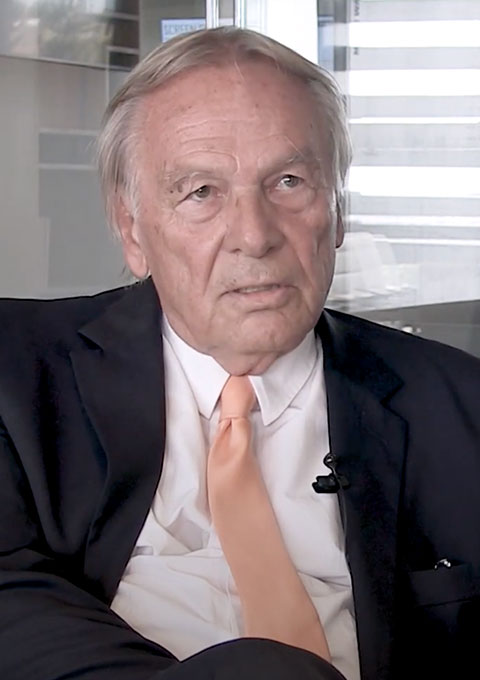
Helmut Sorge
Columnist
Helmut Sorge is a columnist at the Policy Center for the New South, where he publishes opinion pieces in the format of international press reviews of current events related to the Middle East and European affairs, and conducts interviews with high level policy makers and PCNS researchers. He is also a lecturer on journalism and the media. For over 40 years, Helmut Sorge served as a writer, former Foreign correspondent, Foreign editor, and Middle East expert for Germany's leading newsmagazine "Der Spiegel" to Washington, London, Paris and Los Angeles. He reported from Vietnam, the Middle East, wrote about safaris, nuclear accidents, visited prisoners on death row in the United States. The German weekly “Gala” summarized in 2011, when his latest book, a collection of biographies ...

RELATED CONTENT

  • October 15, 2026
    The Policy Center for the New South, in partnership with The Asian Network, is organizing a webinar titled “Emerging Powers and the Remaking of Global Order” to examine the growing role of emerging powers and the Global South at a time of profound transformation in the international sys...
  • October 14, 2026
    في ظل التوترات الجيوسياسية المتصاعدة، تتغير طرق التجارة العالمية وتتبدل معها موازين الممرات الاستراتيجية. تفتح هذه الحلقة من «حديث الثلاثاء» النقاش حول التقاء المسارات البحرية والبرية داخل هذه الممرات، والعوامل التي تتحكم في طبيعة السلع التي تعبرها. وتبحث كذلك في ما يمكن للمغرب أن يجنيه...
  • Authors
    Florent Parmentier
    October 12, 2026
    Cet article soutient que le Chief Geopolitical Officer (CGO) doit être repensé à partir de l’expérience des entreprises africaines. Dans un environnement multipolaire et fragmenté, leur principal défi n’est pas seulement la gestion des risques, mais la préservation de plusieurs options stratégiques simultanément selon une logique de hedging. Trois modèles de CGO sont à distinguer : l’intermédiation (Office chérifien des Phosphates (OCP), Tanger Med), l’intégration régionale (Ethiopi ...
  • Authors
    Paul Isbell
    October 9, 2026
    In the first seven Policy Briefs of this ongoing series of analysis on Pan-Atlanticism: The Atlantic Basin in a Multipolar-Transnational World, we developed the argument that the strategic significance of the Atlantic Basin is on the rise for a range of international actors (states, regions and non-state agents) and from distinct political or ideological perspectives. In addition, in the most recently published Policy Brief -- “The U.S. and the Current International Reconfiguration: ...
  • October 09, 2026
    Can Nigeria’s Dangote refinery help strengthen Africa’s energy security amid disruptions to global supply routes? This discussion considers how expanding local refining capacity can reduc ...
  • Authors
    Marie-Noelle Nwokolo
    October 6, 2026
    The author of this opinion, Marie-Noelle Nwokolo, is a 2024 alumna of the Atlantic Dialogues Emerging Leaders Program.In September 1978, delegations from 138 countries gathered in Buenos Aires, Argentina, around a powerful idea: developing countries had knowledge, experience and capabilities worth sharing with one another. The Buenos Aires Plan of Action gave institutional form to what we now call South-South Cooperation, part of a wider post-colonial effort by developing ...
  • September 25, 2026
    Dans cet épisode d’Africafé, Amadou Diop analyse les défis de sécurité maritime auxquels font face les pays de l’Afrique atlantique, de la piraterie aux trafics transfrontaliers. Il souligne la nécessité de mutualiser les moyens et de partager l’information entre États. L’échange aborde...
  • Authors
    Luladay Berhanu Mengistie
    Guillaume Gérout Suominen
    September 21, 2026
    The African Union Summit of February 2026 instructed the African Continental Free Trade Area (AfCFTA) Council of Ministers to negotiate a Protocol on Industrial Policy and Development. This work, handled without adequate preparation, is likely to reproduce the weaknesses it is meant to remedy. This paper is a conceptual mapping exercise, written to raise the preparatory questions before drafting begins, rather than to prescribe outcomes.It proceeds in five sections:1. It works towar ...





