Publications /
Opinion
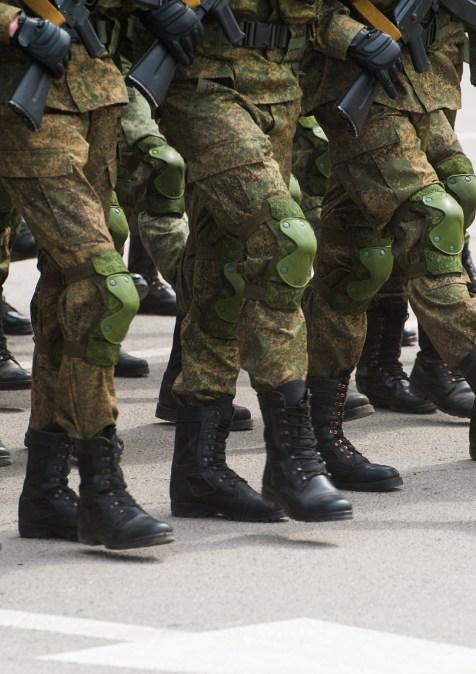
An unusual gesture indeed—the dictator, more often than not a recluse, withdrawn behind his fortress and protected by 1.2 million armed soldiers, finally admitted what had long been seen on the battlefield in Ukraine and by spy satellites far above. North Korean soldiers—possibly 12,000 of them—are fighting on front lines alongside Russian troops, and they are falling or being wounded; some 4,000 men so far, by current estimates.
There he stood, Kim Yong Un, in mid-December 2025, in front of nine chrysanthemum-covered coffins. He knelt, hugging uniformed soldiers who had been reserved the first rows at the “April 25 House of Culture” in Pyongyang, many of them sitting in wheelchairs. Countless photos of fallen soldiers of the 528th Engineering Regiment were placed on a memorial wall. The leader pinned medals to their frames, kissed their children—children who would never see the dictator in person again—admitting for the first time that reclusive North Korea is sacrificing soldiers as mercenaries, not battling in Asia but fighting a European war, and suffering “heart-rendering losses,” as Al Jazeera confirmed on December 12, 2025.
The soldiers the eternal leader honored had possibly fought in Russian uniforms, battling in the Kursk region—troops lacking real-world combat experience and facing unfamiliar terrain in a modern war theatre. Their leader publicly praised the “mass heroism” of his forces. The war in Ukraine is, for the North Korean Armed Forces, the first foreign conflict since the Korean War. And for the first time ever, the regime has openly lionized its fallen troops as “martyrs” and “heroes,” although they did not fall for the glory of their nation but in support of Moscow’s attempt to conquer Ukraine, once a Soviet Republic.
Kim Yong Un’s willingness to sacrifice his soldiers in exchange for material and military aid has not only bolstered Russia’s front lines but also delivered missiles, munitions, artillery—which Russia’s military-industrial complex was slow to provide in the volumes required for a war Moscow once imagined would end in a week or two, but which it is now fighting into its fourth year, with no end in sight.
Real-World Combat Experience
Russia’s armed forces have proven less effective in combat than experts expected, a by-product of poor training, logistics, and strategy. North Korea’s deployment of its troops—apparently ever more extensive—underscores the evolving role of foreign, state-sponsored “mercenaries” as critical assets in attritional warfare. The arrangement with Moscow allows Pyongyang to gain real-world combat experience against Western-backed forces, effectively turning the Ukrainian battlefield into a live-fire laboratory to upgrade its own aging military machine for future conflicts.
Andrew Yeo and Hanna Foreman of the Brookings Institution noted in a research paper (October 29, 2024) that “North Korea could gain valuable combat experience fighting alongside Russians and be able to evaluate firsthand how effective its military technology fairs against Western-manufactured arms and defenses.” Facing a potential shortage of conscripts, Brookings resumed, the use of North Korean troops will temporarily relieve domestic pressure to recruit more Russians this autumn. Deploying foreign forces to Ukraine also addresses the backlash Putin faced after sending fresh conscripts to the front lines.
Russia’s reliance on mercenaries in Ukraine, observed The Conversation as early as September 15, 2022, “points to the weakness of its military—and Putin’s strategy of deflecting blame.” For Pyongyang, this participation also functions as a lucrative military-industrial exchange, trading human lives for essential resources and advanced technology. Once opposed to North Korea’s nuclear program, Putin may now find it useful to help improve Pyongyang’s missile capabilities and nuclear-weapons delivery systems. Russia may also assist North Korea in upgrading its aging submarine fleet, while likely receiving additional economic benefits in return.
Beyond its dealings with the reclusive Asian dictator, Russia has aggressively expanded its recruitment of foreign nationals to bolster frontline forces, often relying on higher salaries to secure signatures. North Korea fighters are reportedly paid, on average, about USD 2,000 per month.
Cubans and Colombians to the Front
In 2025, Cuba is estimated to be, after North Korea, the largest source of manpower for Russian combat units. Allegedly, between 1,000 and 5,000 Cubans have been hired as mercenaries. Russia may also have recruited fighters from China, India, Nepal, Sri Lanka, Pakistan, Tajikistan, and Uzbekistan. India and Nepal have recently reported dozens of their citizens killed or missing after being duped into military service through human-trafficking networks.
Possibly the largest mercenary group hired by Ukraine comes from Colombia. Colombian mercenaries, reported by Middle East Eye (September 21, 2025), have become among the most sought-after commodities in modern, regular warfare. The country’s decade-long internal conflict against guerrillas and drug cartels has produced a steady supply of combat-hardened, field-ready veterans. The South American contingent—mainly composed of former professional soldiers—is estimated to make up roughly 40 percent of Ukraine’s foreign ground forces, alongside U.S. citizens, Brazilians, and Finnish fighters.
In the complex landscape of modern warfare, few figures are as controversial as mercenaries. While the “soldier of fortune” has existed for centuries—in ancient Persia, Cyrus the Younger hired the “Ten Thousand,” a large force of Greek mercenaries in 401 BC to attempt to seize the throne from his brother—international law has moved to condemn and criminalize the practice, creating a unique and precarious legal status for those who fight for private gain rather than national loyalty.
Under the Geneva Conventions, a mercenary cannot claim prisoner-of-war status once captured and, unlike regular soldiers, can be prosecuted by courts. Like many other countries, the Central African Republic, Sierra Leone, and regimes led by endangered leaders such as Mobuto, or units like the Rapid Support Forces in Sudan, have relied on mercenaries—often recruited and deployed by U.S. contractors, such as Blackwater, which hired mercenaries for operations in Iraq and Afghanistan.
Military might has increasingly become a commodity, stripped of moral or ethical constraints—focused solely on the power to intimidate and kill. This is evident in conflicts in Libya or Yemen, where, reportedly, the United Arab Emirates has deployed soldiers of fortune against the Houthis.
The Tenuous Status of the Russian Military
Like many countries, the U.S. and Russia have relied on private military companies—profit-driven organizations that provide military services during wartime—for years, according to The Conversation. Michael Christopher Faulkner, a scholar researching private military companies, observes that “these groups’ increasing visibility reveals the tenuous status of Russia’s military efforts as well as Moscow’s shaky domestic political situation.”
The marketization of force turns military power into a commodity that can be bought and sold to the highest bidder, forcing weak governments to hire mercenaries who can suppress rebels and other opposition—but swear loyalty not to their employer, only to their bank accounts. Americans were allegedly spotted in the ruins of Gaza, while Russians provoked terror through the Wagner Group, now operating as the Africa Corps. African Arguments (November 10, 2025) headlined: “Gold and Mercenaries: The Price of the Massacre in Sudan,” and Atalayar.com reported (October 20, 2025) that Sudanese citizens are enduring the horrors of foreign mercenaries.
The presence of foreign fighters has caused widespread panic among the Sudanese population, exacerbating their suffering amid a war that has ravaged the country since 2023. The deployment of Columbian guns-for-hire in Sudan was thrust into the spotlight, reports Middle East Eye (September 21, 2025), after Sudan lodged a formal complaint with the UN Security Council. The complaint accused the United Arab Emirates of financing and deploying Colombian mercenaries to fight in the conflict. In their letter to the UN, the Sudanese military stated that they had compiled “extensive evidence” of a “systematic campaign by the UAE to undermine peace and security and the sovereignty of Sudan through the recruitment, financing, and deployment of Columbian mercenaries.”
Over the last two decades, military contractors—aka mercenaries—glorified in bestsellers and films, have experienced remarkable growth, escalating from individual engagements and small private armies into a transnational industry. Their presence has left traces in Afghanistan, Sudan, Libya, and Ukraine. In Ukraine, North Koreans die without knowing why they sacrifice their lives or for whom—mirroring the experience of a British citizen who flew to Poland and then took a bus to reach Ukraine’s frontlines.
Possibly a romantic, he was willing to give his life as idealists did in the Spanish Civil War, almost a century ago, when Hemingway reported from the front, George Orwell was wounded, a famous poet assassinated, and Picasso produced one of his greatest paintings. A few days prior to Christmas, the UK mercenary—captured by Russian forces, or possibly by their North Korean comrades—was sentenced to 13 years of hard labor in a Russian camp, paying the price for his idealism or naivety.