Publications /
Opinion
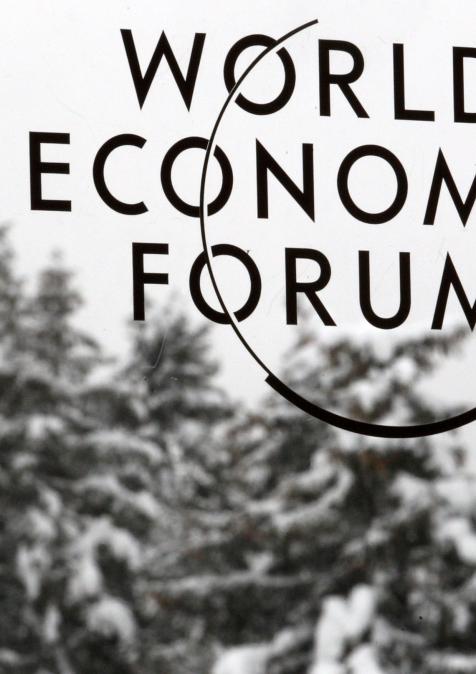
The annual World Economic Forum took place in Davos, Switzerland, from January 15-19. Every year for 54 years, a global business elite has traveled there, whether to interact with customers and suppliers, with intellectual leaders on broad topics or, in an informal environment, with the representatives of governments and multilateral authorities who attend.
Nothing is deliberated, of course, but over time the forum has established a reputation as a stage from which announcements are made and better cross-knowledge of the opinions of key people on hot topics can be obtained.
I personally had the opportunity to see this at the forum in January 2003, when I was a member of the Brazilian government delegation. At that moment, there was enormous and widespread interest in knowing what the first Lula government would be like. Rarely in my life have I seen such a large group of world-renowned economists sitting in a room to listen to the then-newly appointed Minister of Finance, Antônio Palocci, and President of the Central Bank, Henrique Meirelles, talk about their policy plans. Lula also received a huge spotlight at the event. The forum clearly served to satisfy this type of curiosity.
Xi Jinping, president of China, for example, knew how to use Davos well to defend globalization and free trade in 2017. China managed to climb the per-capita income ladder by taking advantage of globalization and, at that moment, it began to have to deal with the anti-Chinese attitude taken by the then Trump Administration. There could not be a better stage for delivering his message.
This year the official motto was ‘rebuilding trust’. It is no coincidence that geopolitical risks dominated discussions, from the wars in Gaza and Ukraine, to the possible consequences of Trump’s return to the White House after this year’s American elections. This was despite some kind of optimism that could have been generated by the favorable surprises in the global economy in 2023, after the predictions made at last year’s forum, when the dominant view—later contradicted—was that the global economy would go through strong deceleration. The need for more ‘trust’ and cooperation to mitigate global risks was the motto.
In January 2003, there was also the shadow of geopolitics. The possibility of an invasion of Iraq—which happened two months after the event—was the subject of discussions. The memory of September 11, 2001, was also fresh enough to appear in discussions. But the fact is that the predominance of the economic globalization agenda was then crystal clear.
Not this year. The 2024 Global Risks Report proposed by the Forum highlighted 10 main risks for the next 10 years. Five of these refer to environmental issues:
1- Extreme weather events;
2- Critical change in Earth systems;
3- Loss of biodiversity and ecosystem collapse;
4- Scarcity of natural resources; and
5- Pollution.
The report remarks that such environmental risks can exceed points of no return (‘tipping points’). In addition, the report highlights growing political polarization, technological risks with artificial intelligence evolving beyond the reach of regulatory controls, and new security risks accompanying the rise in geopolitical tensions. These themes predominated, at least judging by the open online sessions that I attended.
The Davos Forum is a giant in-person networking opportunity. The ebb during the pandemic hasn’t changed that. But something seems to have changed regarding what political scientist Samuel Huntington described in 2004 as a tribe, a global elite with “little need for national loyalty, [...] seeing national borders as obstacles that are fortunately disappearing and national governments as residues of the past. In other words, he described men – and – women of Davos as a tribe of “globalists”.
The Davos Forum is so identified with the expansion and strengthening of globalization in the decades in which it flourished, that it could not emerge unscathed from globalization’s partial retrenchment in recent times. Fears about deglobalization must have been predominant.
It is still paradoxical that, in addition to the smaller presence of globally significant public authorities compared to previous forums, the event had a speech by the new president of Argentina, Javier Milei, in which he warned the men and women of Davos about the risks of being captured by a worldview that “leads to socialism and, consequently, poverty”. Milei sounded how many far-right people have characterized … the ‘globalists’, like the people who attend the World Economic Forum at Davos. It must have been odd for Davos globalists to receive such a message.