Publications /
Policy Brief

Back
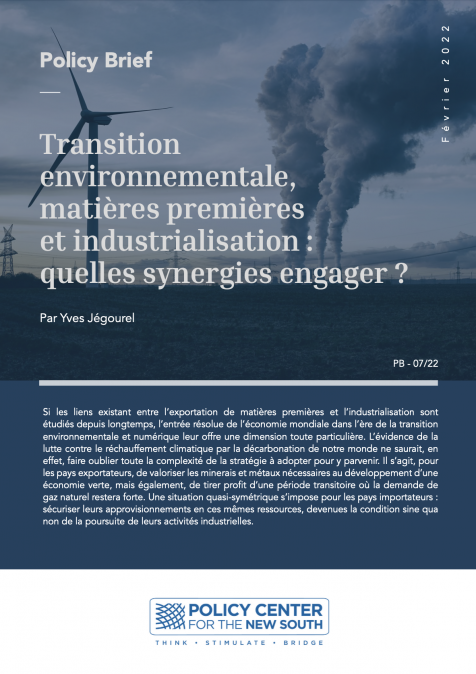
Transition environnementale, matières premières et industrialisation : quelles synergies engager ?
Authors
February 14, 2022

Si les liens existant entre l’exportation de matières premières et l’industrialisation sont étudiés depuis longtemps, l’entrée résolue de l’économie mondiale dans l’ère de la transition environnementale et numérique leur offre une dimension toute particulière. L’évidence de la lutte contre le réchauffement climatique par la décarbonation de notre monde ne saurait, en effet, faire oublier toute la complexité de la stratégie à adopter pour y parvenir. Il s’agit, pour les pays exportateurs, de valoriser les minerais et métaux nécessaires au développement d’une économie verte, mais également, de tirer profit d’une période transitoire où la demande de gaz naturel restera forte. Une situation quasi-symétrique s’impose pour les pays importateurs : sécuriser leurs approvisionnements en ces mêmes ressources, devenues la condition sine qua non de la poursuite de leurs activités industrielles.

RELATED CONTENT

  • Authors
    July 17, 2026
    The close relationship between energy and geopolitics is well established. The same holds true for several armed conflicts. In recent years, however, the conflict most closely intertwined with energy has been the 2026 Iran War, which began on February 28. A ceasefire has been in effect since April 8, and a Memorandum of Understanding (MoU) was signed by Iran and the United States on June 17. Nevertheless, as demonstrated by Iran's attacks on commercial vessels and recent U.S. strike ...
  • Authors
    July 17, 2026
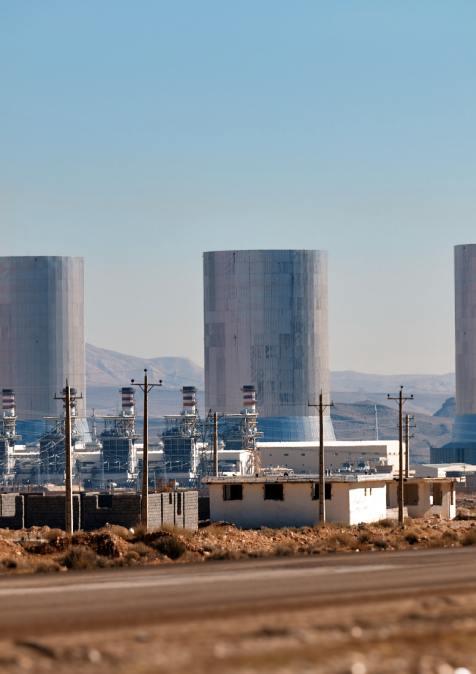
    Les relations, très étroites, entre l’énergie et la géopolitique sont bien connues. Cela vaut aussi pour plusieurs conflits armés. Mais, dans la période récente, le conflit le plus lié à l’énergie est la guerre d’Iran de 2026, qui a débuté le 28 février. Un cessez-le-feu est en vigueur depuis le 8 avril et un protocole d’accord a été signé le 17 juin par l’Iran et les États-Unis. Mais, comme le montrent les attaques de l’Iran contre des navires et les frappes américaines de ces dern ...
  • Authors
    July 2, 2026
    Africa is facing a massive electricity deficit that is impacting its economic and social development, and its ability to catch up with the rest of the world. It is imperative that the continent increase its electricity production to connect the 600 million people who are currently without access and to improve the quality of service for the millions who are suffering from frequent blackouts and load-shedding. Economic development in the 21st century will crucially depend on the digi ...
  • June 11, 2026
    The global energy system has entered a period of acute structural stress following the strikes by the United States and Israel on Iran in late February 2026, and the subsequent disruption of flows through the Strait of Hormuz. According to the International Energy Agency, the resulting shock marks the most severe disruption to global energy markets since the 1970s oil crises, with systemic characteristics comparable to the combined effects of those crises and the 2022 Russia-Ukraine ...
  • Authors
    June 8, 2026
    The energy shock caused by the war between the United States and Israel and Iran has highlighted the need for Africa to refine more of its own crude oil. Africa is a net hydrocarbon exporter, but remains stuck in the old colonial economic model: it mostly exports raw materials and imports refined products. Africa exports about 2.6 billion barrels of crude oil every year, and imports about 1.4 billion barrels of refined products. This is a problem for two reasons. First, Africa ...
  • April 9, 2026
    Cet entretien explore le Nexus Eau-Énergie-Alimentation comme un défi systémique majeur pour le Maroc, dans un contexte de rareté croissante des ressources et de pressions sur la souveraineté. Il met en lumière les interdépendances critiques entre ces trois secteurs et les limites d’app...
  • Authors
    January 20, 2026
    This policy brief examines what the 2025–2026 period reveals about the future of global energy risk and the energy transition. After the shocks of 2021–2023, 2025 brought broad price easing: oil and coal prices declined as supply growth outpaced demand, and the World Bank projects further declines in the global energy price index in 2026, offering short-term relief for energy-importing economies. The brief argues, however, that the macroeconomic relevance of energy entering 202 ...
  • November 25, 2025
    تستعرض هذه الحلقة جهود المغرب في تطوير قطاع الهيدروجين الأخضر، الذي يعد من القطاعات الواعدة لتحقيق التنمية المستدامة والطاقة النظيفة تتطرق الحلقة إلى الاستثمارات، المشاريع الاستراتيجية، السياسات الحكومية، والشراكات الدولية التي تدعم هذه المبادرة، إضافة إلى التحديات والفرص المتاحة أمام ا...