Publications /
Book / Report

Back
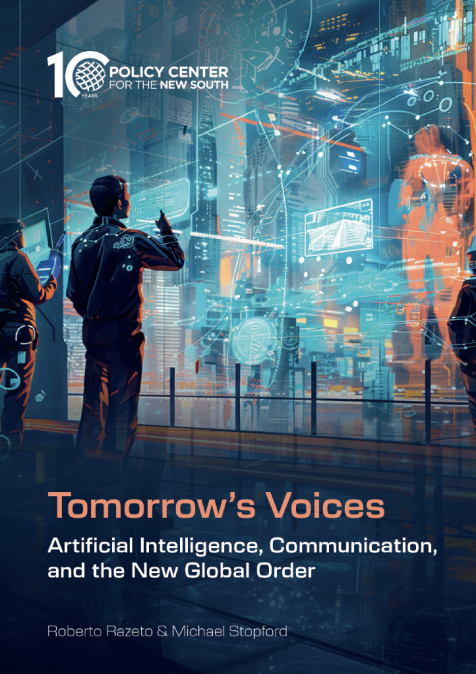
Tomorrow’s Voices: Artificial Intelligence, Communication, and the New Global Order
Authors
Roberto Razeto
Michael Stopford
February 10, 2025

Tomorrow’s Voices: Artificial Intelligence, Communication, and the New Global Order" by Roberto Razeto and Michael Stopford is an eye-opening exploration of how communication—and the rise of artificial intelligence—are reshaping the world. In an era defined by climate crises, pandemics, and spiralling geopolitical tensions, the book reveals how language, diplomacy, and AI-driven technology can bridge divides and drive global solutions. In fact today’s daunting global challenges can only be met through an effective use of communications.

From the power of storytelling to the ethical challenges of AI, Razeto and Stopford present real-world examples of communication's transformative impact. They show how AI, when used responsibly, can amplify voices, foster transparency, and combat misinformation. Yet, they also warn of the dangers: how unchecked technology might mislead, manipulate, or deepen divides.

Through vivid case studies, the authors illustrate the role of communication in fostering a more resilient, interconnected world. "Tomorrow’s Voices" invites readers to imagine a future where communication not only informs but inspires collective action, guided by ethics and innovation. This is more than a treatise—it’s a call to shape the digital age with clarity, empathy, and purpose.

  • October 23, 2025
    Depuis plus de trente ans, les relations entre le Maroc et l’Union européenne (UE) se caractérisent par un équilibre entre pragmatisme politique, ouverture économique et convergence stratégique. Le processus de Barcelone de 1995 a marqué le début d’une coopération euro-méditerranéenne renforcée, consolidée par l’Accord du Statut avancé en 2008 et le Partenariat euro-marocain de prospérité partagée, faisant de l’UE le principal partenaire économique du Royaume. Dans un contexte régio ...
  • October 23, 2025
    The UN’s funding crisis, fueled by unpaid contributions and expanding mandates, is worsening as U.S. disengagement strains peacekeeping and development efforts, particularly in Africa. This shift also strengthens rivals like China and Russia and raises deeper questions about the legitim...
  • October 23, 2025
    On 1 October, China marked the 76th anniversary of the founding of the People's Republic. Few nations in modern history have experienced such a remarkable transformation in so short a time. In just over seven decades, China has ascended from poverty and fragmentation to become a technological, economic, and diplomatic powerhouse of global significance. This trajectory—driven by strategic planning, institutional stability, and a steadfast belief in the state as a catalyst for develop ...
  • Authors
    October 14, 2025
    Almost a year after the December 2024 fall of former President Bashar al-Assad, Syrians on October 5 took part in their first parliamentary vote—a symbolic milestone for a nation emerging from years of war and authoritarian rule. Rather than a direct popular election, the process followed an indirect model: about 7,000 members of regional electoral colleges cast ballots to choose two-thirds of the 210 seats in parliament. The remaining one-third will be appointed directly by Preside ...
  • Authors
    October 14, 2025
    Cementing the Position of a Global PowerNo doubt the news was unwelcome for Pentagon planners in Washington, who had long pressured the Venezuelan government. In August, the United States placed a $50 million bounty on the Venezuelan leader’s arrest. By late September 2025, multiple Chinese vessels, including a naval hospital ship, were detected in the Caribbean. These ships appear to be part of a broader Chinese diplomatic and military strategy in Latin America, heightening tension ...
  • Authors
    Leonardo Párraga
    October 9, 2025
    The author of this opinion, Leonardo Párraga, is a 2016 alumnus of the Atlantic Dialogues Emerging Leaders Program. The next chapter of peacebuilding won’t be written only around the negotiating table or in United Nations chambers. Traditional peacebuilding processes have been characterized by exclusion of some of the key stakeholders that can make them more sustainable: women, young people, and local communities. This trend has been seen in recent peace agreements. For example ...
  • Authors
    Jorge Arbache
    October 9, 2025
    Conventional wisdom holds that the United States has undergone massive deindustrialization in recent decades, with the country's manufacturing sector supposedly withering as it lost ground to China. This narrative has fueled debates about industrial policy, economic nationalism, and the reshoring of manufacturing production. But what if this story is only partially true? What if, instead of disappearing, American industry simply changed its address?  ...
  • Authors
    October 7, 2025
    Africa's development depends on the mobilization of catalytic levers capable of accelerating growth momentum, with wider benefits for the African people. The digital, energy and demographic transitions are all major challenges, but at the same time they present the continent with new opportunities for transformation. In this context, Atlantic Africa appears to be a strategic and promising area, thanks to the richness and diversity of its natural resources, its geographical position ...
  • October 7, 2025
    Global economic growth has been more resilient than expected, as the artificial intelligence-led growth seems to be compensating for the negative impacts of trade conflicts. Overstretched asset values and slowing jobs growth may be signaling that the balanced crossing of those two paths...