Publications /
Policy Brief
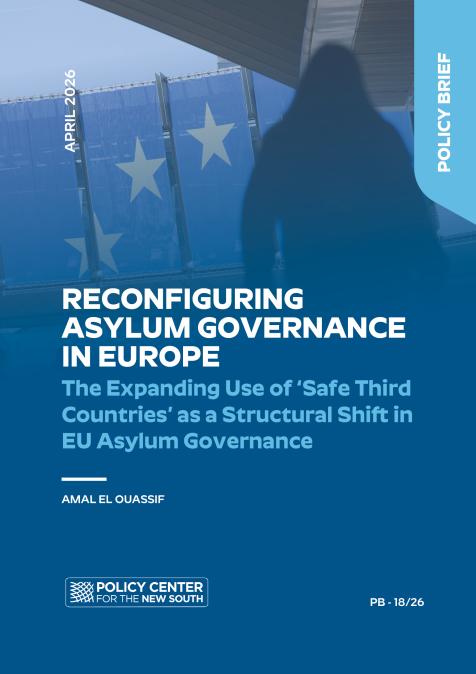
On February 10, 2026, the European Parliament endorsed an asylum reform that expands the use of the ‘safe third country’ concept and introduces a common European Union list of ‘safe countries of origin’. This reform represents more than a technical adjustment of asylum procedures, as it signals a structural reorientation of EU asylum governance toward faster filtering of claims and greater reliance on external actors.
The concept of a safe third country already exists in European asylum law. It allows EU countries to declare an asylum application inadmissible if the applicant could have sought protection in another country considered safe. However, the reform simplifies the conditions for applying this concept and strengthens its operational role. In parallel, the EU seeks to harmonize the identification of ‘safe countries of origin’, including Bangladesh, Colombia, Egypt, India, Morocco, Kosovo, and Tunisia. This list allows authorities to accelerate the processing of applications from nationals of these countries, based on the presumption that they do not face systematic persecution.
These changes respond to long-standing challenges within the Common European Asylum System. In a context in which EU countries continue to face an uneven distribution of asylum applications, there is persistent political pressure to demonstrate control over migration flows. In fact, the European Commission has emphasized repeatedly the need to increase efficiency and reduce procedural delays, particularly in its New Pact on Migration and Asylum adopted in 2020 (European Commission, 2020).
However, the latest reform also reflects a deeper transformation in the way the EU plans its policies on asylum and migration. European migration governance increasingly relies on externalization, meaning the transfer of responsibilities for migration control and asylum processing beyond EU territory. Over the past decade, the EU has developed a wide range of cooperation frameworks with third countries, including mobility partnerships, readmission agreements, and financial support instruments, in order to prevent irregular migration and strengthen border management in partner countries (Carrera et al, 2018).
In this sense, the 2026 reform embeds externalization as a structuring principle of asylum governance. As a matter of fact, by encouraging member states to formalize arrangements with third countries for the examination of asylum claims, the EU normalizes the idea that protection responsibilities can be geographically dislocated while remaining legally framed within the European system. This evolution transforms cooperation instruments, previously situated at the margins of asylum policy, into central components of its implementation.
The reform also broadens the legal grounds on which applications can be deemed inadmissible. The existence of potential protection outside the EU becomes a primary filter through which access to asylum procedures is assessed. This reconfiguration alters the sequence of decision-making, in the sense that authorities shift their focus toward determining whether an applicant should access the procedure within EU territory, before engaging with the substance of the claim itself.
This shift has significant implications. It redefines asylum as a status contingent on procedural eligibility criteria assessed prior to any substantive review. It also introduces a more abstract understanding of protection, grounded in the presumed availability of safety elsewhere, rather than in the actual conditions faced by the individual.
In practice, this dynamic may generate situations in which efficiency gains coexist with weakened protection outcomes. Accelerated screening and admissibility decisions reduce the time, resources, and legal support available to applicants, thereby making it harder for them to demonstrate individual vulnerabilities. With that procedural focus come consequences related to the ability of selected third countries to accommodate -within reasonable conditions- the demand of redirected asylum seekers, because the existence of a formal framework may suffice to justify transfer, regardless of the actual capacity of the receiving country to provide protection.
Ultimately, the reform reorganizes the logic of access to protection by placing admissibility and external alternatives at the center of asylum decision-making. It shifts the normative foundation of asylum toward a system in which the determining question becomes whether an individual qualifies to have their need examined within the European space, rather than whether protection is required.
In fact, this shift is occurring in a broader political context marked by convergence of member states on the need to control migration. While differences remain over burden-sharing and relocation mechanisms, there is growing alignment around the idea that access to asylum procedures within the EU should be limited and managed more strictly. The expansion of the safe third country concept reflects this convergence. However, this change raises fundamental questions about the balance between efficiency and protection. Taking into consideration that European asylum law rests on the principle that individuals have the right to seek protection, and to have their claims assessed on an individual basis, the presumptions of safety elsewhere may alter this balance in significant ways.
Operational Realities and Legal Frictions in an Expanded Framework
In addition to the challenges discussed above, the expansion of the safe third country concept introduces a series of operational complexities that challenge its implementation and raise important legal questions. While the reform aims to streamline procedures, its practical application depends on assumptions that may not hold under closer scrutiny.
The European list of ‘safe countries of origin’ reflects an assessment grounded in asylum recognition rates across EU countries, along with perceptions of institutional stability, and the broader geopolitical positioning. The countries currently includedBangladesh, Colombia, Egypt, India, Morocco, Kosovo, and Tunisia have been designated on the basis that they do not generally produce refugees in significant proportions within the EU. This classification enables the use of accelerated procedures and places the burden on applicants to demonstrate a well-founded fear of persecution or a risk of serious harm.
A key operational benchmark underpinning this approach is the recognition rate of asylum applications. When this rate remains below 20% at the EU level, authorities consider that the presumption of safety can apply. Conversely, when recognition rates exceed this threshold, or when conditions, such as indiscriminate violence in situations of armed conflict, or sanctions linked to violations of fundamental rights, emerge, this presumption can be challenged. Likewise, candidate countries for EU accession benefit from a similar assumption of safety under this framework, subject to these same corrective criteria. This approach reveals a structural tension. The designation of safety relies on aggregate indicators and political classifications, while the reality of protection needs remains inherently individual and context-specific. Consequently, the list operates as a tool of procedural prioritization, with statistical thresholds and geopolitical considerations shaping access to asylum procedures, sometimes at the expense of a more granular and individualized assessment of risk.
Along these lines, a central issue is the definition and assessment of ‘safety’. EU law requires that a country designated as safe must guarantee protection against persecution, ensure respect for the principle of non-refoulement, and provide access to a functioning asylum system (European Parliament and Council of the European Union, 2013). However, the designation of safety often reflects a combination of political judgment and selective evidence, rather than a comprehensive and dynamic evaluation. Human rights organizations have repeatedly documented gaps between formal commitments and actual practices in several countries included in European cooperation frameworks (Amnesty International, 2021; UNHCR, 2018).
Furthermore, the expansion of the concept raises questions about its operational logic. The revised framework significantly broadens the conditions under which the ‘safe third country’ concept can be applied, thereby expanding the scope of inadmissibility decisions. Under the new rules, EU member states may declare an asylum application inadmissible when a third country is deemed responsible for examining the claim, provided that one of several conditions is met. This may include the existence of a connection between the applicant and the third country, such as prior residence, the presence of family members, or linguistic and cultural links. It may also apply in situations in which the applicant has transited through a third country on their way to the EU, and could have requested protection in that third country. In addition, the existence of a bilateral, multilateral, or EU-level agreement enabling the admission of asylum seekers to a third country can serve as a sufficient basis for applying the concept, with the exception of unaccompanied minors. These agreements are required to include provisions to ensure that the third country examines asylum claims on their merits, and provides access to effective protection.
Last but not least, while this framework introduces a degree of formal coherence, its operational implications raise major concerns. The inclusion of transit as a sufficient criterion for responsibility significantly lowers the threshold for transferring applicants outside the EU. In practice, this could lead to situations in which individuals are redirected to countries with which they have only minimal and often incidental connections. The example discussed during the policy exchange illustrates this dynamic[1]. An asylum seeker from Colombia, who has transited through a third country on route to Europe may be considered eligible for transfer to that country, even in the absence of meaningful social, linguistic, or institutional ties. Such an application of the concept places procedural logic at the forefront, while the effectiveness and accessibility of protection in the receiving country remain uncertain. It also raises questions about an applicant’s ability to navigate an unfamiliar legal and social environment, thereby potentially undermining the substantive guarantees that international protection is intended to provide.
Implementation of the reform will also depend heavily on cooperation with third countries. Experience shows that such cooperation remains uneven and often difficult to sustain. Mobility partnerships and readmission agreements have encountered persistent resistance, particularly when they involve the return of third-country nationals, or the assumption of additional responsibilities by partner states. Countries may view these arrangements as imposing disproportionate burdens without sufficient incentives.
The Moroccan case can Serve as an Example to Illustrate These Dynamics
Morocco has long been considered a key partner of the EU in migration governance. The country benefits from advanced status within the EU framework, and participates in multiple cooperation initiatives, including mobility partnerships and financial programs. Despite this close relationship, negotiations on a comprehensive readmission agreement have not reached a conclusive outcome.
Moroccan authorities have consistently expressed reservations about the readmission of third-country nationals who transited Moroccan territory, on the basis that accepting such returns would entail significant logistical, financial, and political costs. It could also create internal pressures when migration management is already a sensitive issue. Therefore, Morocco has favored a more balanced approach that combines cooperation on border management with opportunities for legal mobility and development support (El Qadim, 2018; Cassarino, 2014).
This experience underscores a structural limitation of externalization strategies. The EU may seek to redistribute responsibilities, but partner countries retain agency. They may resist arrangements they perceive as asymmetrical.
A similar lesson emerges from the United Kingdom’s attempt to transfer asylum seekers to Rwanda. This initiative aimed to deter irregular migration by relocating asylum processing outside UK territory. However, it faced significant legal challenges and operational obstacles. The UK Supreme Court concluded that Rwanda could not be considered a safe third country under the proposed framework, citing concerns about the risk of refoulement and the adequacy of safeguards (UK Supreme Court, 2023). The policy also raised questions about cost-effectiveness, implementation capacity, and international credibility.
These experiences suggest that the success of the expanded safe third country concept cannot be taken for granted. Legal and operational constraints may limit its effectiveness and expose it to judicial scrutiny.
The compatibility of the reform with international law is also critical. The 1951 Geneva Convention established the principle of non-refoulement and guarantees the right of individuals to seek asylum. While the safe third country concept does not inherently violate these principles, its application must ensure that individuals have access to effective protection and fair procedures. If not carefully managed, the expansion of admissibility decisions and the acceleration of procedures may weaken these safeguards.
Accelerated procedures often reduce the time available for applicants to present their claims and to access legal assistance. The risk of errors in decision-making may also be increased. If individuals cannot effectively challenge the presumption of safety, the system may fail to meet the standards required under international law. This tension between procedural efficiency and substantive protection remains at the heart of the current reform.
Strategic Implications for Europe and Its Partners
The expansion of the safe third country concept reflects a broader reconfiguration of European asylum governance. It embodies a shift toward a model that prioritizes efficiency, control, and externalization. It also generates a series of strategic implications that extend beyond the immediate functioning of asylum systems.
One of the most significant concerns the redistribution of responsibilities between the EU and its partners. By facilitating the transfer of asylum seekers to third countries, the EU effectively extends its asylum system beyond its borders. However, this extension does not necessarily correspond to a proportional transfer of resources or decision-making authority. Partner countries may find themselves assuming greater responsibilities without commensurate support.
This dynamic raises questions about the sustainability of cooperation frameworks. If partner countries perceive externalization as a mechanism of burden shifting, rather than genuine partnership, their willingness to cooperate may decline. This could limit the effectiveness of the reform and lead to renewed fragmentation within the European asylum system.
The reform also has implications for the coherence of EU migration policy. The EU has always advanced its role as an international normative actor that seeks to balance efficiency with respect for fundamental rights. However, the expansion of admissibility procedures and reliance on presumptions of safety may create tensions between these objectives. If efficiency appears to take precedence over protection, the legitimacy of the system could be undermined, and legal challenges invited.
From a broader perspective, the reform may influence migration dynamics beyond Europe. Restrictions on access to asylum procedures within the EU may encourage migrants to seek alternative routes or destinations. This could shift pressures to other regions and create new patterns of mobility. It could also increase reliance on informal networks, with potential implications for safety and governance.
The discussion held during a February 2026 webinar on ‘Revisiting “Safe Country” Concepts in EU Asylum Policy: New Rules, Implications, and Policy Priorities’, highlighted the importance of addressing these challenges in a forward-looking manner. Efficiency should not be understood solely in administrative terms. It should also encompass the effectiveness of protection, the sustainability of partnerships, and the coherence of legal frameworks. A system that accelerates procedures, but generates legal disputes or operational bottlenecks, may not achieve its intended objectives.
The EU faces a strategic choice. It can continue to expand externalization mechanisms as a primary tool of migration governance. Alternatively, it can seek to refine its approach by strengthening safeguards, enhancing cooperation with partner countries, and reaffirming its commitment to international legal standards.
This recalibration would require a more balanced understanding of responsibility sharing. It would involve investing in the capacity of partner countries, supporting regional protection systems, and ensuring that cooperation frameworks reflect mutual interests. It would also require greater transparency in the designation of safe countries, and more robust mechanisms for monitoring and evaluation.
In this regard, the expansion of the safe third country concept marks a turning point. It reflects both the ambitions and the constraints of contemporary migration governance. Whether it succeeds will depend on whether European policymakers can navigate the tensions it creates, and align efficiency with the principles that underpin the international protection regime.
Conclusion
The early 2026 reform of the European asylum framework marks a decisive evolution in the governance of protection. By expanding the use of the safe third country concept and formalizing a common list of safe countries of origin, the EU is advancing toward a model that places procedural admissibility and external cooperation at the center of its asylum system. This change reflects a broader effort to reconcile administrative efficiency with political demands for greater control over migration flows.
However, this reorientation introduces structural tensions that cannot be overlooked. The increasing reliance on presumptions of safety and admissibility criteria will reshape access to protection in ways that may distance decision-making from the lived realities of asylum seekers. The prioritization of procedural filters over substantive examination creates a risk that individuals with legitimate protection needs may face barriers to full assessment of their claims. This tension becomes particularly visible in scenarios in which applicants may be redirected to third countries, with which they have only limited connections, raising concerns about the practical accessibility of protection.
The operational dimension of the reform also reveals significant constraints. Cooperation with third countries remains uneven and often contested, as illustrated by the persistent challenges surrounding readmission agreements, and the reluctance of partner countries to assume expanded responsibilities. Experiences such as Morocco’s cautious engagement with readmission frameworks, or the UK’s unsuccessful attempt to externalize asylum processing to Rwanda, underscore the limits of externalization strategies when they encounter legal, political, and institutional realities.
Meanwhile, the reform raises important questions about its compatibility with international legal standards. The principles enshrined in the 1951 Geneva Convention, particularly the obligation of non-refoulement and the right to seek asylum, require protection to be effective, accessible, and individualized. Any system that makes access to asylum conditional on procedural eligibility must ensure that these safeguards are preserved in practice, and not only in principle.
The sustainability of this new framework will depend on the EU’s ability to balance efficiency with responsibility. This requires a more nuanced approach to partnerships with third countries, moving beyond the logic of transfer, toward genuine cooperation based on shared interests and capacities. It also calls for greater transparency and rigor in the designation of safe countries, and for stronger mechanisms to ensure that individual rights are protected effectively.
References
Amnesty International. (2021). A perfect storm: The failure of European policies in the central Mediterranean. Amnesty International.
Amnesty International. (2023). EU asylum procedures and the concept of safe countries: Risks to human rights. Amnesty International.
Cassarino, J. P. (2014). Channelled policy transfers: EU-Tunisia mobility partnership and readmission agreements. European Journal of Migration and Law, 16(1), 97–123.
Carrera, S., Santos Vara, J., & Strik, T. (2018). Constitutionalising the external dimensions of EU migration policies. Edward Elgar Publishing.
Costello, C. (2016). The human rights of migrants and refugees in European law. Oxford University Press.
Costello, C., & Foster, M. (2022). (Some) refugees welcome: When is differentiating between refugees unlawful discrimination? International Journal of Refugee Law, 34(1), 1–27.
El Qadim, N. (2018). Governing migration in Morocco: The politics of migration and development. Palgrave Macmillan.
European Commission. (2020). Communication on a new pact on migration and asylum (COM(2020) 609 final). Brussels.
European Commission. (2023). Proposal for a regulation on asylum and migration management. Brussels.
European Council & European Parliament. (2013). Directive 2013/32/EU on common procedures for granting and withdrawing international protection (Asylum Procedures Directive).
European Parliament. (2026). Amendments to the Asylum Procedures Regulation regarding safe third countries and safe countries of origin (Adopted 10 February 2026).
Guild, E., Costello, C., Garlick, M., & Moreno-Lax, V. (2015). Enhancing the Common European Asylum System and alternatives to Dublin. CEPS.
Moreno-Lax, V. (2017). Accessing asylum in Europe: Extraterritorial border controls and refugee rights under EU law. Oxford University Press.
Panizzon, M. (2012). Readmission agreements of EU Member States: A case for EU subsidiarity or dualism? Refugee Survey Quarterly, 31(4), 101–133.
Peers, S. (2021). EU justice and home affairs law (4th ed.). Oxford University Press.
UNHCR. (2018). Legal considerations on the “safe third country” concept. United Nations High Commissioner for Refugees.
UNHCR. (2020). UNHCR recommendations for the European Commission’s New Pact on Migration and Asylum.
UNHCR. (2022). Guidance note on safe country concepts and international protection.
UK Supreme Court. (2023). AAA and others v Secretary of State for the Home Department [2023] UKSC 42.
Webinar on Revisiting “Safe Country” Concepts in EU Asylum Policy: New Rules, Implications, and Policy Priorities. FNF-PCNS.
[1] The author was a speaker on a webinar entitled ‘Revisiting “Safe Country” Concepts in EU Asylum Policy: New Rules, Implications, and Policy Priorities’, organized by the Migration Policy Group, during which a member of the European Parliament raised concerns about the potential cultural and linguistic barriers implied by the measure.