Publications /
Book / Report

Back
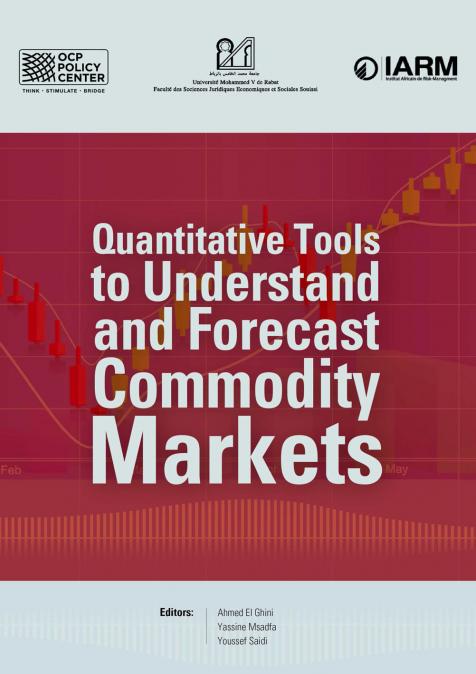
Quantitative Tools to Understand and Forecast Commodity Markets
Authors
Ahmed El Ghini
Yassine Msadfa
Youssef Saidi
August 2, 2017

Understanding the commodity markets development and dynamics is of first-order importance for the global economy, since they seem to impact the determination of a significant portion of incomes and welfare of both commodity-consuming and commodity-producing nations. Indeed, for many economies, especially developing countries, commodities remain an important source of export earnings, and commodity price volatility has a major impact on their overall macroeconomic performance. Consequently, the relevance of studying how we can improve and expand our knowledge of commodity markets (of crucial importance for both economists and decision makers) has spurred the publication of a vast range of literature, using a large variety of quantitative approaches. Those approaches have employed a broad spectrum of methodologies, from structural to non-structural models. Within this framework, an international workshop was held on September 28, 2016, at the OCP Policy Center in Rabat to discuss the wide development and application of commodity markets and industries models. The present Book, which represent a collaboration between The Faculty of Law, Economics and Social Sciences (Souissi) of Mohammed V University in Rabat, the African Institute of Risk-Management and OCP Policy Center, collects the revised and updated versions of the five papers that were presented at the workshop.

RELATED CONTENT

  • Authors
    October 2, 2026
    Le Cameroun dispose d'importants gisements de minerais, notamment de fer, de la bauxite, d'or, de cobalt, de nickel, de manganèse, de calcaire, de marbre, de diamants, entre autres. L'industrie minière du pays est restée dominée par l'exploitation artisanale et à petite échelle, en particulier l'orpaillage, tandis que les hydrocarbures ont représenté l'essentiel des recettes issues des industries extractives. Le pays cristallise ainsi le paradoxe africain : malgré l’ampleur et la di ...
  • Authors
    September 23, 2026
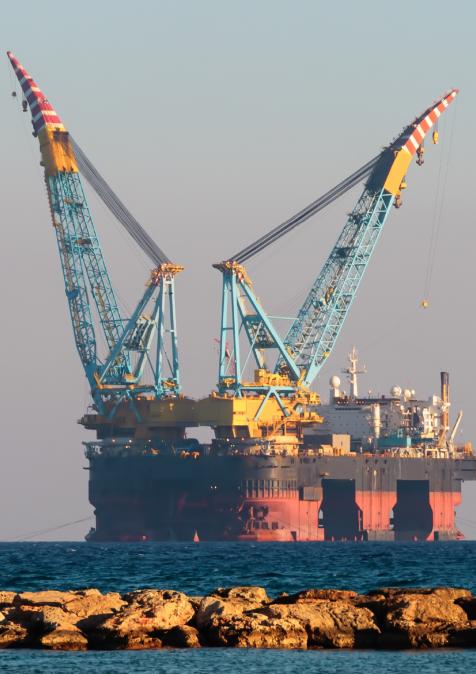
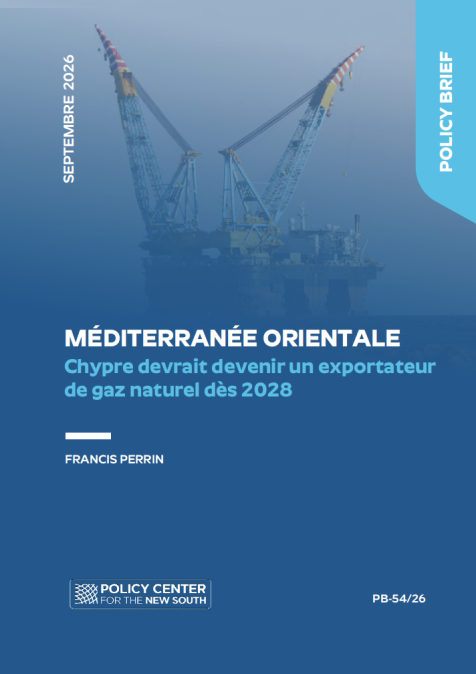
    Since around 2010, it has been known that the Eastern Mediterranean is a new gas province. Gas resources have indeed been discovered offshore four countries or territories: Egypt, Israel, Cyprus and Gaza. Two of them have become producers and exporters of natural gas, Egypt and Israel. Off the coast of Gaza, the Gaza Marine gas field has never been developed, and it is highly unlikely to be developed anytime soon given the very high tensions between the State of Israel and Hamas. By ...
  • Authors
    September 23, 2026
    Depuis 2010, environ, on sait que la Méditerranée orientale est une nouvelle province gazière. Des ressources gazières ont en effet été découvertes au large de quatre pays ou territoires, l’Égypte, Israël, Chypre et Gaza. Deux d’entre eux sont devenus producteurs et exportateurs de gaz naturel, l’Égypte et Israël. Au large de Gaza, le champ gazier de Gaza Marine n’a jamais été développé et il est très peu probable qu’il le soit prochainement en raison des très fortes tensions entre ...
  • Authors
    Pedro Henrique de Christo
    Travis Knoll
    September 18, 2026
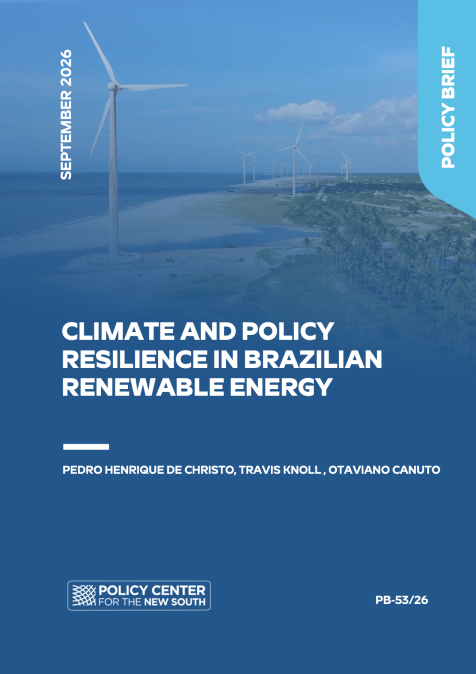
    The Brazilian context involving a clean-electricity base, a more balanced lobbying landscape, and mounting climate and social pressure, makes it more difficult for the kind of abrupt and unrestrained energy policy swing seen in Colombia. The trend in Brazil tends to be more economically viable for renewables. However, these structural conditions by themselves will not guarantee the success of the transition. Fruition will depend on whether policymakers use this window to prepare for ...
  • Authors
    September 14, 2026
    The outbreak of the war in Iran and the closure of the Strait of Hormuz have had major consequences for a large number of global commodity markets. While media attention has understandably focused on oil and natural gas, as well as on aluminum – owing to the strong dependence of that metal’s supply on energy prices – sulfur, like helium, ethylene, propylene, or urea, has also been caught up in the fallout of this conflict. Far from being a marginal commodity, it is essential to the ...
  • Authors
    September 14, 2026
    Le déclenchement de la Guerre en Iran et le blocage du détroit d’Ormuz ont eu des conséquences majeures sur un grand nombre de marchés mondiaux de matières premières. Si l’attention médiatique s’est logiquement portée sur le pétrole et le gaz naturel, ainsi que sur l’aluminium, en raison de la forte dépendance de l’offre de ce métal aux prix de l’énergie, le soufre, comme l’hélium, l’éthylène, le propylène ou l’urée, a également été pris dans les rets de ce conflit. Loin d’être une ...
  • Authors
    August 13, 2026
    The renewed instability in the Middle East has exposed Africa's continued vulnerability to external energy shocks. Shipping disruptions through the Strait of Hormuz, the maritime chokepoint through which roughly one-fifth of global oil and LNG supplies transit, have once again demonstrated that African fuel security remains highly dependent on geopolitical developments beyond the continent. While many African economies have traditionally relied on refined petroleum imports from Gulf ...
  • Authors
    Meryam Amarir
    August 13, 2026
    Recent crises in the Middle East, particularly attacks targeting commercial vessels in the Red Sea and tensions surrounding the Strait of Hormuz, have highlighted the vulnerability of the main strategic corridors of global trade. Rather than fundamentally disrupting the organization of trade flows, these crises are accelerating an ongoing transformation driven by the search for more resilient connectivity chains, the diversification of trade routes, and the development of logistics ...
  • Authors
    Meryam Amarir
    August 13, 2026
    Les crises récentes au Moyen-Orient, notamment les attaques ciblant les navires commerciaux en mer Rouge et les tensions autour du détroit d'Ormuz, ont mis en évidence la vulnérabilité des principaux corridors stratégiques du commerce mondial. Plus qu'un bouleversement de l'organisation des échanges, elles accélèrent une transformation déjà engagée, fondée sur la recherche de chaînes de connectivité plus résilientes, la diversification des itinéraires commerciaux et le développement ...