Publications /
Opinion

History offers ample instances in which the veneer of fairness in international relations has worn away, revealing with unsentimental clarity the crude mechanics of power. The contemporary global trade architecture, promoted for decades by the United States as a virtuous system of open markets, a rules-based order, and reciprocal gains, is merely the latest in a long lineage of such illusions.
Like every hegemony before it, the United States now finds itself in a phase of relative decline, no longer honoring the principles it once espoused. Instead, it reaches instinctively for the very instruments it once condemned. The American economic model increasingly relies not merely on domestic productivity and innovation, but on the extraction of value from beyond its borders a twenty-first century economic imperialism artfully draped in the language of “national interest.”
This inversion is as striking as it is consequential: the United States does not primarily generate wealth to sustain the living standards of its citizens; it absorbs it. The centrality of the dollar, the persistent allure of the American market, and perhaps most decisively the unwillingness or inability of other nations to challenge the asymmetries embedded in the global system allow Washington to capture a disproportionate share of the world’s resources. In contrast, others bear the costs of maintaining this imbalance.
The result is a systemic transfer of wealth masquerading as free trade. Developing and middle-income nations are steadily drained of their productive value to underwrite American consumption and geopolitical dominance. Under this dispensation, trade is no longer a vehicle for mutual prosperity but an instrument of extraction and control.
Recent data from Debt Justice UK shatters another common misconception namely, that China is the primary cause of debt distress in the Global South. Between 2020 and 2025, external debt payments of lower-income countries to private lenders were three times higher than those to Chinese public and private creditors. Bondholders, commercial banks, and commodity traders have claimed a significantly larger share of these nations’ scarce revenues revenues that could otherwise be used to fund education, infrastructure, or climate resilience. Multilateral repayments are also surging, a consequence of pandemic-era lending now maturing under a far less forgiving interest-rate environment. Ethiopia, Ghana, Zambia, and Malawi are not struggling primarily because of Beijing; their difficulties stem from a web of creditors whose terms reflect the unflinching logic of profit maximization.
What emerges from these trends is the persistence of the old core-periphery structure, merely dressed in the attire of twenty-first-century finance. Despite its liberal democratic rhetoric, Washington operates according to the logic of zero-sum gain: dominate or be dominated. Reducing domestic consumption, rebalancing fiscal accounts, or boosting productivity is deemed politically untenable. Far easier to shift the burden outward to press partners, punish rivals, and coerce allies all under the banner of “fairness.” One might be forgiven for suspecting that in Washington’s lexicon, “fairness” means whatever benefits Washington.
This is why dismissing alternatives such as BRICS+ is not caution; it is capitulation. The tired critique that BRICS+ merely swaps dependency on Washington for dependency on Beijing willfully ignores that the grouping lacks the coercive conditionality of the IMF or World Bank. In a genuinely multipolar environment, competing sources of capital increase a nation’s bargaining power. Dependency, where it exists, can be negotiated, balanced, and, when necessary, strategically reduced offering reassurance of fair trade practices in the future.
Equally misguided is the argument that the internal heterogeneity of BRICS undermines its value. ASEAN’s flexible architecture did not prevent it from becoming a formidable force in Asia’s diplomatic and commercial landscape. BRICS+ is not NATO; it is a platform, not a bloc designed to accommodate diverse systems and perspectives, to convene without imposing rigid alignment, and to enhance global trade and multilateralism.
For Latin America and much of the Global South, the key strategic question is not whether to align with Washington or Beijing, nor whether to pledge loyalty to the Bretton Woods system or BRICS+. It is whether to embrace the structural logic of multipolarity a system in which power is distributed among multiple poles or centers, rather than concentrated in a single entity. This approach allows nations to hedge, diversify, and translate systemic shifts into tangible national advantage.
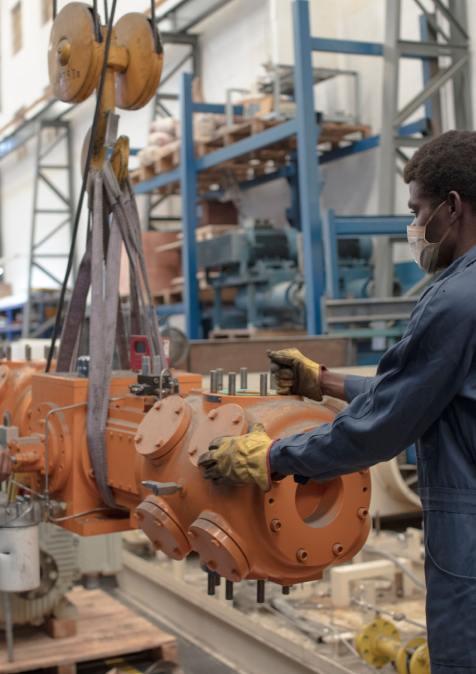
The future global economy cannot rest upon the perpetuation of privilege but must instead be grounded in symmetry. This demands clarity: access to the U.S. market is not a benevolent concession; it is a transaction, subject to leverage, renegotiation, and, where circumstances require, strategic decoupling. It calls for renewed investment in industrial capacity, diversified trade relationships, the restoration of sovereign development agendas, and the recognition that genuine sovereignty is incompatible with structural dependency.
The United States is entitled to pursue its interests; others are equally entitled indeed, obliged to pursue theirs. Only then can the world begin to construct an international economic order in which rules are negotiated, not dictated, and growth is shared, not extracted.