Publications /
Opinion
At the beginning of 2020, one of us wrote that the energy transition was an inexorable, irrevocable, and irreversible path. The other, in 2021, argued that although it might require paying a toll, the road toward decarbonization was unavoidable.
At the time, the major question was not whether the transition would happen, but at what pace. Following the famous sustainability and environmental commitment letter written by Larry Fink, CEO of BlackRock, the world’s largest asset management company, advocating increased financing for renewable energy and reduced investment in fossil fuels, strong momentum emerged—a true turning point for the energy transition.
This was reinforced by movements among the world’s largest energy companies, including those traditionally tied to oil, which began announcing diversification plans, investments in clean energy, and targets to reduce their dependence on fossil fuels. It seemed that a new energy era would quickly consolidate itself: A “New Global Energy Order.”
But history has shown that reality is more complex. Shifts in the supply and demand dynamics of fossil fuels, energy price volatility, and intensified geopolitical conflicts—such as the war between Russia and Ukraine—were enough to leave much of that enthusiasm behind.
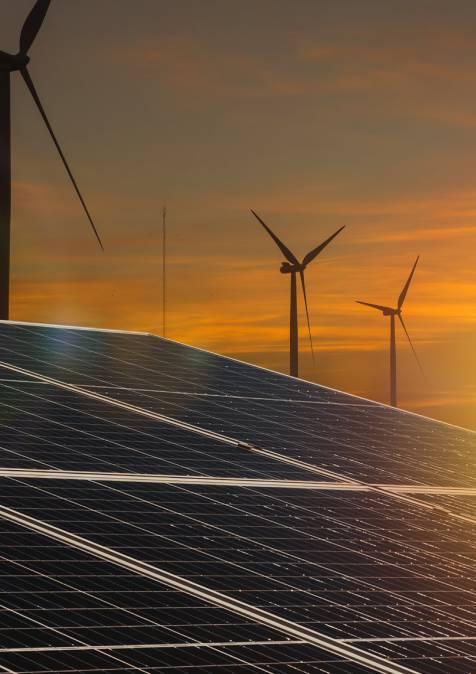
Today, many things have changed. Yet others remain profoundly the same. Renewable energy has overcome fundamental barriers: resources, technology, scale, costs, pricing, and competitiveness. It has become mature, efficient, and indispensable. In many markets, the cost disadvantage of renewables has virtually disappeared. In several regions of the world, solar and wind are already the most competitive sources for expanding electricity supply and continue to grow at remarkable speed year after year.
However, there has still not been a definitive structural shift in the relationship between renewable energy and fossil fuels. The reason is simple, though uncomfortable: the energy transition has not yet fully overcome the price barrier because it has failed to surpass the return rates of fossil fuels in any producing regions.
Today, roughly 25% of countries produce oil, while the remaining 75% depend on those producers. In the case of renewable energy, 75% of the world has the resources and technology needed to generate energy in reasonably abundant quantities, making both its production and consumption highly competitive. Given the technical differences between these two commodities—and therefore their market structures—there are strong indications that this barrier will only be overcome through clear public policies at the level of global governance capable of regulating the power of this oligopolistic model with monopolistic tendencies.
Such public policies must establish clear, adequate, and stable economic and regulatory signals. This necessarily involves carbon pricing. Although it is not the only measure capable of addressing the problem, regulation that restores the good old price signal to this market remains the main driver of change. Humanity is indeed moved and transformed by values—that is a fact of nature. But it accelerates through economic incentives, which, in a capitalist society, is an unavoidable reality.
At the same time, a new dimension of this energy transformation is beginning to emerge: the electrification revolution of economies. Transportation, industry, buildings, and other processes that were once highly dependent on fossil fuels are gradually shifting their operations toward electricity. And this profoundly reshapes the logic of the global energy system.
However, producing clean energy alone is not enough to drive transformation. The transition will require massive complementary investments in infrastructure, particularly in transmission networks, grid modernization, digitalization, operational flexibility, and battery energy storage systems (BESS).
In practice, the new energy economy will rely on a fundamental triad: electrification, energy storage, and transmission infrastructure. Electrification expands the use of electricity in sectors previously dependent on fossil fuels. Storage guarantees flexibility, stability, and system security. And transmission lines make it possible to integrate generation, consumption, and different renewable sources at scale.
Batteries are becoming central players in this process. They are no longer merely a complementary technological solution, but rather a strategic pillar for ensuring stability, energy security, and the efficient integration of intermittent sources such as solar and wind.
Likewise, the expansion and modernization of transmission networks are becoming decisive. In many countries—like Brazil—the limitation no longer lies solely in the capacity to generate renewable energy, but also in the ability to transport, integrate, and distribute it efficiently. The variability of natural resources such as wind and sunlight throughout the day and across seasons will not be addressed by generation alone, but by the intelligent management of the system as a whole.
In this context, the energy transition cannot be treated solely as an environmental agenda. It is also a matter of energy sovereignty, economic sovereignty, national security, industrial competitiveness, and geopolitical repositioning. The world needs to decarbonize. But countries also need to grow, create jobs, ensure secure energy supply, and preserve their strategic autonomy.
Therefore, perhaps the question “Is it finally happening?” should be replaced by another: what economic, political, technological, and institutional conditions will be necessary for the energy transition to truly take place—and at the speed the planet demands? Because by all indications, the great energy dispute of the 21st century will no longer be merely about who produces energy. It will be about who can electrify, store, transmit, integrate, and control the energy systems of the future.
*Elbia Gannoum is CEO of ABEEólica (Brazilian Association of Wind Energy), Vice-Chair of the Global Wind Energy Council (GWEC), COP30 Special Energy Envoy, and a member of the Brazilian Federal Government’s Council for Sustainable Economic and Social Development.
*Otaviano Canuto served as Vice President and Executive Director at the World Bank, Executive Director at the IMF, and Vice President at the Inter-American Development Bank (IDB). He also served as Secretary for International Affairs at Brazil’s Ministry of Finance and as a professor at USP and Unicamp. He is currently a Senior Fellow at the Policy Center for the New South, a Non-Resident Senior Fellow at the Brookings Institution, a Distinguished Visiting Senior Fellow and Professor at the Elliott School of International Affairs at George Washington University, and an affiliated professor at Mohammed VI Polytechnique University.