Publications /
Opinion
This Opinion was originally published in Project Syndicate
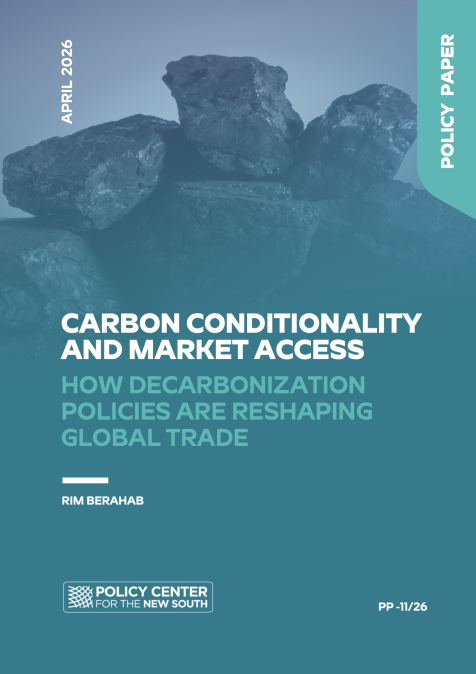
As the world prepares for COP30 in Belém, Brazil, African countries have an opportunity to advocate for equitable carbon-pricing mechanisms that align climate action with sustainable development. While cutting emissions is important, so, too, is ensuring fairness and equity for the communities most vulnerable to climate change.
RABAT – Carbon pricing is a crucial climate-policy tool. By assigning a monetary value to greenhouse-gas emissions, it creates incentives for firms to emit less and generates revenue that can be spent on sustainable development. More than 70 jurisdictions worldwide have already implemented carbon taxes or emissions-trading systems, as a way to reconcile economic growth with climate objectives.
The international community has recently focused on strengthening the frameworks for global carbon markets. At last year’s United Nations Climate Change Conference (COP29) in Baku, Azerbaijan, countries finalized negotiations on Article 6 of the Paris climate agreement, which aims to standardize such markets. This involved adopting rules to facilitate cross-border cooperation on emissions-reduction projects.
While the transparency and accountability provided by these rules will almost surely build trust in carbon markets, a standardized framework poses some risks for Africa. Specifically, it could fail to address the continent’s needs, exacerbating inequality and impeding development. Nearly 600 million Africans still lack access to electricity, while biomass accounts for 45% of the continent’s energy supply, leaving rural and low-income households particularly vulnerable to carbon-pricing policies that are not tailored to Africa’s unique socioeconomic and environmental realities.
A flat carbon tax, for example, that is not accompanied by targeted subsidies, government investment, and international financing could disproportionately burden rural and low-income households, keeping them in poverty and hindering electrification efforts. The shift to renewables requires significant upfront spending on infrastructure, and carbon pricing must be structured to facilitate, not obstruct, this transition.
Moreover, Africa is acutely vulnerable to climate shocks, as shown by recurring droughts in the Sahel and catastrophic floods in Mozambique. African countries on average lose 2-5% of GDP per year to climate change, and many divert up to 9% of their annual budget to respond to extreme weather events, putting a severe strain on their economies.
To tailor carbon-pricing models to Africa’s realities, policymakers should push for the strategic reinvestment of any resulting revenue in essential sectors such as education, health care, and renewables. In South Africa, proceeds from the country’s carbon tax have been channeled into clean-energy projects, expanding access to solar power in underserved regions. Such “revenue recycling” mitigates carbon pricing’s regressive effects while also tackling energy poverty and fostering inclusive development.
Pursuing the phased implementation of carbon-pricing models, with initially modest prices, would enable African countries to adapt gradually to the demands of a green economy, without stifling growth. At the same time, the slow and steady development of frameworks for measuring, reporting, and verification would make it easier to identify and rectify errors, resulting in more robust and trustworthy systems. This approach minimizes the economic shocks often associated with abrupt transitions, offering a practical pathway to sustainable development.
Public-private partnerships are a powerful tool for mobilizing investment in green technology and carbon-credit projects and for aligning environmental and social objectives. For example, Rwanda’s clean-cooking initiative, which uses private-sector expertise and funding to distribute efficient cookstoves, has reduced emissions and improved health outcomes for rural households.
Leveraging nature-based solutions is equally important. Africa’s rainforests, wetlands, and peatlands store vast amounts of carbon, with the Congo Basin alone holding more than 30 billion tons of carbon dioxide. These assets could generate high-quality carbon credits, which would attract international financing and preserve critical ecosystems. Under the multi-donor, UN-hosted Central African Forest Initiative, Gabon’s pioneering carbon-credits program has conserved huge portions of its forests. As a result, Gabon secured a commitment of $150 million over ten years through a 2019 agreement with CAFI.
While carbon pricing has immense potential to address Africa’s climate and development needs, barriers to implementation remain, and overcoming them will require carefully targeted interventions. For starters, institutional weaknesses could undermine robust measurement, reporting, and verification, which are essential for ensuring credibility and attracting investment. International organizations such as the UN Environment Programme and the World Bank could assist with the operationalization of carbon-pricing mechanisms in African countries by providing technical training and supporting the development of necessary infrastructure.
Ensuring the social acceptance of carbon pricing is another challenge for African countries. Because these policies can trigger a public backlash if they are perceived as unjust, or even just poorly explained, governments must be transparent about reinvesting the revenue that they generate. It is also possible that these funds will fall short of meeting Africa’s energy and infrastructure needs, in which case complementary tools such as green bonds, blended-finance mechanisms, and international climate finance can help bridge the gap.
A pan-African carbon market, coordinated through institutions like the African Continental Free Trade Area, could consolidate fragmented national efforts into a unified platform. Such a market would lower entry barriers for smaller economies, streamline standards, and attract international investment. It would also bolster Africa’s role in advancing nature-based climate solutions, allowing the continent to deliver global emissions reductions while supporting local communities.
As the world prepares for COP30 in Belém, Brazil, African countries have an opportunity to advocate for equitable carbon-pricing mechanisms that align climate action with sustainable development. While cutting emissions is important, so, too, is ensuring fairness and equity for the communities most vulnerable to climate change.