Publications /
Policy Paper

Back
The Economic Effects of Refugee Return and Policy Implications
Authors
October 31, 2017

According to the European Union over a million asylum rejected asylum seekers have been ordered to return to their country of origin from Europe alone, or will be soon. To these could be added refugees that have been given temporary shelter but who could be asked to return once conditions in their home country improve. The debate on returning asylum seekers and refugees is nearly always cast in political, legal and humanitarian terms. This paper looks at the question of return strictly from the economic perspective in the advanced countries that receive refugees: is return in their economic interest? Considering all the main economic dimensions – fiscal, economic growth and labor market impact – the answer, for most advanced countries is no. The costs of hosting refugees are front-loaded, while the benefits of hosting them, which are considerable, only accrue over time.

The paper also argues that – on economic grounds alone –mass voluntary return of refugees to their country of origin is highly unlikely even when conditions improve. Development agencies can help countries that are the largest source of refugees recover once conflicts abate and help prevent new refugee crises occurring in the future. However, the expectation that they will promote the return of refugees is unrealistic. Development agencies should not place refugee return as a central objective of their efforts.

RELATED CONTENT

  • Authors
    Pedro Henrique de Christo
    Travis Knoll
    September 18, 2026
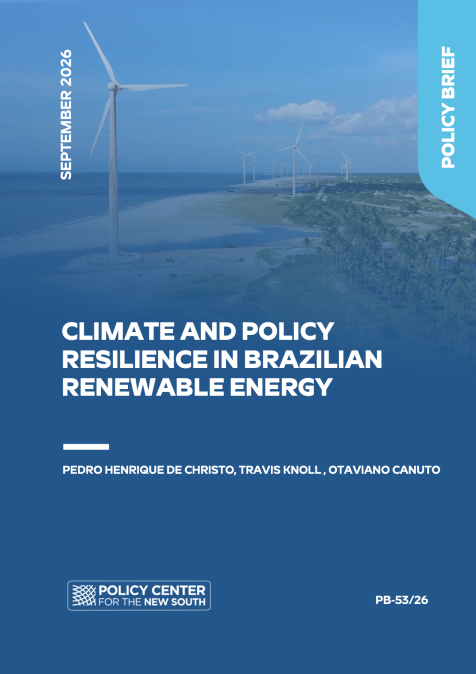
    The Brazilian context involving a clean-electricity base, a more balanced lobbying landscape, and mounting climate and social pressure, makes it more difficult for the kind of abrupt and unrestrained energy policy swing seen in Colombia. The trend in Brazil tends to be more economically viable for renewables. However, these structural conditions by themselves will not guarantee the success of the transition. Fruition will depend on whether policymakers use this window to prepare for ...
  • Authors
    September 17, 2026
    Various competing cross-border payment networks have become vehicles for geopolitical competition. As tensions have risen, many countries want to secure access to cross-border payment systems by joining with like-minded countries to form interoperable networks, either via tokenization or Instant Payment Systems (IPSs). Three major projects are under development, serving the strategic interests of the US, China and the Rest of the World—corresponding to the three trading spheres taki ...
  • Authors
    September 14, 2026
    Le déclenchement de la Guerre en Iran et le blocage du détroit d’Ormuz ont eu des conséquences majeures sur un grand nombre de marchés mondiaux de matières premières. Si l’attention médiatique s’est logiquement portée sur le pétrole et le gaz naturel, ainsi que sur l’aluminium, en raison de la forte dépendance de l’offre de ce métal aux prix de l’énergie, le soufre, comme l’hélium, l’éthylène, le propylène ou l’urée, a également été pris dans les rets de ce conflit. Loin d’être une ...
  • Authors
    September 14, 2026
    The outbreak of the war in Iran and the closure of the Strait of Hormuz have had major consequences for a large number of global commodity markets. While media attention has understandably focused on oil and natural gas, as well as on aluminum – owing to the strong dependence of that metal’s supply on energy prices – sulfur, like helium, ethylene, propylene, or urea, has also been caught up in the fallout of this conflict. Far from being a marginal commodity, it is essential to the ...
  • September 11, 2026
    Le marché du travail marocain connaît, depuis les années 2000, une expansion continue de la scolarisation qui ne s'est pas accompagnée d'une transformation équivalente de la structure productive de l'économie, ouvrant la voie à des situations d'inadéquation verticale entre le niveau de formation des actifs occupés et les exigences des emplois qu'ils occupent. La présente étude analyse les déterminants du déclassement (sur-éducation) et du surclassement (sous- éducation) à partir des ...
  • September 11, 2026
    Since the early 2000s, the Moroccan labour market has experienced continuous educational expansion that has not been matched by an equivalent transformation of the economy's productive structure, giving rise to situations of vertical mismatch between employed workers' education levels and the requirements of the jobs they hold. This study analyzes the determinants of overeducation and undereducation using anonymized microdata from the 2014 General Population and Housing Census (RGPH ...
  • Authors
    September 9, 2026
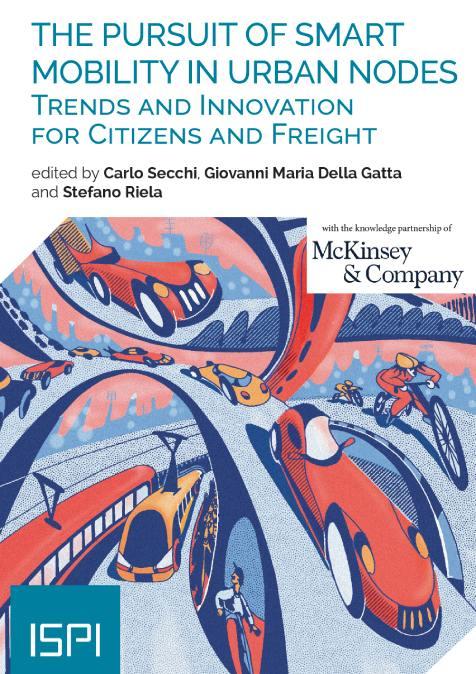
    This paper was originally published as a chapter in the ISPI report The Pursuit of Smart Mobility in Urban Nodes: Trends and Innovation for Citizens and Freight. Agglomeration economies have historically supported industrialisation and global integration by concentrating firms, labour and infrastructure in dynamic urban cores. However, these same forces have also generated persistent patterns of territorial polarisation. Drawing on New Economic Geography, this chapter interpret ...