Publications /
Policy Paper
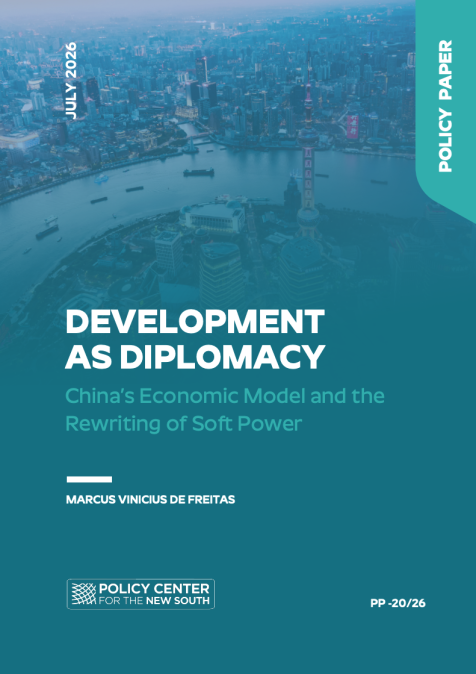
This policy paper explores how China’s economic development model—rooted in pragmatism, long-term planning, and civilizational renewal—has become its most compelling soft power asset, particularly in the eyes of the Global South. While critically engaging with Joseph Nye’s original conception of soft power as a primarily cultural and normative force, the paper argues that China’s ability to transform itself from an impoverished postimperial state into the world’s largest trading nation constitutes a far more persuasive and concrete form of attraction.
Drawing on the historical context of China’s “Century of Humiliation”, the paper emphasizes the distinctiveness of the Chinese response—not one of nostalgic paralysis, but of strategic rejuvenation. Rejuvenation, as opposed to mere modernization, is presented as a deeply internal, spiritual, and civilizational force that animates the Chinese development project and distinguishes it from other postcolonial experiences.
Additionally, the paper identifies key lessons from the Chinese model, including the strategic role of the state, the necessity of long-term and quantifiable development goals (such as GDP per capita targets), the centrality of public education and national security, the importance of meritocratic leadership, and the cultivation of national industries aligned with strategic vocation. These insights are positioned as highly relevant for countries in Latin America and Africa seeking to move beyond dependency and reclaim their development trajectories on sovereign and dignified terms.
Ultimately, the paper calls for a new grammar of global development—one that places excellence, integrity, rejuvenation, and purpose at its core, and where multipolarity is not just a geopolitical condition but a civilizational imperative.