Publications /
Policy Paper

Back
DEVELOPMENT AS DIPLOMACY : China’s Economic Model and the Rewriting of Soft Power
August 3, 2026

This policy paper explores how China’s economic development model—rooted in pragmatism, long-term planning, and civilizational renewal—has become its most compelling soft power asset, particularly in the eyes of the Global South. While critically engaging with Joseph Nye’s original conception of soft power as a primarily cultural and normative force, the paper argues that China’s ability to transform itself from an impoverished postimperial state into the world’s largest trading nation constitutes a far more persuasive and concrete form of attraction. 

Drawing on the historical context of China’s “Century of Humiliation”, the paper emphasizes the distinctiveness of the Chinese response—not one of nostalgic paralysis, but of strategic rejuvenation. Rejuvenation, as opposed to mere modernization, is presented as a deeply internal, spiritual, and civilizational force that animates the Chinese development project and distinguishes it from other postcolonial experiences. 

Additionally, the paper identifies key lessons from the Chinese model, including the strategic role of the state, the necessity of long-term and quantifiable development goals (such as GDP per capita targets), the centrality of public education and national security, the importance of meritocratic leadership, and the cultivation of national industries aligned with strategic vocation. These insights are positioned as highly relevant for countries in Latin America and Africa seeking to move beyond dependency and reclaim their development trajectories on sovereign and dignified terms. 

Ultimately, the paper calls for a new grammar of global development—one that places excellence, integrity, rejuvenation, and purpose at its core, and where multipolarity is not just a geopolitical condition but a civilizational imperative.

RELATED CONTENT

  • August 3, 2026
    This policy paper explores how China’s economic development model—rooted in pragmatism, long-term planning, and civilizational renewal—has become its most compelling soft power asset, particularly in the eyes of the Global South. While critically engaging with Joseph Nye’s original conception of soft power as a primarily cultural and normative force, the paper argues that China’s ability to transform itself from an impoverished postimperial state into the world’s largest trading nat ...
  • Authors
    July 14, 2026
    Avec la capitale Pékin comme acteur principal de la politique étrangère chinoise, l’engagement de la Chine en Afrique ne peut plus être appréhendé à travers le seul prisme de l’État central. Suite aux réformes de décentralisation engagées en 1978, les gouvernements provinciaux de l’Empire du Milieu jouent un rôle de plus en plus visible et structurant, en s’affirmant en tant qu’acteurs à part entière de la coopération internationale. Ils interviennent, entre autres domaines, dans le ...
  • July 10, 2026
    For much of the post-war period, the Global South was framed as an object of history, defined by dependency, constrained by structural asymmetries, and confined to the margins of global decision-making. That narrative, once empirically grounded, is now no longer adequate. A profound yet uneven transformation is underway. The Global South is no longer only reacting; it is increasingly shaping rules, institutions, and narratives.This Policy Brief argues that the Global South is thus t ...
  • June 22, 2026
    History devotes considerable attention to the rise and fall of great powers. Scholars have spent centuries analyzing why empires collapse, why nations decline, and why dominant states eventually lose their position. By comparison, relatively little attention has been devoted to a different question: what happens when a country succeeds beyond its own expectations? ...
  • November 18, 2025
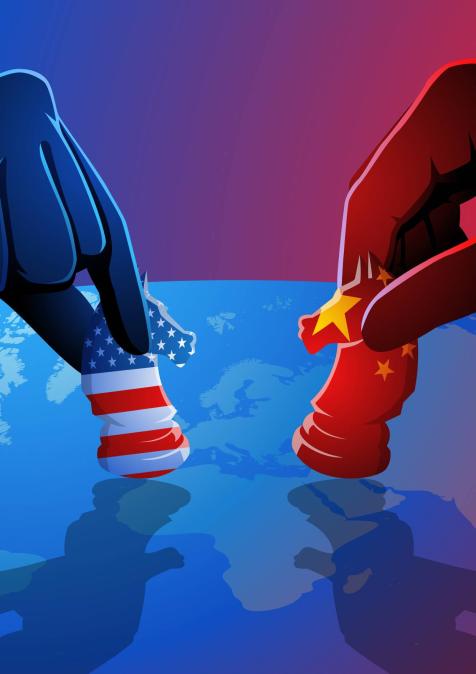
    The meeting between Donald Trump and Xi Jinping in Busan, South Korea, was more than an exercise in diplomacy. It was an emblematic performance of a world in transformation. Behind the formalities, the cameras, and the studied smiles lay an unspoken recognition: the world is no longer unipolar. The era of American supremacy, sustained for decades through its economic reach, military presence, and ideological projection, is giving way to a more diffuse, multipolar reality. ...
  • October 23, 2025
    Depuis 2016, le Policy Center for the New South et le Centre de Géopolitique de l’école HEC Paris organisent chaque année deux éditions des « Dialogues Stratégiques ». Cette plateforme d’analyse et d’échange réunit des experts, des chercheurs provenant de différents think-tanks et du mo...
  • June 5, 2025
    The history of relations between the West and East Asia is deeply rooted in fear, dating back to the 13th century when Mongol hordes swept from Central Asia into the European steppes. This civilizational neurosis took root in the European imagination and has since shaped Western perceptions of the East. The derogatory racial metaphor “Yellow Peril”, which emerged in the late 19th century, was not a new invention but rather a recurring theme invoked whenever politically expedient. It ...