Publications /
Book / Report

Back
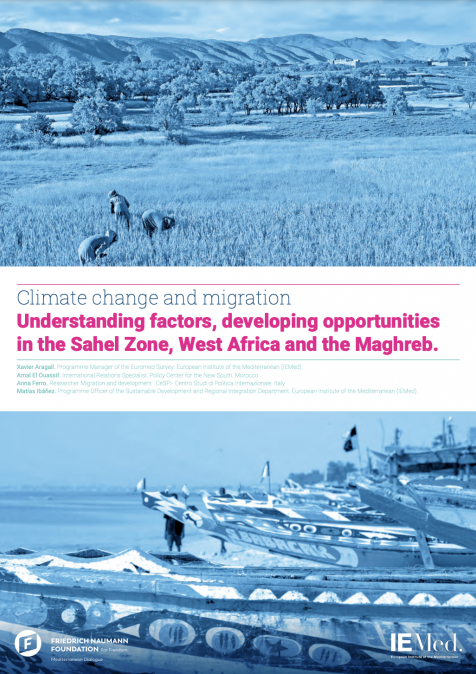
Climate change and migration Understanding factors, developing opportunities in the Sahel Zone, West Africa and the Maghreb
Authors
Xavier Aragall
Anna Ferro
Matías Ibáñez
June 26, 2023

This report was originally published on iemed.org

In the last decade, it has become very clear that climate change is not a problem of the future. This threat multiplier is causing severe natural disasters, rising sea levels, desertification, and rising temperatures in every continent, reminding us that it is not only the global South that is experiencing and will be experiencing its direct effects. It is true, however, that some of the most severe impacts of climate change are indeed being felt in the Sahel, the Maghreb, and West Africa, where millions of people are facing increasing water scarcity, desertification, and land degradation, to name a few. These impacts have serious implications for human development, food security, and political stability, and are already driving a growing trend of migration across the region.

Although most migration is intraregional, migratory flows toward Europe will increase steadily at potentially unsustainable levels if climate change continues to affect basic resources such as water and food security. The UNHCR recently estimated that approximately 1.2 billion people are at risk of climate-related displacement. This displacement, which we have been able to already observe during research for this report, will in turn, be the cause of serious political instability in migrants’ countries of origin and destination, as well as between them at the international level. It is therefore critical that awareness of climate change and its impact on human displacement is widely recognized and that it leads to more comprehensive and coordinated responses by policymakers and governing bodies. Current predictions indicate that mitigation and adaptation efforts must be further strengthened to give people a chance to live safely in a new climate reality. Economic development plays a critical role in this effort and helps ensure societies are resilient to climate change.

Migration is a human phenomenon that has always occurred for a variety of reasons. It is up to those in power to ensure that the way it happens remains a humane process and that human rights remain a priority. People forced to leave their homes and communities in search of more stable conditions and better opportunities are often demonized in political rhetoric and the media, but as climate change makes migration increasingly inevitable, it is as important as ever to be aware of its causes. We are confident that the information gathered in this report reflects these ideas while bringing more attention to this critical issue on all shores of the Mediterranean. Mitigating some of the worst effects of global warming is undoubtedly an issue on which we must act now. In doing so, we can help ensure a more sustainable and prosperous future for all.


David Henneberger, Head of Office Spain, Italy, Portugal & Mediterranean Dialogue, Friedrich Naumann Foundation for Freedom

Roger Albinyana, Managing Director, European Institute of the Mediterranean (IEMed)
RELATED CONTENT

  • Authors
    July 2, 2026
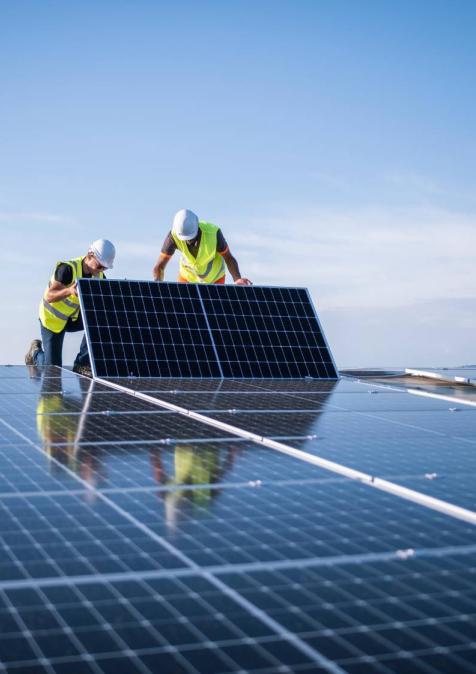
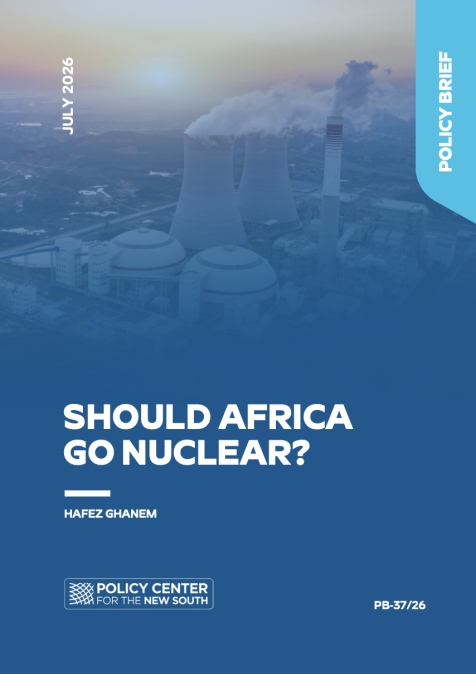
    Africa is facing a massive electricity deficit that is impacting its economic and social development, and its ability to catch up with the rest of the world. It is imperative that the continent increase its electricity production to connect the 600 million people who are currently without access and to improve the quality of service for the millions who are suffering from frequent blackouts and load-shedding. Economic development in the 21st century will crucially depend on the digi ...
  • Authors
    June 24, 2026
    Africa today remains far from food secure. Chronic malnutrition, widespread anemia among women of childbearing age, stunting and wasting among young children, pervasive underemployment in both rural and urban areas, and a youth bulge frustrated by high unemployment are key features of a continent that is seriously off track with respect to the SDG deadline: only 6% of SDGs have been implemented (Mo Ibrahim Forum, 2025).Despite this dismal progress, Africa can still achieve “The Afri ...
  • May 29, 2026
    This Paper was originally published on tandfonline.com This paper examines how reductions in transportation costs reshape regional economic and environmental outcomes in Morocco. We simulate a reduction in delivered (purchasers’) costs via a transport-margin efficiency improvement – implemented as a margin-saving technical change in the transport sector – within a province-level Spatial Computable General Equilibrium (SCGE) framework. Simulating a 1% decline in transport costs, ...
  • April 9, 2026
    Cet entretien explore le Nexus Eau-Énergie-Alimentation comme un défi systémique majeur pour le Maroc, dans un contexte de rareté croissante des ressources et de pressions sur la souveraineté. Il met en lumière les interdépendances critiques entre ces trois secteurs et les limites d’app...
  • Authors
    January 23, 2026
    Introduction: COP30 as a Test of Reality, Not AmbitionCOP30 in Belém was never going to be a breakthrough. In a world marked by fiscal exhaustion, geopolitical rivalry, and eroding trust in multilateralism, expecting transformational climate cooperation bordered on denial. The choice of the Amazon as host carried symbolic weight, but symbolism does not override power, interests, or institutional capacity.The outcome of COP30 confirms a deeper truth: the global climate regime has ent ...
  • Authors
    January 13, 2026
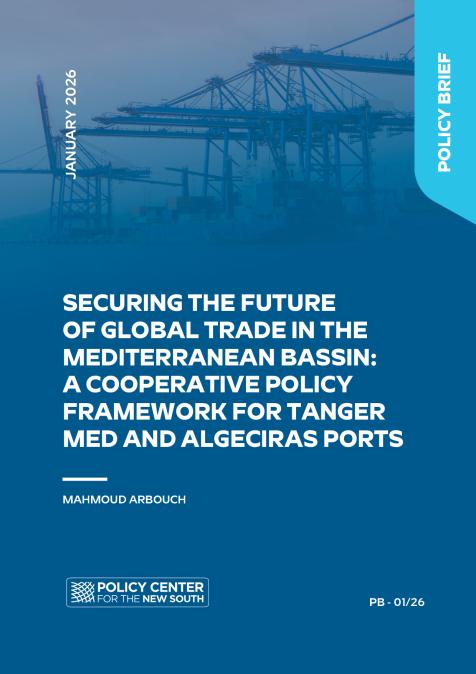
    This policy brief was originally published on : euromesco.net This paper examines the nexus between governance structures, digital transformation, sustainability, and port service efficiency through an international comparative lens, with a specific focus on the Tanger Med–Algeciras corridor in the strait of Gibraltar. Using global best practices—from Singapore to Busan and Kaohsiung—it explores how public-private coordination, digital innovation, and green transition policies ...
  • January 2, 2026
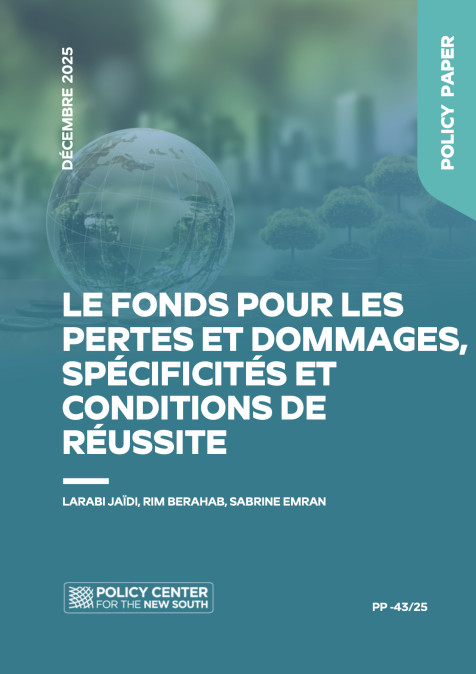
    Ce Policy Paper analyse les enjeux politiques, économiques et opérationnels du Fonds pour les pertes et dommages, créé pour répondre aux impacts climatiques irréversibles subis par les pays les plus vulnérables. Il clarifie d’abord la notion de pertes et dommages, qui mêle effets économiques et non économiques, et souligne les défis d’attribution liés à la superposition entre chocs climatiques et fragilités structurelles. L’analyse met ensuite en lumière les tensions d’économie poli ...
  • Authors
    November 13, 2025
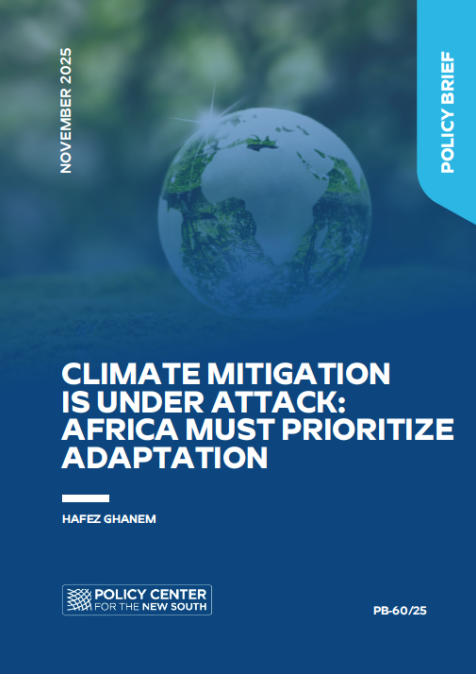
    Africa today has only one real climate priority: adaptation. Africa should still push the rich countries of the Global North to cut emissions. But Africa should not have any illusions. Past mitigation efforts have had some positive effects but have not been sufficient to stay on track with the targets of the Paris Agreement. There is no reason to believe that future efforts will fare any better. Political developments in the United States and Europe do not augur well for global miti ...
  • November 10, 2025
    This Opinion was originaly published on kalam.chathamhouse.org Morocco’s environmental governance rests on a comprehensive constitutional and legal architecture that establishes the right to a healthy environment as a fundamental right. The 2011 Constitution obliges the state to ensure equal access to water, a healthy environment, and sustainable development while also requiring the protection of natural resources and future generations, and guaranteeing equal environmental rig ...
  • October 17, 2025
    Jodie Keane, Principal Research Fellow at the International Economic Development Group, discusses how green trade measures are transforming African economies, stressing the need for faire ...