Publications /
Policy Paper

Back
Capital flows and emerging market economies since the global financial crisis
Authors
January 20, 2023

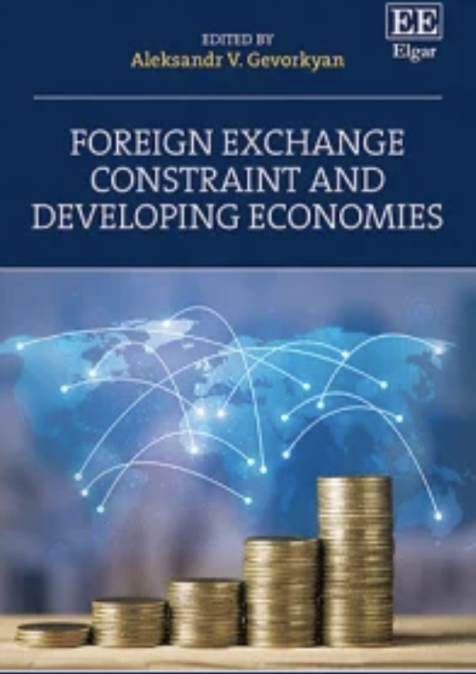
This paper was originally published as a chapter within the Book, Foreign Exchange Constraint and Developing Economies, published on January 2023 (ISBN  978 1 80088 049 8).


The decade after the global financial crisis (GFC) of 2007–2009 saw signifi- cant changes in the volume and composition of capital flows in the global economy. Portfolio investments and other non-bank financial intermediaries (NBFIs) are behind an increasing share of foreign capital flows, while bank- ing flows have shrunk in relative terms. This chapter approaches the implica- tions of such a metamorphosis of finance for capital flows to emerging market economies (EMEs).

Changes in capital flows accompanied structural shifts in financial inter- mediation in capital-source countries, with NBFIs increasingly shaping the demand for and supply of liquidity in financial markets. The channels of systemic risk propagation have changed with the higher profile acquired by NBFIs, with leverage fluctuations through changes in margins rising in weight.

Risks associated with capital flows to EMEs have changed accordingly. Foreign capital potentially brings benefits to EMEs. However, wide swings in capital flows carry high risks to macroeconomic and financial stability, including the adverse effects of sudden stops to capital inflows and challenges faced by economies with weaker institutions and less-developed financial markets.

Capital inflows in emerging market economies are driven by both global and country-specific drivers. The abundance of global liquidity since the GFC has pushed investors to search for yield, with shifts in risk appetite becoming a source of fluctuations. On the other hand, changes in the macroeconomic fundamentals and institutional frameworks of EMEs have made investors more selective.

The weight of global factors came to the fore in the first half of 2020, when the financial shock in advanced economies caused by coronavirus outbreaks led to a substantive wave of capital outflows from emerging markets, with unprecedented speed and magnitude. The shock was mitigated subsequently by central banks’ counter-shock policy moves in source countries, as well as by EME policy tools in managing the risks associated with extreme shifts in capital flows.

The chapter first examines the metamorphosis of finance and of capital flows after the GFC, up to the shock to capital flows to EMEs during the 2020–2021 coronavirus crisis. Then we analyse the extent to which normali- zation of monetary policies in advanced economies may lead to shocks in those flows, as well as why exchange-rate fluctuations between the US dollar and other major currencies can affect capital flows to EMEs. Finally, we assess the range of policy instruments that EME policymakers tend to resort to when managing risks derived from capital-flow volatility.


RELATED CONTENT

  • June 12, 2026
    Cet épisode revient sur les principaux défis de la politique budgétaire au Maroc, à partir du chapitre consacré au sujet dans le Oxford Handbook of the Moroccan Economy. Les intervenants soulignent le caractère largement structurel des déficits, la difficulté à sortir d’une politique bu...
  • Authors
    June 9, 2026
    In 2017, eight scientists from the Google research team published in the journal Advances in Neural Info Processing Systems the remarkable article “Attention is all you need,” which introduced a Transformer neural network architecture. The paper has been cited over 173,000 times and ranks among the top 100 most cited papers of the 21st century. It builds on the attention principle introduced in 2014 by Bahdanau, Cho and Turing Award winner Bengio, who proposed neural machine transla ...
  • Authors
    Karim El Mokri
    Idriss El Abbassi
    June 8, 2026
    Le monde du travail est engagé dans un processus de mutation sans précédent. La quatrième révolution industrielle, portée par l’intelligence artificielle (IA) et la robotisation, a été le point de commencement d’une ère nouvelle où les repères économiques et sociaux se redéfinissent à une vitesse inédite. Ces technologies suscitent un engouement légitime et offrent des perspectives prometteuses, mais requièrent une vigilance accrue face aux incertitudes qui les entourent.Bien que, à ...
  • Authors
    February 11, 2026
    The U.S.–China technological rivalry has become a central axis of global economic and geopolitical competition. While the United States continues to lead in frontier innovation—most notably in advanced semiconductors and artificial intelligence (AI)—China has consolidated strengths in large-scale implementation, manufacturing capacity, and control over critical segments of global supply chains. These advantages are especially visible in clean energy technologies and in the processin ...
  • Authors
    January 30, 2026
    The 2026 World Economic Forum (WEF) Annual Meeting took place in an environment of elevated economic uncertainty and structural risk repricing. According to the Global Risks Report (GRR) 2026, geoeconomic confrontation and economic downturn rank among the most severe near-term risks, while inflation-related risks and economic volatility have risen sharply in perceived severity compared with the previous edition. Notably, 50% of respondents to the Global Risks Perception Survey ...
  • January 29, 2026
    Le Mali, le Burkina Faso et le Niger, réunis au sein de l’Alliance des États du Sahel (AES), affirment l’ambition de bâtir une souveraineté nationale qui leur permettrait de s’émanciper de la domination et des influences extérieures et de se doter d’une liberté d’action dans les choix de développement politique et économique. Cependant, cette ambition se heurte à de nombreuses contraintes économiques et sécuritaires.La souveraineté ne peut se construire sans une base économique soli ...
  • Authors
    January 27, 2026
    This paper revisits Big Push industrialization theory in the context of open economies deeply integrated into global value chains (GVCs). While classical Big Push models emphasize demand complementarities and coordination failures in largely closed economies, many middle-income countries now industrialize through foreign-owned, import-intensive production networks. We develop an extended Big Push framework that incorporates GVC integration and import leakage, and show how these feat ...
  • Authors
    Ahmed Ouhnini
    December 5, 2025
    L’« uberisation », terme né du nom de l’entreprise américaine Uber au début des années 2010, désigne initialement un modèle économique fondé sur la mise en relation directe entre offre et demande via des plateformes numériques. Rapidement popularisé, le concept s’est élargi, avec Airbnb dans l’hébergement, puis à une multitude d’autres secteurs : livraison de repas, services à domicile, commerce en ligne, voire des métiers traditionnellement régulés ou corporatistes. Ce néologisme t ...
  • Authors
    Ahmed Ouhnini
    December 5, 2025
    “Uberization,” a term derived from the American company Uber in the early 2010s, initially refers to an economic model based on directly matching supply and demand through digital platforms. Rapidly popularized, the concept has expanded with Airbnb in accommodation, and then to a wide range of other sectors: food delivery, home services, e-commerce, and even traditionally regulated or corporatist professions. This neologism thus reflects a transformation of economic and social relat ...