Publications /
Book / Report

Back
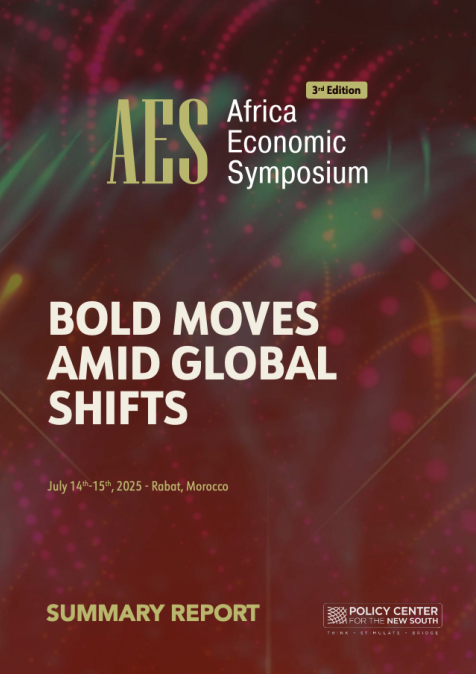
Africa Economic Symposium (AES) 3nd edition - SUMMARY REPORT
Authors
General rapporteur Mahmoud Arbouch
September 2, 2025

The Africa Economic Symposium (AES) has firmly established itself as one of the flagship annual events of the Policy Center for the New South, alongside the Atlantic Dialogues and the African Peace and Security Annual Conference (APSACO). Now in its third edition, AES continues to provide a unique platform for economists, policymakers, and academics from across the continent and beyond to exchange perspectives on the pressing macroeconomic and structural challenges facing Africa. Its mission remains to foster rigorous, evidence-based debates that inform policymaking and support long-term strategies for Africa’s development in an era of uncertainty. 

The 2025 edition, convened under the theme “Bold Moves amid Global Shifts,” explored the difficult policy trade-offs confronting African governments as they navigate a volatile global environment. The continent’s recovery from COVID-19 has been uneven, while debt pressures, supply chain disruptions, and geopolitical tensions weigh heavily on fiscal and economic resilience. Structural challenges such as persistent unemployment, low productivity, and the exclusion of Africa’s youth continue to hinder inclusive growth, even as policymakers are called upon to adapt to deep systemic uncertainty. 

The symposium underscored that many African states are increasingly resorting to short-term stabilization measures—such as accumulating reserves and postponing reforms—that may provide immediate security but risk delaying the structural transformation urgently needed. Against this backdrop, AES 2025 called for a careful balance between fiscal prudence, social investment, and the pursuit of sustainable growth, placing emphasis on reforming governance, improving macroeconomic management, and accelerating structural change. 

The discussions highlighted the urgent need to rethink Africa’s economic strategies in a shifting global order. From debt sustainability and the role of central banks to the promise of financial innovation, digital inclusion, and new instruments such as central bank digital currencies, the symposium emphasized that policy choices must align with long-term transformation goals. The debates also explored the opportunities and challenges of regional integration, trade connectivity, and development finance, all of which are essential levers for Africa’s resilience and prosperity. 

As in previous editions, the Annual Report on African Economies was launched alongside the symposium, offering an in-depth analysis of the continent’s macroeconomic dynamics and structural transformation pathways. More than just a publication, the report reflects the collective intellectual effort of leading scholars and practitioners, providing evidence-based insights to guide decision- makers. Together, the symposium and the report reinforced the Policy Center for the New South’s commitment to fostering forward-looking economic thinking that moves beyond short-term headlines to tackle Africa’s enduring challenges.

RELATED CONTENT

  • Authors
    August 13, 2018
    Depuis la fin de l’année 2017, le président Donald Trump mène plusieurs batailles commerciales, contre différents partenaires, sous prétextes de sauver des emplois industriels américains et de réduire le déficit commercial des États-Unis. S’il est difficile de se prononcer sur les effets des combats commerciaux amorcés par le président Trump, l’importance des opposants et des échanges pour l’économie mondiale en fait une source de risque pour la croissance, les emplois et les prix à ...
  • Authors
    August 13, 2018
    The Brazilian economy pays a price in terms of productivity foregone because of its lack of trade openness. A trade opening process would bring an adjustment impact that could nonetheless be mitigated with public policies that facilitate labor mobility and job migration. Benefits from trade opening would also hinge on policy improvements in complementary areas, such as infrastructure investments, business environment and others. The Brazilian economy would benefit from opening trad ...
  • Authors
    August 6, 2018
    The IMF released last July 24 its latest assessments of the current account balances for the 30 largest economies in its External Sector Report 2018 (ESR). There was no major change in 2017 relative to previous years and the reconfiguration of surpluses and deficits that has prevailed since 2013 was essentially extended. However, there are reasons to expect more abrupt alterations ahead, as the U.S. fiscal easing under high employment conditions unfolds. Given the context ...
  • August 1, 2018
    “This article has been originally published in 'Morocco in Focus 2018,' the magazine of the Moroccan Embassy in New Delhi, India on the occasion of the Morocco National Day 2018.” Introduction In an article published last year, the author stressed the role of partnership between Morocco and India for the inclusive growth of small farmers. There is no doubt that agriculture remains a major instrument for human development both in India and in Africa. Several international reports&n ...
  • Authors
    August 1, 2018
    “A WAKE UP CALL FOR THE WORLD” For Simon Elin, chief executive of the British Recycling Association, it’s “a tough time” his industry and country are facing just now. He does not think about Brexit, Britain trying to leave the E.U., dreaming to return to glorious times as a world power, one day soon. His colleague Arnaud Brunet, head of the Bureau of International Recycling, predicted “catastrophic environmental problems.” An assessment the London Times shared: “The world ...
  • Authors
    François Gaulme
    July 20, 2018
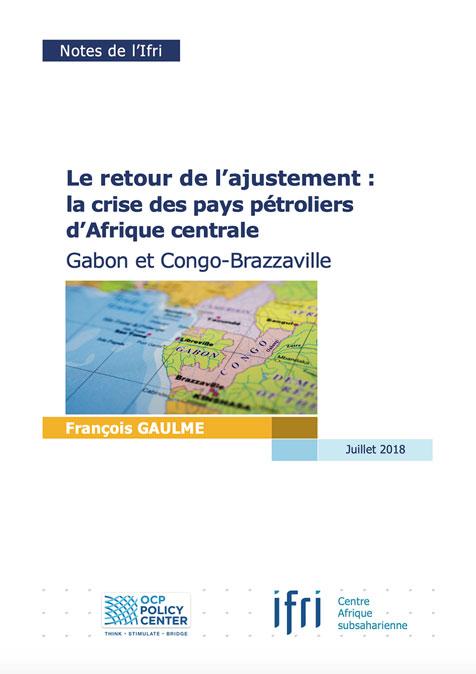
    Cette note vise à mettre en lumière le cycle d’ajustement à la fois financier, économique et politique affectant deux pétro-États d’Afrique centrale, le Gabon et la République du Congo (Congo-Brazzaville). Unis par leur système économique de rente et leur histoire coloniale commune, ces deux pays n’en ont pas moins connu des destins politiques différents après leur indépendance, le premier conservant une relation privilégiée avec la France tandis que le second optait rapidement pour ...
  • Authors
    July 10, 2018
    Historians often offer different interpretations of the events that have shaped our destiny, yet, with respect to World War 2, the bloodiest conflict in history, they seem to concur on two points. First, that those yearning for peace underestimated the National Socialists’ determination to wage a war of conquest until it was far too late to deter them, and, second, that Nazi Germany failed to anticipate that Britain, the United States, and the Soviet Union – each of which it provok ...
  • Authors
    July 3, 2018
    The addition of a fourth US rate rise to the Federal Reserve’s 2018 dot-plot graph after the June meeting of the Federal Open Market Committee sparked a bout of portfolio outflows from emerging markets. This followed a fleeting upswing at the beginning of the month that fell short on reversing the unwinding of exposure and sell-off of assets in May (Chart 1). Country differentiation has been accentuated, with exchange rate devaluation pressures and capital outflows occurring more no ...
  • June 13, 2018
    From cryptocurrencies to blockchain to mobile money, financial technology or “fintech” is revolutionizing the basic structures of the global economy. Financial services delivered through ...
  • Authors
    June 6, 2018
    The spike in US bond yields since mid-April in tandem with the strengthening of the dollar sparked a retrenchment of capital flows to emerging markets (EM), accompanied by a sell-off of assets in some cases. Argentina and Turkey suffered from strong and potentially disruptive exchange rate depreciation pressures in May, with financial markets calming down only after bold domestic policy moves (interest rate hikes in both countries and, in the case of Argentina, a decision to seek a ...