Publications /
Book / Report

Back
Africa Economic Symposium (AES) 3nd edition - SUMMARY REPORT
Authors
General rapporteur Mahmoud Arbouch
September 2, 2025

The Africa Economic Symposium (AES) has firmly established itself as one of the flagship annual events of the Policy Center for the New South, alongside the Atlantic Dialogues and the African Peace and Security Annual Conference (APSACO). Now in its third edition, AES continues to provide a unique platform for economists, policymakers, and academics from across the continent and beyond to exchange perspectives on the pressing macroeconomic and structural challenges facing Africa. Its mission remains to foster rigorous, evidence-based debates that inform policymaking and support long-term strategies for Africa’s development in an era of uncertainty. 

The 2025 edition, convened under the theme “Bold Moves amid Global Shifts,” explored the difficult policy trade-offs confronting African governments as they navigate a volatile global environment. The continent’s recovery from COVID-19 has been uneven, while debt pressures, supply chain disruptions, and geopolitical tensions weigh heavily on fiscal and economic resilience. Structural challenges such as persistent unemployment, low productivity, and the exclusion of Africa’s youth continue to hinder inclusive growth, even as policymakers are called upon to adapt to deep systemic uncertainty. 

The symposium underscored that many African states are increasingly resorting to short-term stabilization measures—such as accumulating reserves and postponing reforms—that may provide immediate security but risk delaying the structural transformation urgently needed. Against this backdrop, AES 2025 called for a careful balance between fiscal prudence, social investment, and the pursuit of sustainable growth, placing emphasis on reforming governance, improving macroeconomic management, and accelerating structural change. 

The discussions highlighted the urgent need to rethink Africa’s economic strategies in a shifting global order. From debt sustainability and the role of central banks to the promise of financial innovation, digital inclusion, and new instruments such as central bank digital currencies, the symposium emphasized that policy choices must align with long-term transformation goals. The debates also explored the opportunities and challenges of regional integration, trade connectivity, and development finance, all of which are essential levers for Africa’s resilience and prosperity. 

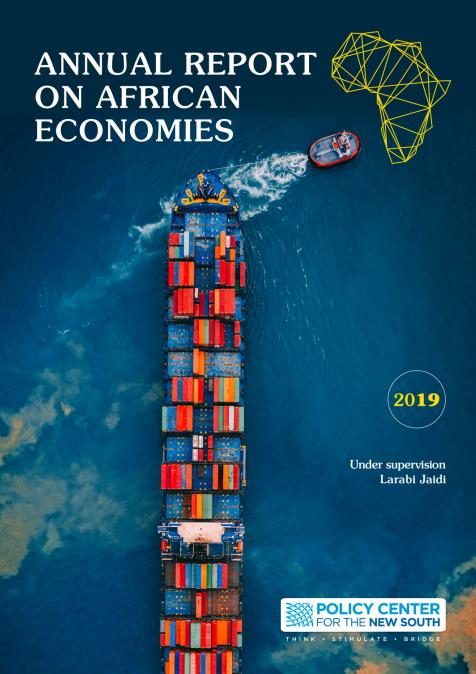
As in previous editions, the Annual Report on African Economies was launched alongside the symposium, offering an in-depth analysis of the continent’s macroeconomic dynamics and structural transformation pathways. More than just a publication, the report reflects the collective intellectual effort of leading scholars and practitioners, providing evidence-based insights to guide decision- makers. Together, the symposium and the report reinforced the Policy Center for the New South’s commitment to fostering forward-looking economic thinking that moves beyond short-term headlines to tackle Africa’s enduring challenges.
RELATED CONTENT

  • Authors
    Under the Supervision of
    October 2, 2019
    Africa is an economic region which holds great potential despite the risks associated with its development. Indeed, many experts agree that Africa is emerging as the new frontier for global growth. Boosted by its abundant natural resources, a young and vibrant population, strong urbanization, more stable macroeconomic conditions, more stringent economic policies, a constantly improving business climate and improving governance, Africa is on track for a structural transformation that ...
  • Authors
    Sous la direction de
    October 2, 2019
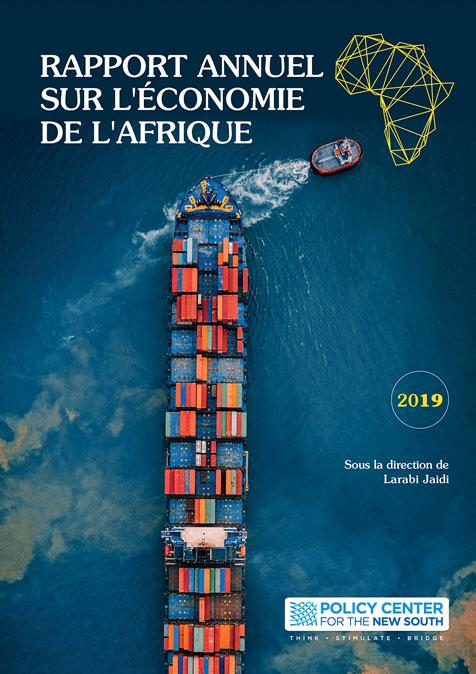
    Le Rapport sur l’économie de l’Afrique s’inscrit dans une série de documents annuels publiés par le Policy Center for the New South (PCNS). Les grandes évolutions économiques du continent y sont traitées, avec une large place faite à l’analyse prospective. Ce rapport s’ajoute ainsi au Rapport annuel sur la géopolitique de l’Afrique et l'Annual Report on Commodity Analytics and Dynamics in Africa (Arcadia), écrits par des chercheurs issus du Nord comme du Sud. Le Rapport sur l’écono ...
  • October 1, 2019
    Some of the papers in this special issue were initially presented at a September 2016 conference on Global Labor Markets organized by the IMF, Policy Center for the New South and Brunel University, while others were commissioned through a call for papers. Funding for this initiative was provided in part through the IF-DFID program on Macroeconomic Research in Low Income Countries. Views expressed in this introduction and in the papers are those of the authors and should not be ascri ...
  • Authors
    Zidong An
    Nathalie Gonzalez Prieto
    September 30, 2019
    This paper investigates the relationship between economic growth and job creation in developing economies with a focus on low and lower middleincome countries along two dimensions: growth patterns and short-run correlations. Analysis on growth patterns shows that regime changes are quite common in both economic growth and employment growth, yet they are not synchronized with each other. Okun’s Law—the short-run relationship between output and labor market—holds in half of the countr ...
  • Authors
    September 30, 2019
    Despite some short-term benefits, trade deviation to the region shouldn’t be expected to last. Has the U.S. trade war with China been good for Latin America? An increase in Chinese demand for primary products from the region, as well as recent news of production transfers from China to Mexico, might give the impression that it has. But any positive short-term effects of the confrontation should also take into account its negative medium- and long-term impacts on the region and on gl ...
  • Authors
    September 25, 2019
    The concept of ‘developing country’ is now a source of controversy, asking “Is China a developing country?”, for example. The normative implications of such question will be considered, after a grief survey of its use in international organizations. Then, the transformation of the relations between States from asymmetric solidarity to symmetric complementarity is suggested. As an example of complementary relations, those between Morocco and Japan is surveyed. ...
  • September 24, 2019
    En pleine transition ordonnée de son régime de change, sous l'autorité bienveillante du Fonds monétaire international (FMI), le Royaume du Maroc est un exemple très concret des avantages et des inconvénients des deux régimes de change dominants ces dernières décennies/change fixe et change flottant /. L’objet de cette note est de rappeler, tout d'abord, les fondamentaux économiques des deux systèmes et leur environnement historique (I). Ensuite, à la lumière de ces fondamentaux, pré ...