Publications /
Policy Brief

Back
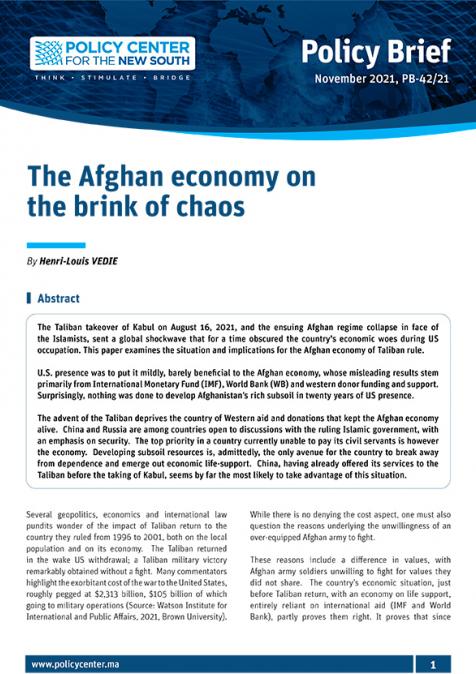
The Afghan economy on the brink of chaos
November 8, 2021

The Taliban takeover of Kabul on August 16, 2021, and the ensuing Afghan regime collapse in face of the Islamists, sent a global shockwave that for a time obscured the country's economic woes during US occupation. This paper examines the situation and implications for the Afghan economy of Taliban rule.
U.S. presence was to put it mildly, barely beneficial to the Afghan economy, whose misleading results stem primarily from International Monetary Fund (IMF), World Bank (WB) and western donor funding and support. Surprisingly, nothing was done to develop Afghanistan’s rich subsoil in twenty years of US presence.
The advent of the Taliban deprives the country of Western aid and donations that kept the Afghan economy alive. China and Russia are among countries open to discussions with the ruling Islamic government, with an emphasis on security. The top priority in a country currently unable to pay its civil servants is however the economy. Developing subsoil resources is, admittedly, the only avenue for the country to break away from dependence and emerge out economic life-support. China, having already offered its services to the Taliban before the taking of Kabul, seems by far the most likely to take advantage of this situation.
RELATED CONTENT

  • Authors
    January 12, 2022
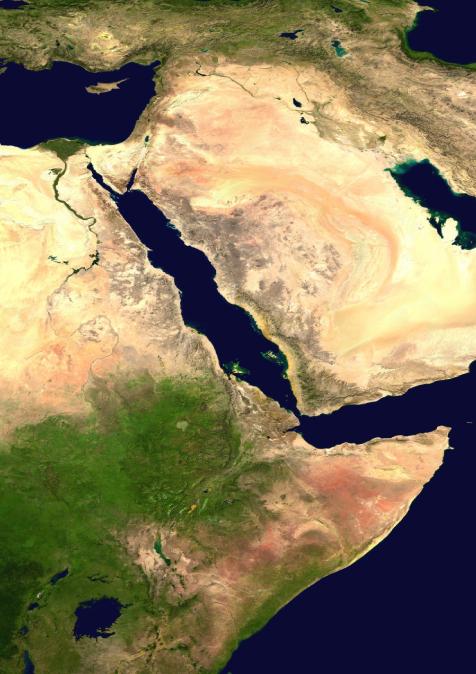
    Feeble eyesight may hinder you from finding Puntland on a map, the unrecognized Federal member state in Somalia, Khaatumo State, Jubaland, or Somaliland, concerning the planet’s size just large enough to be covered by the shadow of a palm tree. Arab entities surrounded by sun and sand and the Gulf of Aden, Somaliland is surviving as a self-declared nation, located on the southern coast of the Gulf of Aden bordered by Djibouti to the northwest, Ethiopia to the south and west, Somalia ...
  • November 30, 2021
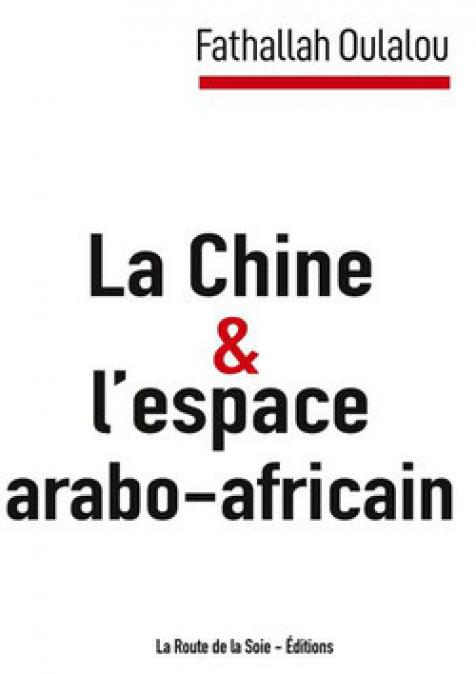
    Pourquoi ce thème ? Pourquoi, alors que nous traversons une pandémie sans précédent, l'auteur a-t-il décidé de comprendre les liens entre la Chine, l'espace arabo-africain et les nouvelles routes de la soie ? À cause du Covid-19, le monde se trouve à un tournant historique et stratégique du processus de mondialisation. Selon ses observations (comme homme politique), cette pandémie est bien plus qu'une crise sanitaire, c'est une crise globale qui a des impacts sociaux, économiques, ...
  • November 8, 2021
    The Taliban takeover of Kabul on August 16, 2021, and the ensuing Afghan regime collapse in face of the Islamists, sent a global shockwave that for a time obscured the country's economic woes during US occupation. This paper examines the situation and implications for the Afghan economy of Taliban rule. U.S. presence was to put it mildly, barely beneficial to the Afghan economy, whose misleading results stem primarily from International Monetary Fund (IMF), World Bank (WB) and weste ...
  • Authors
    September 22, 2021
    Face à la concurrence mondiale croissante, les Emirats arabes unis (EAU) ont pu constater le retard enregistré dans le domaine maritime dans les points stratégiques traditionnels au début du 21ème siècle. Pour autant, le pays détient une position importante sur la scène internationale en ce qui concerne le transport maritime. Grâce à la DP World, instrument diplomatique émirati, le lancement d’initiatives permettant au pays de regagner une place et une implantation dans différents p ...
  • Authors
    July 16, 2021
    The BDA Currents: Where Diplomacy Meets Business, is the Brussels Diplomatic Academy’s annual report covering the wider geopolitical and other factors influencing and affecting the world of diplomacy, international relations and global business. The journal focuses on issues of topical interest around the centers of global power, influence and importance, including the continents of Europe and Africa, the Middle East, China, India & Asia, Russia and the Commonwealth of Independe ...
  • Authors
    Amine Benbernou
    Dorothée Schmid
    July 9, 2020
    Middle Eastern geopolitics is currently undergoing structural changes: the regional order is in transition in the aftermath of the Arab Spring that undermined authoritarian governance, and triggered the competition for power against a backdrop of American withdrawal. This new race for regional domination challenges the traditional hierarchy of powers that is mainly based on military capacity and the interplay of foreign alliances. The economy, which had previously guaranteed the pol ...
  • April 29, 2020
    La transition politique de l’Égypte, depuis 2011, a été tout aussi turbulente que sa transition économique. Tous les efforts de l’Egypte post-Moubarak se sont articulés autour de la relance économique, la stabilisation macroéconomique et politique et du renforcement de la sécurité interne du pays. Suite à l’accord avec le Fonds monétaire international (FMI), en 2016, l’Egypte a mené plusieurs réformes économiques qui ont, pu relancer la croissance économique et donner des résultats ...
  • Authors
    Amine BENBERNOU
    Dorothée SCHMID
    March 23, 2020
    La géopolitique du Moyen-Orient connaît aujourd’hui des changements structurels: l’ordre régional est en transition, dans le sillage des printemps arabes, qui ont ébranlé la gouvernance autoritaire et libéré la compétition de puissance, sur fond de retrait américain. Cette nouvelle course à la domination régionale remet en cause la hiérarchie traditionnelle des puissances, essentiellement fondée sur la capacité militaire et le jeu des alliances extérieures. L’économie, jusque-là gar ...
  • Authors
    January 20, 2020
    Le 3 octobre 2016, la Turquie a déposé une plainte contre le Maroc devant l’Organisation Mondiale du Commerce (OMC) au sujet des mesures antidumping appliquées par le Maroc contre les exportations turques en Acier laminé à chaud.1 Suite à l’échec des consultations entre les deux pays, la Turquie a demandé, le 12 janvier 2017, l’établissement d’un groupe spécial pour examiner la conformité des mesures prises par le Maroc avec le droit de l’OMC. Demande qui marque le passage du litige ...
  • Authors
    January 15, 2020
    “The Nightmare we feared has arrived” Death was late because the departure time of the plane was delayed. But death arrived- six minutes after takeoff from Tehran’s “Imam Khomeini International Airport. It was still dark, 6.12 hours’ local time, when flight 752 of “Ukraine International Airlines” took course toward Kyiv, the Ukraine capital three hours and fourty two minutes away. The Boeing 737 800 NG had reached 2400 meters, when the American military’s “Space Based Infrared ...