Podcasts

Back

Reviving Multilateral Security Dialogue in the MENA: Finding the Hard, but Possible, Compromise

05
May 2017
Emiliano Alessandri 

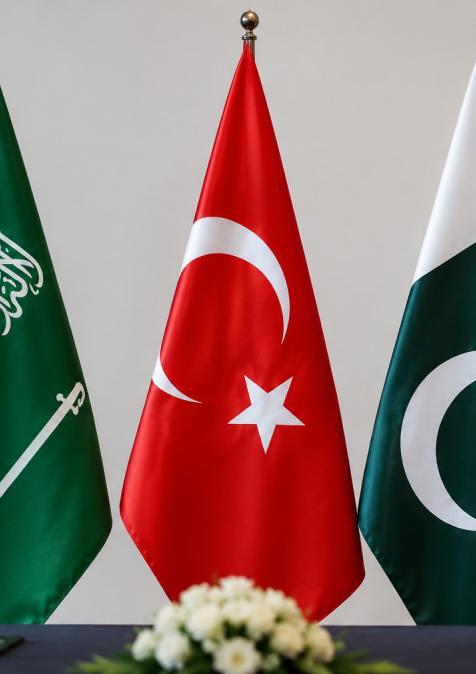
This podcast is performere by Mr. Eamiliano Alessandri. While possible, prospects for repairing existing fractures through multilateral dialogue and compromise have become elusive as crises in the region persist. There are quite a few unfavorable conditions hindering the emergence of some form of multilateral security process: areas of hot conflict have widened in recent years making violence almost endemic in the region, in countries like Syria, Iraq, Yemen and Libya; the Middle East peace process is in a stalemate and already thin trust between the Israeli and Palestinian leaderships is all but gone as both have become more contested among respective constituencies and less respected abroad; in some countries, the social contract seems to be breaking after a failed Arab Spring, challenging government authority even in places like Tunisia where a fragile democratic transition audaciously continues despite growing socio-economic discontent and a deteriorating security situation; some other MENA states have become weaker as a result of chronic violence and dysfunctional governance; while non-Arab states, from Turkey to Iran, have seen an opportunity to expand their clout in a Middle East in flux, even if themselves under great pressure, extra-regional actors have never appeared more divided about the course to follow, or more distracted by other priorities.

RELATED CONTENT

  • Authors
    Fadoua Ammari
    July 27, 2026
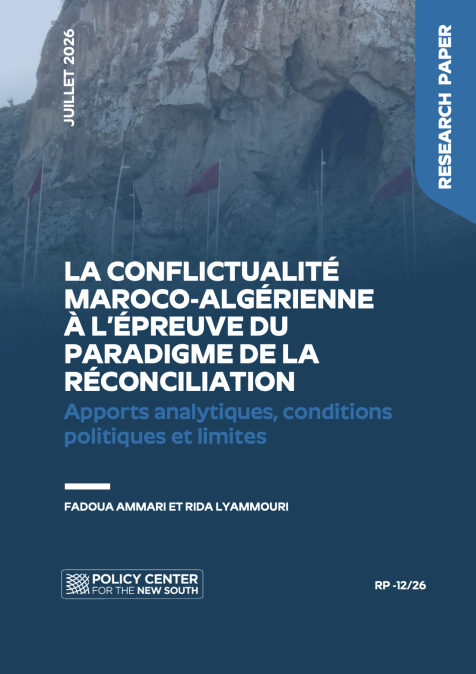
    Cet article évalue la pertinence du paradigme de la réconciliation pour analyser la rivalité maroco-algérienne. À partir d’une démarche qualitative, historico-interprétative et interdisciplinaire fondée sur un corpus raisonné de travaux académiques et de sources institutionnelles, il montre que cette conflictualité ne se réduit ni au différend du Sahara ni à un simple antagonisme bilatéral. Elle se construit à l’intersection de mémoires concurrentes, de mécanismes de sécuritisation, ...
  • July 24, 2026
    Dans cet épisode d’Africafé, les échanges portent sur la situation sécuritaire au Sahel et le rôle de la CEDEAO face aux défis régionaux. À travers le cas du Mali, la discussion revient sur les recompositions en cours, le retrait des partenaires internationaux, la montée en puissance de...
  • Authors
    Niccola Milnes
    July 21, 2026
    Armed-group drone use in the Sahel and Lake Chad Basin has scaled from rudimentary commercial-quadcopter Improvised Explosive Device (IED) drops in 2023 to a capability set that now includes First-Person View (FPV) strikes with shapedcharge anti-armor warheads, fiber-optic FPVs that defeat radio-frequency jamming, coordinated drone-and-ground assaults on hardened airfields, and a 25-drone non-state swarm. Four groups—Jama'at Nusrat al-Islam wal-Muslimin (JNIM), the Azawad Liberation ...
  • Authors
    July 17, 2026
    Les relations, très étroites, entre l’énergie et la géopolitique sont bien connues. Cela vaut aussi pour plusieurs conflits armés. Mais, dans la période récente, le conflit le plus lié à l’énergie est la guerre d’Iran de 2026, qui a débuté le 28 février. Un cessez-le-feu est en vigueur depuis le 8 avril et un protocole d’accord a été signé le 17 juin par l’Iran et les États-Unis. Mais, comme le montrent les attaques de l’Iran contre des navires et les frappes américaines de ces dern ...
  • Authors
    July 17, 2026
    The close relationship between energy and geopolitics is well established. The same holds true for several armed conflicts. In recent years, however, the conflict most closely intertwined with energy has been the 2026 Iran War, which began on February 28. A ceasefire has been in effect since April 8, and a Memorandum of Understanding (MoU) was signed by Iran and the United States on June 17. Nevertheless, as demonstrated by Iran's attacks on commercial vessels and recent U.S. strike ...
  • June 26, 2026
    Three years after the adoption of the first National Action Plan (NAP) on the Women, Peace and Security (WPS) Agenda, Morocco has made real institutional progress, but implementation is still inadequate. The extension of the NAP opens a window of opportunity to prepare a second, more ambitious and operational cycle.This Policy Brief identifies four persistent obstacles: a virtually stagnant female employment rate of 19.1%, less than 3% female representation in peacekeeping contingen ...