Publications /
Opinion

Back
EU democracy is alive and well as the battle for Europe’s top jobs starts
Authors
Thomas Richter
May 27, 2019

The author is an alumnus of the 2018 Atlantic Dialogues Emerging Leaders program

As European citizens wake up on Monday morning, democracy is alive and well in Europe. Voter turnout increased to 50,5% compared to with 42,6% in 2014, the highest for two decades as voters across the continent responded to the populist threat.

Anti-EU, populist and nationalist parties have seen gains (around 115 seats) and as a committed European i am saddened to see more voters turn to populists for answers. And yet it was a European election night that lived up to the hype. Despite predictions of the End of Europe, the far-right earthquake didn't quite shake the parliament's foundations. The constellation of the new European Parliament shows that the pro-European centre largely held firm in the face of its biggest threat from anti-establishment parties. The large majority of EU citizens voted in support of the European project, supporting parties that aim to create a better and stronger Europe.

Voters across Europe have chosen a European future. While the conservative EPP and socialist S&D, the two traditional power blocs in the EU Parliament, have lost seats, liberals and greens grew stronger. Together they hold a strong majority that in theory can shape Europe. Yet in the past five years differences between pro-European parties readily delayed legislative work and they were rarely united. If they are to effectively prevent the nationalists/populists from disrupting Europe, they will need to put aside political differences and build a broad coalition for Europe - a willingness to compromise for progress.

Now that the people have spoken what’s next?

The big question in Brussels is now who will be the next European Commission president? The work starts with the European Heads of State and Government who are meeting in Brussels on Tuesday evening for a special EU Council meeting. EU leaders should send a clear signal that Europe is up and running and able to make decisions quickly and effectively.

EU leaders select a candidate for the new EU Commission President, but he or she will have to gain the support of the new European Parliament (at least 376 votes). Manfred Weber of the EPP wants the pro-EU parties to support him, or at least behind the idea that the EU Commission’s top job must go to a Spitzenkandidat, but other parties are yet to declare their intentions.

In 2014, the conservative EPP and Socialist were able to provide a majority for the EU Commission President in the EU Parliament. In 2019, they will require support from either the liberals or the Greens to reach a majority. The pro-EU parties hold around two-thirds of seats. But the majority isn’t as comfortable as it seems once abstentions, no-shows, Brits and Hungarians are taken into account so the possible options are:

* A big pro-EU coalition (EPP, Socialists, Liberals, Greens):  506

* The big three (EPP, Socialists, Liberals): 436

* A coalition without Macron (EPP, Socialists, Greens): 399

So the question is what price they will either the liberals or greens or both ask in return for their support and may this open the door for a Commission President not from the EPP or Socialists?

While everyone will be focused on who will get the top jobs, EU leaders and politicians urgently need to address the growing disappointment voiced by the rising number of nationalist and populist voters. It is too easy to simply dismiss them. EU political leaders would do well to listen to their concerns and try to reintegrate them into the European project.

While the debate about the interpretation of the EU election and the future of the European project continues, one thing is clear after this election: Europe won - the vision for Europe and European democracy is alive. And Europe is far more popular amongst its citizens than many wanted to admit.
RELATED CONTENT

  • Authors
    August 13, 2026
    The Resolution adopted by an overwhelming majority of elected European officials in Strasbourg on June 10, 2021, on "the violation of the UN Convention on the Rights of the Child and the exploitation of minors by the authorities in the migration crisis in Ceuta" (2021/2747/RSP), could not fail to leave its mark.Decoding the ResolutionThe Resolution shocked Moroccans to such an extent that it was quickly set aside at the time, as if there were a wish to forget it as fast as possible. ...
  • Authors
    August 13, 2026
    Cuando estalla una crisis, esta da lugar a la activación de reflejos para su gestión y la limitación de sus efectos. Comienzan, entonces, los análisis y las suposiciones sobre las disfunciones, los incumplimientos y las fallas que la ocasionaron. En algunos casos, la teoría de la conspiración se inmiscuye y las hipótesis buscan a los autores que provocaron la crisis, sus designios y sus objetivos. Sin embargo, la teoría de la gestión de crisis nos enseña que una crisis surge según ...
  • Authors
    August 12, 2026
    When a crisis erupts, it sets crisis-management reflexes in motion and prompts efforts to contain its effects. Analysts then begin looking for the malfunctions, oversights, and failures that caused it. In some cases, conspiracy theories creep in, and speculation turns to who engineered the crisis, and to what end. Crisis-management theory teaches us, however, that a crisis unfolds under conditions that favor its emergence. Crises take shape in an environment where latent vulnerabil ...
  • Authors
    August 11, 2026
    Lorsqu’une crise éclate, elle donne lieu à l’actionnement des réflexes pour sa gestion et la limitation de ses effets. Commencent, alors, les analyses et les suppositions sur les dysfonctionnements, les manquements et les défaillances ayant entrainé ladite crise. Dans certains cas, la théorie du complot s’ingère et les hypothèses cherchent les auteurs ayant provoqué la crise, leurs desseins et leurs buts.Cependant, la théorie de gestion des crises nous apprend qu’une crise inte ...
  • Authors
    August 6, 2026
    With America's 250th anniversary, there will be many analyses of the country's history from domestic and international perspectives. But the meaning of the American story should also be assessed in key regional settings, from Asia to Latin America, and in transatlantic terms. In this vein, it is worth exploring the U.S. engagement in and with the Mediterranean world, one of the first places of U.S. international activism, and a setting where diverse aspects of U.S. foreign policy ha ...
  • August 4, 2026
     Cet article a initialement été publié sur la plateforme confrontations.org Février 2022 : face à un nouveau contexte international, les Européens se rallient aux idées de souveraineté européenne et d’autonomie stratégique, brisant ainsi un tabou. Octobre 2025 : après cinquante ans de contentieux, le Conseil de sécurité ouvre la porte à une reconnaissance officielle de la souveraineté marocaine au Sahara occidental.Apparemment sans rapport, ces deux évènements sont reliés ...
  • Authors
    July 27, 2026
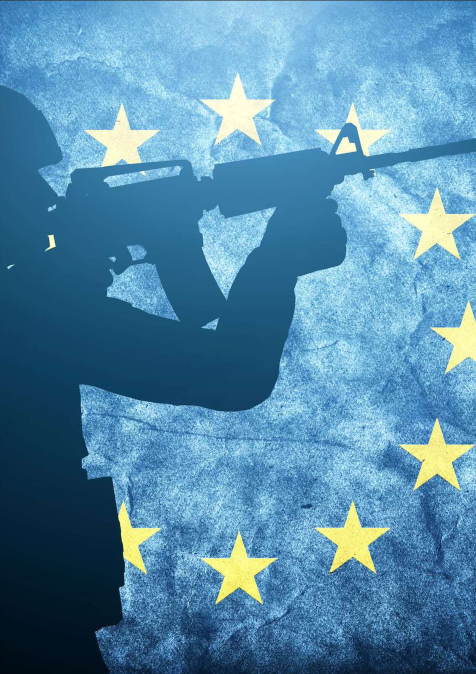
    Is Europe Prepared for War?European public opinion is moving from treating a major conflict as unthinkable to regarding it as a possibility for which governments must prepare. Attention is increasingly focused on Russian hybrid operations, vulnerabilities in critical infrastructure and the risk of fragmentation within NATO. European defence policy is consequently undergoing a rapid transition from post-Cold War complacency towards preparations for high-intensity warfare. Recent ...
  • Authors
    July 15, 2026
    We Are Watching You In April 2026, the UK Ministry of Defence revealed that it had tracked a covert Russian submarine operation apparently intended to map critical undersea cables and pipelines in the North Atlantic and the North Sea. A Russian attack submarine and two specialised intelligence vessels operated by the Main Directorate of Deep-Sea Research, commonly known as GUGI, were reportedly monitored for four weeks by the Royal Navy, including HMS St Albans and P-8 Poseidon ...
  • Authors
    July 13, 2026
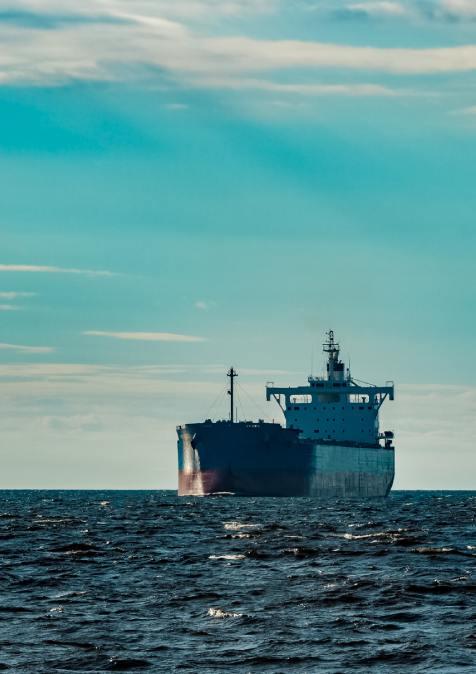
    On “marinetraffic.com”, thousands of triangles fill a map of the world’s ports and oceans, each representing the active location and destination of a ship, reported the “McGill International Review” (April 16, 2026) adding,” suspicious tankers are plentiful among them.” One of these vessels, marked by a red triangle, appears, zoomed, as “Monique”, a twenty-year-old vessel, aka Tokyo, Phuket and Elysia. Its old age and the frequent name change, suspects reporter Julnar Alzuki, “indic ...