
This episode explores the evolving African defense strategies in response to emerging security threats. We discuss the shift toward regional cooperation, modernization of military capabilities, and integration of technology. The conversation highlights the role of governance, economic resilience, and diplomacy in sustaining security. It underscores Africa’s push for self-reliance and strategic autonomy in defense policy.
RELATED CONTENT
-
 December 19, 2025The U.S. military buildup in the Caribbean—the most significant since the Cuban Missile Crisis—comes at a moment when a new world order is taking shape, its contours still unclear, and in which the U.S. seeks to be more assertive in the Western Hemisphere. This disposition toward South America and the Caribbean was underscored by the recent publication of the new U.S. National Security Strategy, in which the Monroe Doctrine is explicitly invoked. This Policy Brief situates the devel ...
 -
 December 18, 2025The return of President Donald Trump to the White House at the start of 2025 was expected to signal an American retreat from international engagement, especially in regions of traditional security interest, such as southern Europe, North Africa, and the Middle East. To the surprise of many observers around the Mediterranean, and perhaps to the dismay of some in the Trump administration’s ideological orbit, this has not happened. If anything, the second half of 2025 has seen a high d ...
 -
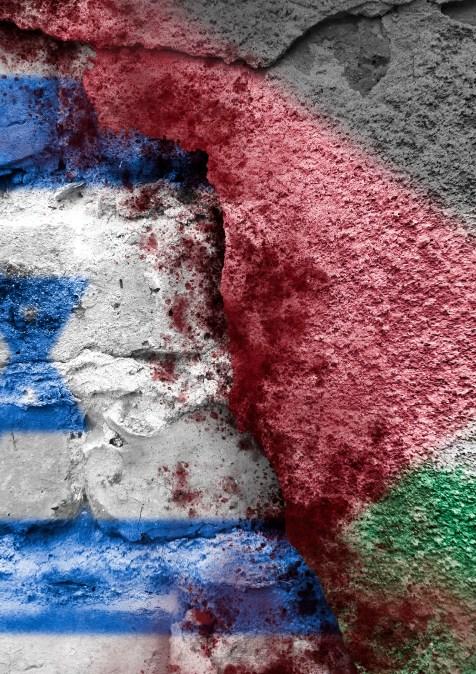 December 17, 2025I recently participated in a discussion between Israelis and Arabs, some living in the Middle East, some living abroad[1]. The discussion topic was ‘The Two State Solution’. This article presents my personal takeaways from the discussion. It does not try to describe the details, and other participants may have different takeaways.I joined the discussion thinking that the two-state solution was dead. Most of the other participants felt the same way—all very pessimistic. But I left fe ...
 -
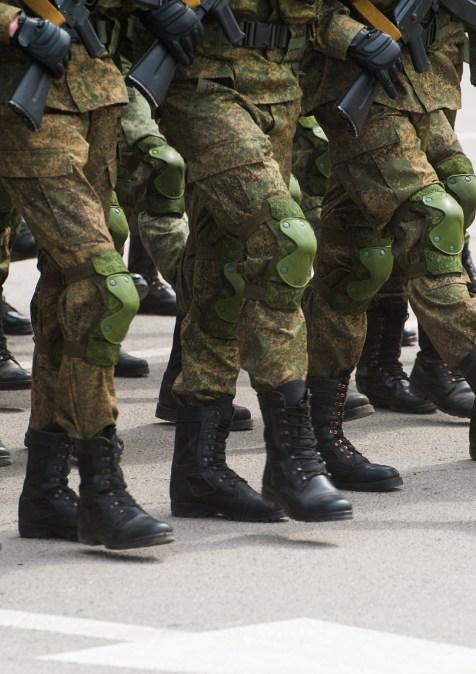 December 16, 2025An unusual gesture indeed—the dictator, more often than not a recluse, withdrawn behind his fortress and protected by 1.2 million armed soldiers, finally admitted what had long been seen on the battlefield in Ukraine and by spy satellites far above. North Korean soldiers—possibly 12,000 of them—are fighting on front lines alongside Russian troops, and they are falling or being wounded; some 4,000 men so far, by current estimates. ...
 -
 December 14, 2025In 2025, the global landscape became increasingly fragmented and uncertain. Great power competition intensified, regional conflicts became protracted and exacerbated, while economic nationalism reshaped the rules of trade and development. The mechanisms for conflict resolution and cooperation that have long provided a foundation for international cooperation are now under strain due to polarization and mistrust. Even longstanding alliances, bilateral and collective security architec ...
 -
 December 1, 2025This Paper was originally published on transatlantic.org The contemporary maritime domain is increasingly recognized as a geopolitical and economic space, but also as an environment intertwined with human, social, ecological, and governance systems ashore. The United Nations Institute for Disarmament Research (UNIDIR 2024) report argues that maritime security has evolved from a narrow naval and state-centered concern into a multidimensional issue embedded in global human s ...
 -
 November 28, 2025Le 17 novembre 2025, le Conseil de sécurité de l’Organisation des Nations Unies (ONU) a adopté la résolution 2803 par laquelle il fait sien le Plan d’ensemble du Président Donald Trump ayant pour objectif de mettre fin au conflit à Gaza. Contrairement à ce qu’on pourrait croire, l’initiative américaine ne date pas du 2ème mandat de l’Administration Trump. Elle a vu le jour durant son premier mandat. Le Plan entériné par la résolution du Conseil de sécurité de l’ONU, surnommé ‘ ...
 -
November 28, 2025On November 17, 2025, the United Nations (UN) Security Council adopted Resolution 2803, endorsing President Donald Trump's Comprehensive Plan to end the conflict in Gaza. Contrary to popular belief, the American initiative does not date from the Trump Administration's 2nd term. It was born during his first term.The plan endorsed by the UN Security Council resolution, dubbed the ''Deal of the Century'', is in fact the heir to the initial plan, which bore the name ''Peace to Prosperit ...
-
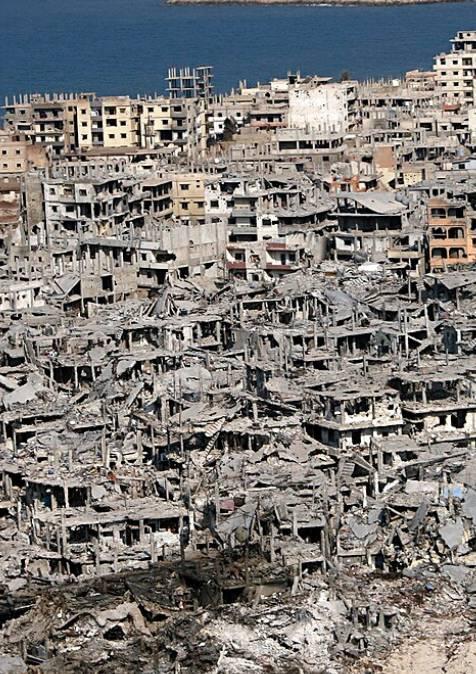 November 28, 2025The adoption of United Nations Security Council Resolution 2803 on November 17, 2025, endorsing the “Comprehensive Plan to End the Gaza Conflict,” is a step in the right direction, but it must be accompanied by the implementation of a Gaza development and post-conflict reconstruction program. Paragraph 6 of Resolution 2803 “calls upon the World Bank and other financial institutions to facilitate and provide financial resources to support the reconstruction and development of Ga ...
 -
 November 25, 2025This Policy Paper analyses the Fourth Industrial Revolution (4IR) through the critical lens of technological colonialism. It argues that the fusion of physical, digital, and biological technologies is not merely a technical phenomenon but a civilizational shift reshaping the foundations of global power. The article traces a historical continuum from previous industrial revolutions, demonstrating how patterns of inequality and extraction persist, now transposed into the digital realm ...

