The rise of populism in Spain with our columnist Helmut Sorge

November 22, 2019

Questions:

1/ The recent elections in Spain showed a successful right wing party “Vox’’. Is this a sign of more trouble for Europe?

2/ Do we have to fear a strong rise of populism?

3/ Is a more restrictive immigration policy a solution?

Speakers
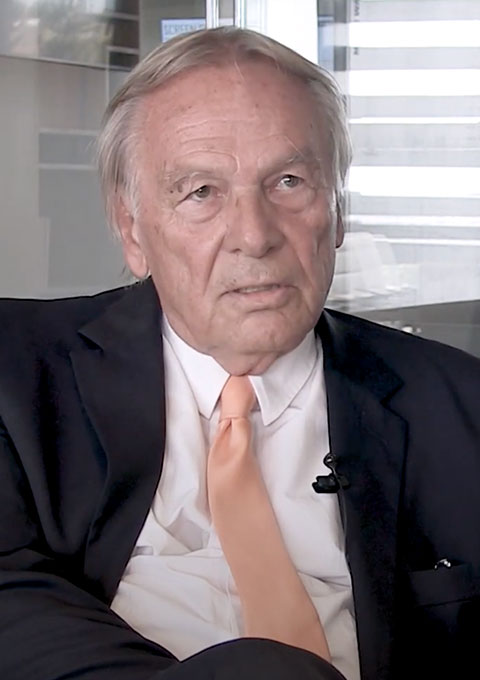
Helmut Sorge
Columnist
Helmut Sorge is a columnist at the Policy Center for the New South, where he publishes opinion pieces in the format of international press reviews of current events related to the Middle East and European affairs, and conducts interviews with high level policy makers and PCNS researchers. He is also a lecturer on journalism and the media. For over 40 years, Helmut Sorge served as a writer, former Foreign correspondent, Foreign editor, and Middle East expert for Germany's leading newsmagazine "Der Spiegel" to Washington, London, Paris and Los Angeles. He reported from Vietnam, the Middle East, wrote about safaris, nuclear accidents, visited prisoners on death row in the United States. The German weekly “Gala” summarized in 2011, when his latest book, a collection of biographies ...
  • July 3, 2026
    This Policy Paper has also been published in French and Spanish by Le Grand Continent Morocco offers a compelling example of how a middle-income economy can navigate a more fragmented global environment, characterized by weak growth and slower convergence. Since 2022, economic activity has remained relatively strong, with growth exceeding that of many comparable economies. Non-agricultural growth has averaged 4.4% since 2022, around 1.3 percentage points above its historical av ...
  • July 3, 2026
    This episode explores Russia’s growing influence in Africa through media, information warfare, and anti-Western narratives. It examines how Moscow uses historical ties, social media, local influencers, and security partnerships to shape perceptions, while questioning the real scope and ...
  • July 3, 2026
    Depuis plusieurs semaines, l'Afrique du Sud vivait au rythme d'une échéance sans existence légale. Au 30 juin, des mouvements anti-immigration avaient fixé la date à laquelle les étrangers en situation irrégulière devaient, selon eux, avoir quitté le pays. Le gouvernement Sud-africain a même dû démentir qu'il s'agissait d'une directive officielle du ministère de l'Intérieur. L’initiative a pourtant produit des effets importants : des milliers de ressortissants mozambicains, malawite ...
  • June 26, 2026
    Three years after the adoption of the first National Action Plan (NAP) on the Women, Peace and Security (WPS) Agenda, Morocco has made real institutional progress, but implementation is still inadequate. The extension of the NAP opens a window of opportunity to prepare a second, more ambitious and operational cycle.This Policy Brief identifies four persistent obstacles: a virtually stagnant female employment rate of 19.1%, less than 3% female representation in peacekeeping contingen ...
  • Authors
    Sous la direction de
    June 23, 2026
    Bientôt disponible en vente. L’Afrique atlantique émerge aujourd’hui comme un espace de réflexion stratégique majeur. Longtemps envisagée sous l’angle de sa fragmentation ou de sa marginalité relative dans les grands récits géopolitiques, cette façade maritime tend désormais à être appréhendée comme un ensemble en devenir, structuré par des dynamiques géopolitiques, économiques et sécuritaires de plus en plus intenses. C’est dans cette perspective qu’a été initié le Africa ...
  • June 22, 2026
    What does it take for think tanks to stay trusted, relevant, and heard in a world that's increasingly sceptical of institutions? At the Policy Center for the New South we put that question to keynote speakers Erica Schoder and Héctor Cárdenas on the sidelines of the OTT Conference 2026 ...
  • June 22, 2026
    History devotes considerable attention to the rise and fall of great powers. Scholars have spent centuries analyzing why empires collapse, why nations decline, and why dominant states eventually lose their position. By comparison, relatively little attention has been devoted to a different question: what happens when a country succeeds beyond its own expectations? ...
  • Authors
    Diogo Ramos Coelho
    Bruno Saraiva
    June 22, 2026
    Global imbalances are back—and this time the risks look different. The 2008 financial crisis showed how persistent current-account deficits and surpluses between major economies can fuel financial instability and trigger sudden, severe reversals of capital flows. After almost two decades, many thought that episode had been resolved. It had not. New imbalances have built up, with a familiar cast: China, Germany, Japan, and oil exporters running large surpluses, and the United States ...