Résilience de l'Afrique : cas du COVID-19 - Interview de Abdelhak Bassou

April 7, 2020

- On annonce une catastrophe en Afrique en relation avec le Covid-19, quelle part de vérité dans ces annonces ? - L’Afrique enregistre-t-elle des défaillances de résilience ? - Que peut-on reprocher à la résilience en Afrique ?

Speakers
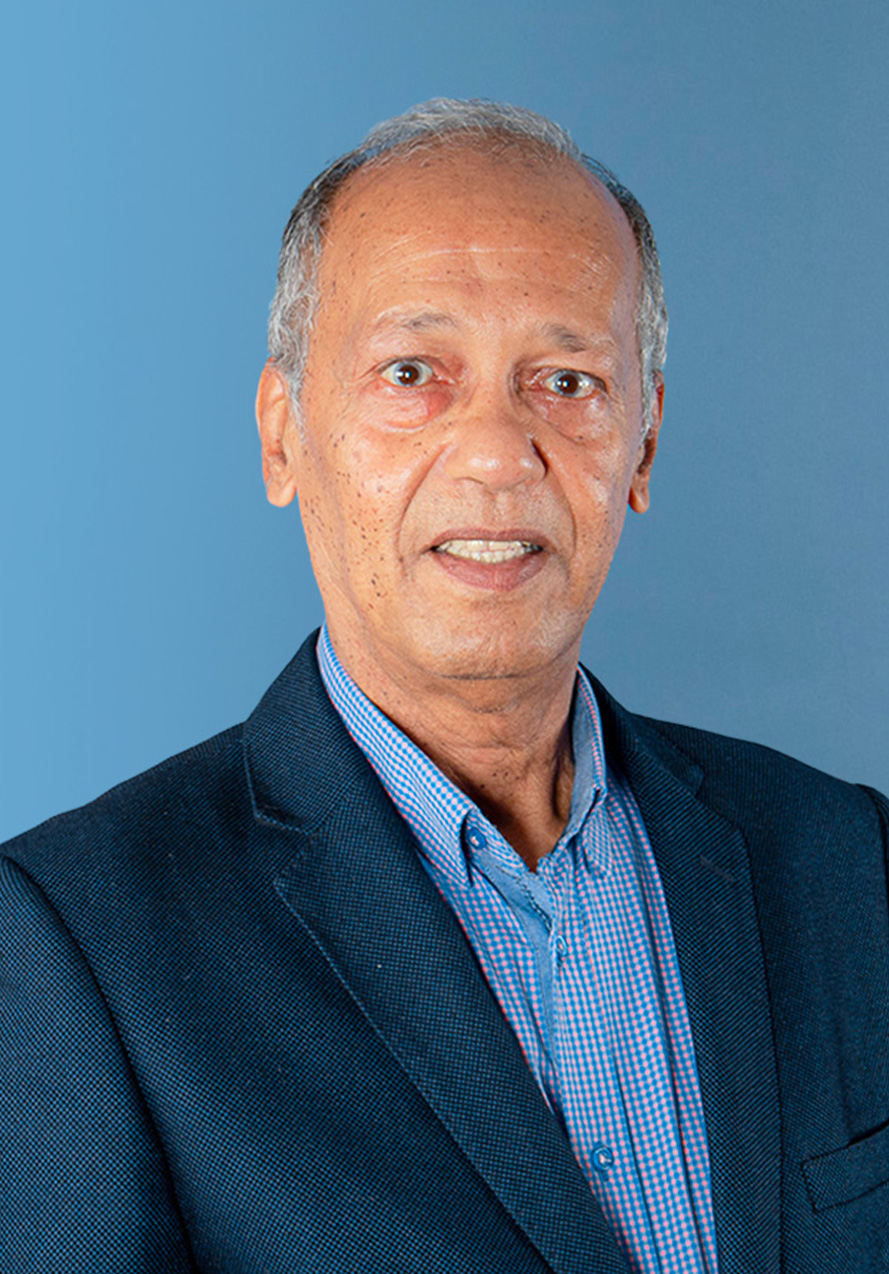
Abdelhak Bassou
Senior Fellow
Abdelhak Bassou is a Senior Fellow at the Policy Center for the New South and a non-resident senior fellow at the Atlantic Council’s Africa Center. He is also an Affiliate Professor at Mohammed VI Polytechnic University. Bassou has had an extensive career in Moroccan National Security, where he served in various capacities including as head of the border division from 1978 to 1993. He was the former director of the Royal Institute of Police in 1998 and served as Head of Regional Security (Errachidia 1999-2003, Sidi Kacem 2003-2005) and as Central Director of General Intelligence from 2006 to 2009.   He holds a master's degree in political science and international studies from the Faculty of Law, Economics, and Social Sciences in Rabat. His academic research delves into ...
RELATED CONTENT

  • October 7, 2016
    La réunion des chefs d’État et de gouvernement des pays de l’OTAN à Varsovie constitue une étape importante de la transformation structurelle et fonctionnelle de l’Alliance atlantique et de l’OTAN. Le Communiqué final et les trois déclarations confirment le retour progressif à l’endiguement, à travers le renforcement de la dissuasion et la défense de l’Alliance, et la mise à distance de la menace asymétrique et hybride. Cette dynamique contribue à la centralité de la défense collect ...
  • Authors
    Emiliano Alessandri
    September 19, 2016
    This policy brief reviews the recently published EU Global Strategy, highlighting its main strengths and weaknesses as well as innovations, starting with the concept of resilience. It argues that the document has many strengths for being a compromise text written at a time of deep uncertainty about the EU's own future. The brief also comments on the future of EU-Morocco relations in the new framework. It notes that the strategy perhaps missed an opportunity to reaffirm European-Moro ...
  • Authors
    Laura El-Katiri
    September 7, 2016
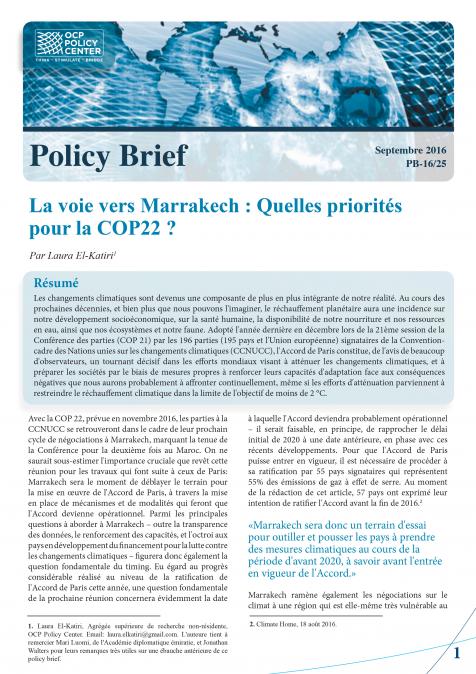
    Climate change is an increasingly integral part of our reality. Over the coming decades, global warming will affect our socio-economic development, human health, our availability of food, water along with our ecosystems and wildlife, more than we are likely able to imagine. The Paris Agreement, adopted last year in December at 21st session of Conference of the Parties (COP 21) by 196 parties (195 countries and the European Union) to the UN Framework Convention on Climate Change (UNF ...
  • Authors
    Aleksandr V. Gevorkyan
    August 15, 2016
    Emerging market economies (EM) as a special class of financial assets have recently been subject to two competing tales. On the one hand, there is evidence of continued financial deepening and further integration within the global financial system, while the offer of higher yields remains hard to find elsewhere. On the other hand, there are frequent bouts of fear of systemic unwinding of positions triggered by investors “exiting” EM that exhibit signs of weak or unclear macroeconomi ...
  • July 13, 2016
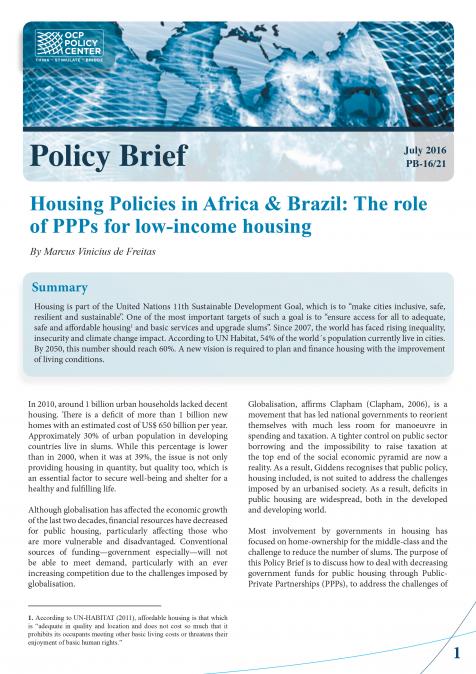
    Housing is part of the United Nations 11th Sustainable Development Goal, which is to “make cities inclusive, safe, resilient and sustainable”. One of the most important targets of such a goal is to “ensure access for all to adequate, safe and affordable housing1 and basic services and upgrade slums”. Since 2007, the world has faced rising inequality, insecurity and climate change impact. According to UN Habitat, 54% of the world´s population currently live in cities. By 2050, this n ...
  • Authors
    Under the Supervision of
    Philippe Chalmin
    July 4, 2016
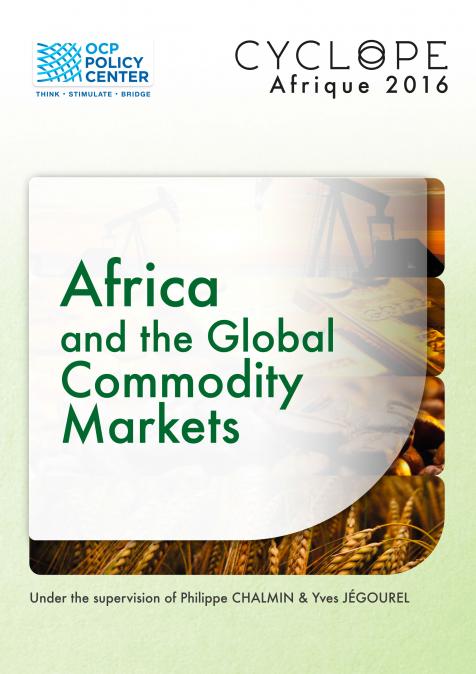
    Guinea’s bauxite, Moroccan phosphates, Nigerian Bonny Light, Zambian copper, Côte d'Ivoire’s cocoa, Ethiopian coffee or Madagascar’s vanilla: all are examples demonstrating that raw materials have a dimension that is as global as it is local. Global by the markets on which they are traded, local by their quality, a key element of their price, and their macroeconomic impact, particularly for Africa. In line with the 2016 CyclOpe report, which celebrates three decades of existence thi ...