Presentation of the 7th edition of the Atlantic Currents Report: Chapters on Geopolitics & IR

April 15, 2021

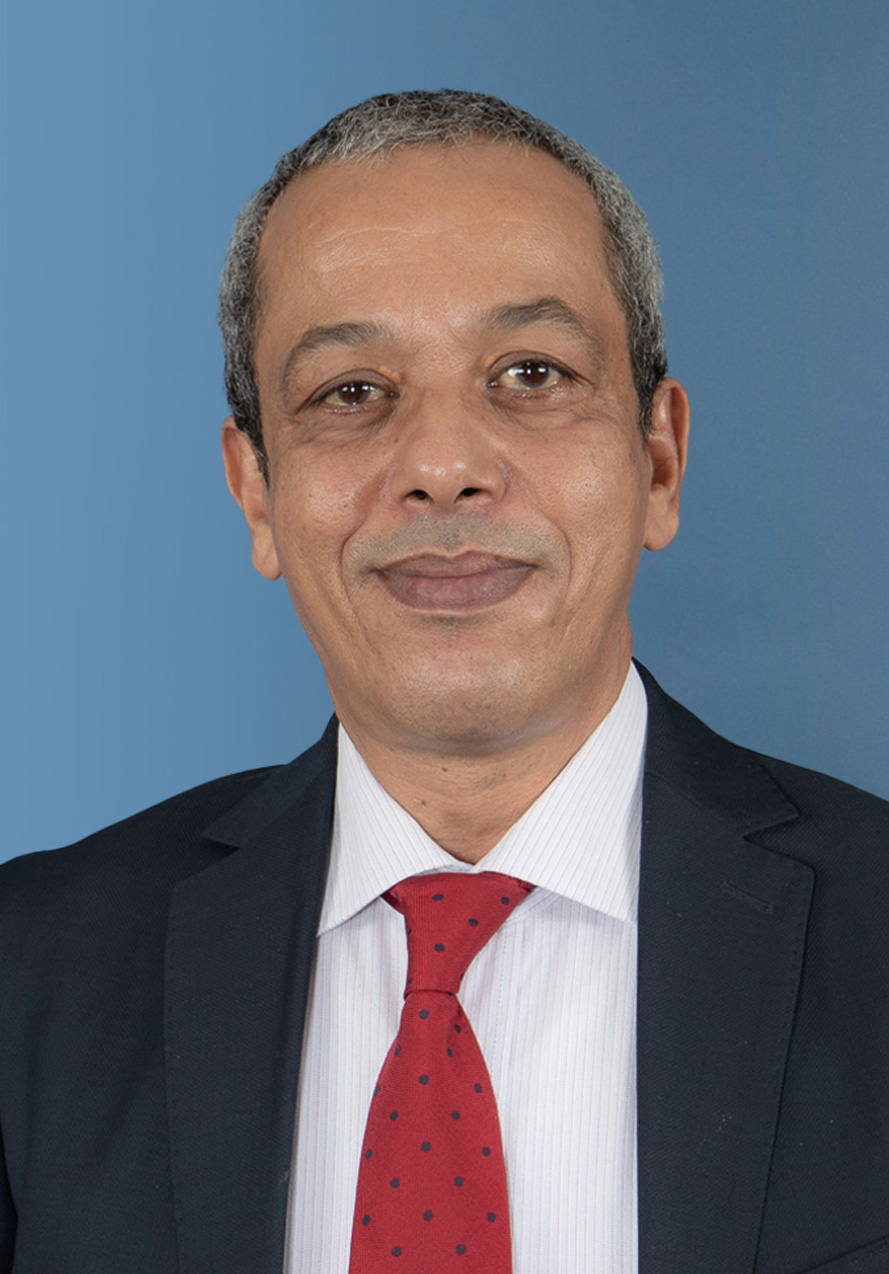
The Policy Center for the New South is pleased to host an online panel to present some of the main findings of the 7th edition of the Atlantic Currents report on Thursday, April 15, 2021 at 15:00 GMT. The Atlantic Current’s 7th edition provides a unique overview and in-depth analysis of the COVID-19 pandemic as seen from the Atlantic and the challenges it poses for the region. In this edition, the authors examine how COVID-19 has proved to be a destabilizing force in a wide range of sectors such as health, international relations, trade, energy or the economy. This report aims to examine and assess the consequences of the COVID-19 crisis while endeavoring to learn from these new and unexpected times in the hope of formulating solutions to the many issues that have arisen. 15:00-16:00 GMT Moderator: Mohammed Loulichki, Senior Fellow, Policy Center for the New South Speakers: - Salma Daoudi, Research Assistant in International Relations, Policy Center for the New South - Eduardo A. Haddad, Senior Fellow, Policy Center for the New South - El Mostafa Rezrazi, Senior Fellow, Policy Center for the New South
Speakers
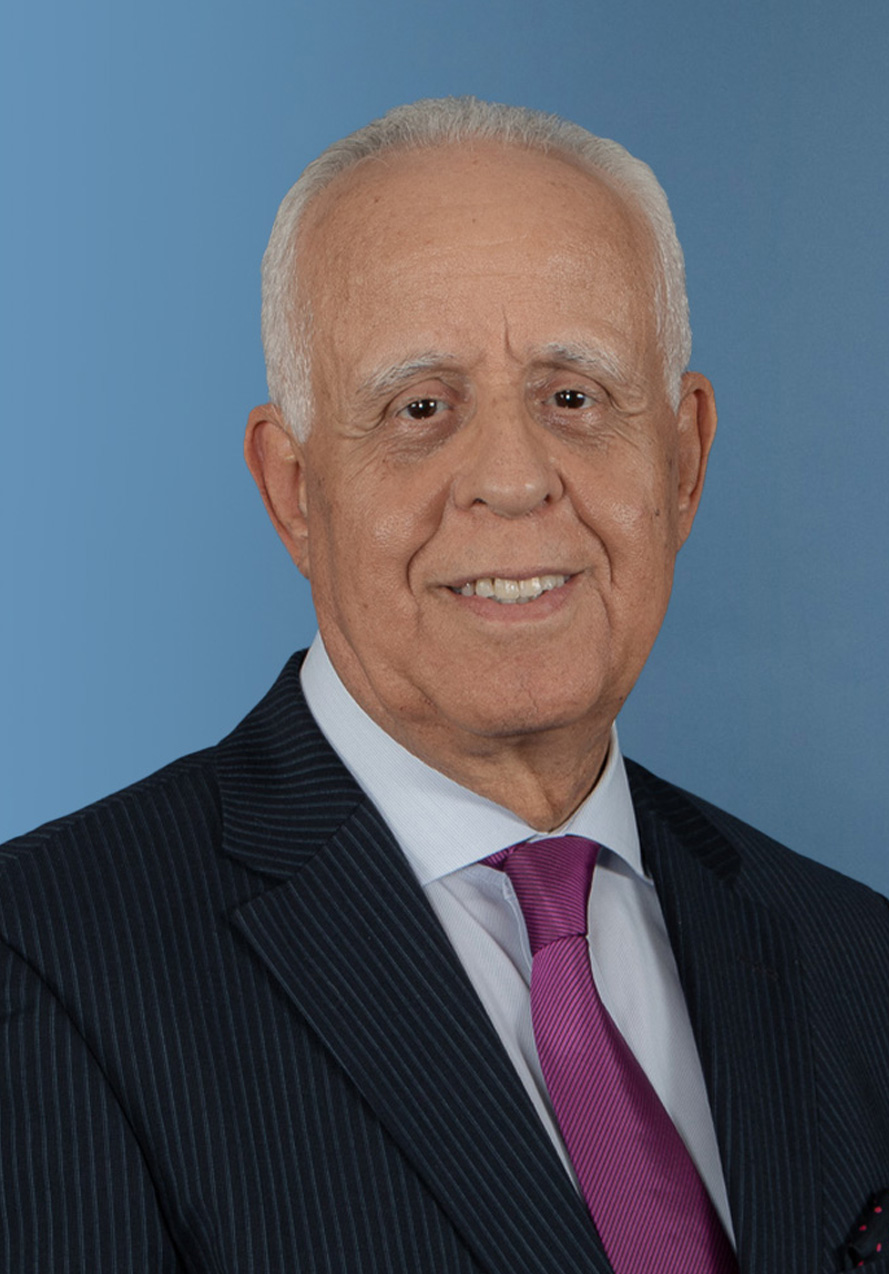
Mohammed Loulichki
Senior Fellow
Mohammed Loulichki is a Senior Fellow at the Policy Center for the New South and an Affiliate Professor at Mohammed VI Polytechnic University. He brings over 40 years of comprehensive experience in diplomacy, conflict resolution, and human rights. He has served in various roles including as a member and Deputy Head of the Moroccan delegation to the 3rd Conference on the Law of the Sea (1982-1990), Head of the Department of Legal Affairs and Treaties at the Ministry of Foreign Affairs (1988-1991), and General Director for Multilateral Affairs in the same ministry (2003-2006).   He also acted as Morocco's Ambassador to Hungary, Bosnia-Herzegovina, and Croatia (1995-1999), and was the Moroccan Government's Ambassador Coordinator with MINURSO (1999-2001). Furthermore, he se ...
Eduardo Amaral Haddad
Senior Fellow
Eduardo A. Haddad is Full Professor at the Department of Economics at the University of São Paulo, Brazil, where he directs the Regional and Urban Economics Lab (NEREUS). He is additionally a Affiliate Professor at the Faculty of Governance, Economic and Social Sciences of the Mohammed VI University. He also holds a position as Affiliate Research Professor at the Regional Economics Applications Laboratory – REAL – at the University of Illinois at Urbana-Champaign, USA. He is a Senior Fellow at the Policy Center for the New South, Rabat, Morocco. Prof. Haddad has published widely in professional journals on regional and interregional input-output analysis, computable general equilibrium modeling, and various aspects of regional economic development in developing countries; he ...
El Mostafa Rezrazi
Senior Fellow
Dr El Mostafa Rezrazi is a professor of Crisis Management, and Security Studies and a Senior Fellow at the Policy Center for the New South who focuses on Terrorism, Security and East Asia studies. His area of Expertise covers Afro-Asian Affairs, Strategic & Security Studies, Terrorism, Extremism and Deradicalization, mainly from the view of Criminal; Legal and Forensic Psychology.  He got his Ph.D. in Regional & International Affairs from the University of Tokyo in 1998, and later a Doctorate from the University of Mohammed V on the Psychological dynamisms of Suicide Bombers (2014). He is the executive director of the Moroccan Observatory on Extremism and Violence, Director of the African Center for Asian Studies, Rabat. Currently, he is Visiting Professor a ...
RELATED CONTENT

  • January 23, 2026
    The post-1945 international order, an architecture born of war-weariness and colonial twilight, is now a majestic but empty shell. Its foundational promise—a universal system of rules administered impartially—has been hollowed out by decades of selective enforcement, instrumentalized law, and a chasm between the rhetorical ideals of its custodians and their geopolitical practice. This is not a temporary dysfunction, but a systemic failure of legitimacy. From the invasion of Iraq und ...
  • Authors
    January 21, 2026
    In response to developing countries’ dissatisfaction with the New Collective Quantified Goal (NCQG) of $300 billion, which was decided at the Twenty-Ninth Conference Of the Parties (COP29) to the United Nations Framework Convention on Climate Change, in 2024 in Baku, Azerbaijan, the COP29 and COP30 presidencies promised to develop a roadmap to achieve $1.3 trillion in external climate finance that developing countries need, and to present it at COP30 in Belém, Brazil[1]. The two pre ...
  • Authors
    January 20, 2026
    This policy brief examines what the 2025–2026 period reveals about the future of global energy risk and the energy transition. After the shocks of 2021–2023, 2025 brought broad price easing: oil and coal prices declined as supply growth outpaced demand, and the World Bank projects further declines in the global energy price index in 2026, offering short-term relief for energy-importing economies. The brief argues, however, that the macroeconomic relevance of energy entering 202 ...
  • Authors
    Stephan Klingebiel
    Andy Sumner
    January 9, 2026
    Global cooperation is under stress. It hardly requires detailed analysis: the international system is in a profound crisis, when seen from many Northern vantage points. What if we see the same turbulence but from a different vantage point? For many in the Global South the current period signals risk, but also opportunity. That the same events could spark a sense of crisis in one group but opportunity in another is nothing new. However, the sheer scale, speed, and scope of recen ...
  • Authors
    Edited by Mohammed Loulichki
    December 11, 2025
    Available soon on Livremoi & Amazon. The 12th edition of Atlantic Currents explores how the Wider Atlantic can remain a space of cooperation and renewal in an age marked by instability. As geopolitical rivalries, technological competition, and climate pressures reshape the global order, the Atlantic Basin emerges not as a periphery but as a vital arena for pragmatic partnerships, shared problem-solving, and credible collective action. This 2025 edition traces the shift ...
  • Authors
    December 1, 2025
    This Paper was originally published on transatlantic.org The contemporary maritime domain is increasingly recognized as a geopolitical and economic space, but also as an environment intertwined with human, social, ecological, and governance systems ashore. The United Nations Institute for Disarmament Research (UNIDIR 2024) report argues that maritime security has evolved from a narrow naval and state-centered concern into a multidimensional issue embedded in global human s ...
  • Authors
    September 22, 2025
    Le Processus des États de l’Afrique atlantique (PEAA), lancé par Sa Majesté le Roi Mohammed VI en novembre 2023, ambitionne de transformer la façade atlantique africaine — jusqu’ici morcelée et vulnérable — en un espace géopolitique cohérent, intégré et prospère. L’Initiative s’appuie sur les provinces du Sud marocain comme pont stratégique vers les vingt- trois pays riverains de l’Atlantique, et sur une vision d’ouverture Sud-Sud et euro-africaine.Malgré des disparité ...
  • Authors
    Patricia Ahanda
    September 18, 2025
    L’autrice de cette opinion, Patricia Ahanda, est une alumna du programme Atlantic Dialogues Emerging Leaders 2018. Cette opinion a été publiée initialement sur patriciaahanda.paris Dans un monde marqué par l’émergence d’une instabilité géopolitique globale, par la non-linéarité et l’imprévisibilité croissante des rapports de force, le Maroc s’impose comme un leader pivot du Sud global. Un acteur incontournable capable de relier continents, blocs et cultures dans un mo ...
  • Authors
    Fadoua Ammari
    September 12, 2025
    The Atlantic Initiative, announced by King Mohammed VI in November 2023 to provide landlocked Sahelian countries with access to the Atlantic Ocean via Moroccan territory, promises to profoundly reshape the bilateral relationship between Rabat and Nouakchott. This research paper examines how this unprecedented project creates new strategic opportunities while raising shared challenges for Morocco and Mauritania. Diplomatically, the rapprochement around the Atlantic Initiative unfolds ...