Marchés de capitaux et marchés financiers : quels leviers de développement au Maroc ?

May 11, 2026

Cet épisode interroge la capacité du Maroc à atteindre ses ambitions économiques avec un système de financement encore largement dominé par les banques. Dans un contexte de besoins croissants en investissement et de transformation du tissu productif, les marchés de capitaux apparaissent comme un levier stratégique pour mobiliser l’épargne, soutenir les entreprises et diversifier les sources de financement. À travers l’analyse de Mohammed Benmoussa, l’épisode met en lumière les réformes et dynamiques nécessaires pour faire des marchés de capitaux un moteur durable de croissance et de compétitivité pour le Maroc.

Speakers
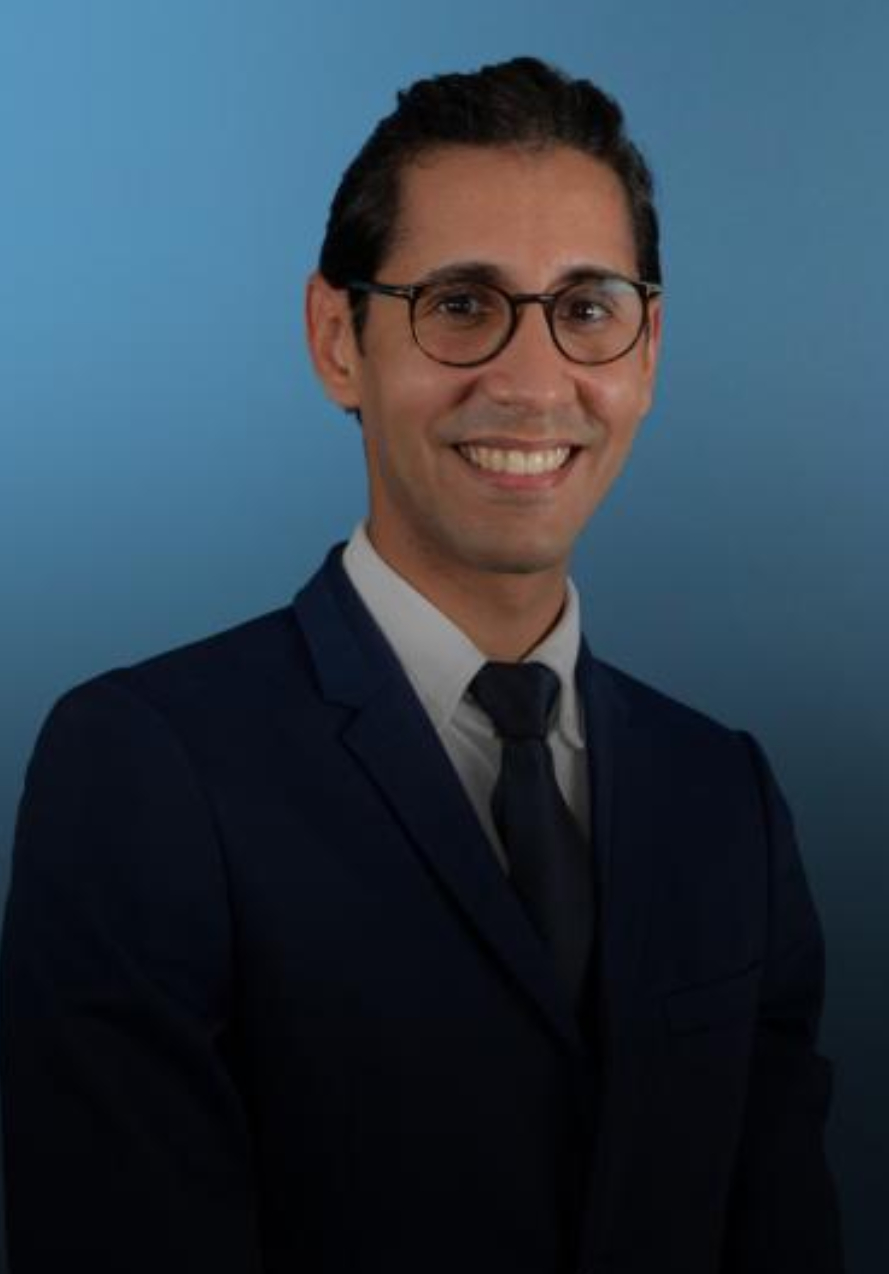
Ahmed Ouhnini
Economist, Policy Center for the New South
Ahmed Ouhnini is an Economist at the Policy Center for the New South. His research area covers agricultural economics, human and social development. Previously, he has worked as a researcher at the Paris School of Economics (PSE) and has also a record of working in consulting services in Morocco. Ahmed holds an engineering Diploma in Agriculture and Rural Development from the National School of Agriculture of Meknes and a Master’s Degree in Law, Economics and Management from the Paris 1 Pantheon Sorbonne Institute of Development. ...
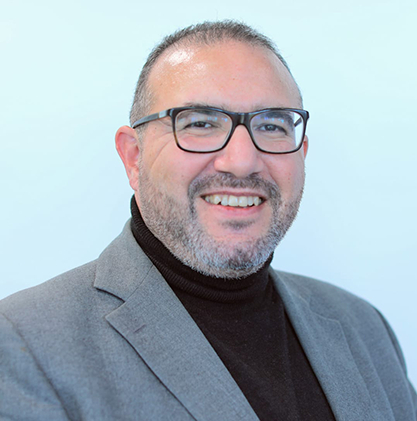
Mohammed Benmoussa
Affiliate Professor, Mohammed VI Polytechnic University, Rabat
Mohammed Benmoussa is a Moroccan economist and senior consultant in economic policy, taxation, and public finance, as well as a former banker and capital market practitioner. He is Professor of Corporate and Market Finance at Mohammed VI Polytechnic University. In December 2019, he was appointed by HM King Mohammed VI to the Special Commission on the New Development Model. He is also President of the Forum of Progressive Economists, President of the Damir Movement and the La Samir Front. He previously served as President of the Brokerage Firms Association and Vice-President of the Casablanca Stock Exchange. ...

RELATED CONTENT

  • June 22, 2026
    History devotes considerable attention to the rise and fall of great powers. Scholars have spent centuries analyzing why empires collapse, why nations decline, and why dominant states eventually lose their position. By comparison, relatively little attention has been devoted to a different question: what happens when a country succeeds beyond its own expectations? ...
  • Authors
    Diogo Ramos Coelho
    Bruno Saraiva
    June 22, 2026
    Global imbalances are back—and this time the risks look different. The 2008 financial crisis showed how persistent current-account deficits and surpluses between major economies can fuel financial instability and trigger sudden, severe reversals of capital flows. After almost two decades, many thought that episode had been resolved. It had not. New imbalances have built up, with a familiar cast: China, Germany, Japan, and oil exporters running large surpluses, and the United States ...
  • June 12, 2026
    Cet épisode revient sur les principaux défis de la politique budgétaire au Maroc, à partir du chapitre consacré au sujet dans le Oxford Handbook of the Moroccan Economy. Les intervenants soulignent le caractère largement structurel des déficits, la difficulté à sortir d’une politique bu...
  • Authors
    June 12, 2026
    This essay argues that the current debate about the future of the international monetary system is not really about Gulf currencies, oil pricing, or de-dollarization in the narrow technical sense. It is about something deeper and more important: whether institutional trust can survive when geopolitical certainty is eroding.The Gulf monarchies—Saudi Arabia, the United Arab Emirates, Qatar, Kuwait, Bahrain, and Oman—increasingly exist in a world where the United States no longer looks ...
  • Authors
    June 9, 2026
    In 2017, eight scientists from the Google research team published in the journal Advances in Neural Info Processing Systems the remarkable article “Attention is all you need,” which introduced a Transformer neural network architecture. The paper has been cited over 173,000 times and ranks among the top 100 most cited papers of the 21st century. It builds on the attention principle introduced in 2014 by Bahdanau, Cho and Turing Award winner Bengio, who proposed neural machine transla ...
  • Authors
    Karim El Mokri
    Idriss El Abbassi
    June 8, 2026
    Le monde du travail est engagé dans un processus de mutation sans précédent. La quatrième révolution industrielle, portée par l’intelligence artificielle (IA) et la robotisation, a été le point de commencement d’une ère nouvelle où les repères économiques et sociaux se redéfinissent à une vitesse inédite. Ces technologies suscitent un engouement légitime et offrent des perspectives prometteuses, mais requièrent une vigilance accrue face aux incertitudes qui les entourent.Bien que, à ...
  • June 4, 2026
    Cet épisode revient sur les principaux enseignements du chapitre consacré au secteur extérieur marocain, en mettant en lumière le paradoxe d’un déficit commercial structurel persistant combiné à une forte résilience des équilibres externes. Badr Mandry explique comment les transferts de...
  • June 3, 2026
    تقدّم هذه الحلقة قراءة حليلية لتطور السياسة النقدية في المغرب في سياق دولي يتسم بارتفاع معدلات التضخم وتزايد التقلبات الاقتصادية والجيوسياسية. وتهدف إلى تسليط الضوء على دور بنك المغرب في إدارة التوازنات الاقتصادية الكبرى، من خلال أدواته النقدية الرامية إلى كبح التضخم، ودعم النمو الاقتصا...
  • May 21, 2026
    Cette interview revient sur les enjeux du système financier marocain, son rôle dans le développement économique et les défis liés au financement des TPME. Le professeur Ben Moussa analyse également les limites du modèle bancaire actuel, l’internationalisation des banques marocaines en A...
  • Authors
    Eugène Berg
    May 19, 2026
    L’Organisation pour la coopération et le développement économiques (OCDE), forte de 38 membres, a longtemps fait figure d’Organisation regroupant les « démocraties industrielles développées ». Cette image n’est plus vraie, du fait de l’adhésion en son sein de pays, qualifiés jadis en développement, et que l’on considère souvent comme faisant partie du « Sud global ». C’est ainsi que l’ont intégrée : le Mexique (1994), qui lui a donné un Secrétaire général, Angel Gurria, la Corée du ...