Les Politiques Economiques de Relance Post-Covid-19 : Regards Croisés

June 12, 2020

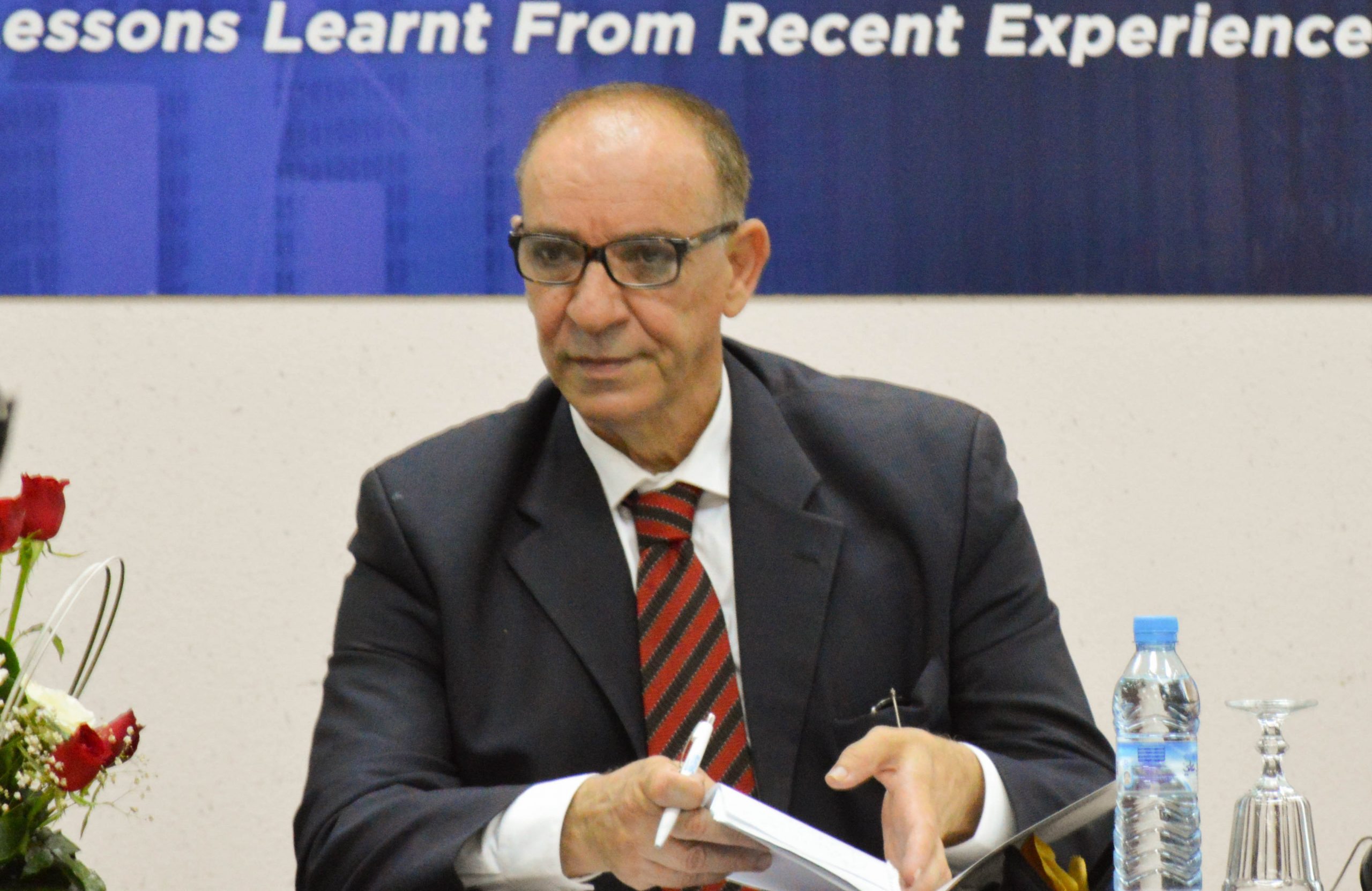
Le Laboratoire d’Economie Appliquée ( LEA) de la Faculté des Sciences Juridiques Economiques et Sociales Rabat - AGDAL en partenariat avec le Policy Center for the New South, a le plaisir de vous inviter à participer à la table ronde organisée sous le thème «Les politiques économiques de relance Post Covid-19 : Regards croisés », qui se tiendra le vendredi 12 juin 2020 à 18h00 (Heure de Rabat). Les politiques économiques de gestion de la crise issue du covid-19 sont en rupture avec les pratiques antérieures. Elles sont audacieuses et révèlent au grand jour la capacité des pays, quand ils mettent en stand-by les prêts à penser- orthodoxes-, à gérer des chocs extrêmes. Il s’agit maintenant d’examiner la capacité des politiques économiques de relance post Covid-19 à l’échelle internationale et au Maroc, de saisir cet effet de révélation, de le traduire en stratégies innovantes à même de reconstruire un Maroc social inclusif et durable.


Speakers
Abdelaaziz Ait Ali
Head - Research in Economics
Abdelaaziz Ait Ali is a principal Economist and head of the Research Department at the Policy Center for the New South. He joined the Center in 2014 after five years of experience at the Central Bank of Morocco. He worked as an economist in the International Studies and Relations Department and was analyzing the real estate price index and financial asset prices for monetary policy and financial stability purposes. Since then, Abdelaaziz has focused on cyclical and structural issues of the Moroccan economy, including macroeconomic management and industrial policy design. He has published articles on the reform of the exchange rate regime in the Moroccan economy and its implications for macroeconomic regulation, as well as on the evolution of the macroeconomic framework over th ...
Idriss El Abbassi
Professor of economics, Mohammed V University
Idriss El Abbassi is a Professor of Economics at Mohammed V University in Rabat and coordinator of the Master’s programme in economics. He holds a PhD from Florida State University, and his research focuses on open-economy macroeconomics, growth, and structural transformation. He teaches at both the Master’s and PhD levels and is a founding member of the Laboratory of Applied Economics. A former director of the EMPRETEC/UNCTAD programme in Morocco, he has also been a visiting professor in London. He co-authored Human Capital and Economic and Social Development in Morocco and has recently published in The Economic and Labour Relations Review and Structural Change and Economic Dynamics. ...
Lahcen Oulhaj
Laboratoire d'Economie Appliquée (LEA), FSJES Agdal
...
Larabi Jaïdi
Senior Fellow
Larabi Jaïdi is a Senior Fellow at the Policy Center for the New South and an Affiliate Professor at Mohammed VI Polytechnic University. His areas of expertise include international economy, economic policies, international economic relations, regional economies, social development, international relations, and Mediterranean studies. He also served on the Special Commission on the New Development Model of Morocco, a consultative body created in November 2019 to formulate the country's new developmental guidelines. Jaïdi is a former Professor at Mohamed V University in Rabat-Agdal and a founding member of both the Centre Marocain de Conjoncture and the Groupement d’Etudes et de Recherches sur la Méditerranée.   Prof. Jaïdi previously served as Advisor to the Prime Minist ...
Saïd Tounsi
Professor and Researcher, Mohammed V University
Saïd Tounsi is a Professor and Researcher at Mohammed V University in Rabat. A specialistin economic policies, particularly fiscal policy, he has authored several studies onpublic debt sustainability and exchange rate regimes in developing countries. He has alsoco-edited collective volumes on macroeconomic policies in Morocco. A former trainer atthe IGF and Bank Al-Maghrib, he combines academic expertise with institutional experiencein analysing national and international economic dynamics. ...

RELATED CONTENT

  • Authors
    October 2, 2024
    La nouvelle était largement attendue : mercredi 18 septembre 2024, et pour la première fois depuis 2020, la Réserve fédérale américaine (Fed) a diminué ses taux directeurs, les portant ainsi à 4,75 % et 5 %, soit une baisse significative de 50 points de base. En repli quasi-constant depuis juin 2022 où elle avait atteint une valeur record de 9,2 % en base annuelle, l’inflation américaine est désormais sous contrôle, tandis que les récentes statistiques du marché ...
  • September 30, 2024
    The outcome of the 2024 U.S. elections marks a pivotal moment for U.S. engagement with the New South. Historically, American involvement in the Atlantic region oscillates between deeper economic integration and strategic retrenchment, driven by shifts in domestic priorities and global p...
  • Authors
    Sven Grimm
    Mavis Owusu-Gyamfi
    Rob Floyd
    Neuma Grobbelaar
    Brahima Coulibaly
    Abbi Kedir
    Iliana Olivié
    Sara Pantuliano
    September 27, 2024
    This paper was originally published on t20brasil.org   Geopolitical fragmentation and rising debt have constrained fiscal space in many developing economies, particularly in Africa, limiting investments in critical sectors such as health, education, and infrastructure. Key challenges include the inefficacy of the G20’s Common Framework for debt restructuring, the inequitable allocation of Special Drawing Rights (SDRs), and funding shortages for concessional financing thr ...
  • Authors
    September 27, 2024
    This paper examines the implications of the U.S.-China trade war for developing countries, particularly in light of the 2024 U.S. presidential election. The study traces the origins and escalation of the trade conflict, analyzing its multiple impacts on global trade patterns and economic growth. While some developing countries have benefited from trade diversion and supply-chain shifts, others, especially resource-exporting nations and the least-developed countries, have faced signi ...
  • Authors
    Brahima Coulibaly
    Wafa Abedin
    September 26, 2024
    This paper was originally published on t20brasil.org   The developing world is once again facing unsustainable sovereign debt levels that threaten to erase several years of progress on development agendas. The COVID-19 pandemic, Russia-Ukraine war, and high interest rates are the latest in a series of events that have contributed to the recent build-up of debt and raised the cost of debt financing for developing countries. The G20’s Common Framework (CF) for debt treatme ...
  • Authors
    Zakaria Elouaourti
    September 26, 2024
    This Paper was originally published on emerald.com   Purpose Young graduates in Morocco are encountering an increasingly challenging labor market environment. Confronted with intense competition, job insecurity, and unclear career trajectories, many find themselves in low-skilled positions despite possessing relevant qualifications. This issue is particularly pronounced among vocational training graduates, who experience professional downgrading at a rate three times hi ...
  • Authors
    Malancha Chakrabarty
    Manish K Shrivastava
    September 25, 2024
    This paper was originally published on t20brasil.org   In a global context marked by unprecedented economic and environmental challenges, Africa stands at a crossroads. The rapid rise in public debt, coupled with the climate emergency, imposes a dual constraint on the continent's countries, severely limiting their ability to pursue sustainable development and mitigate the effects of climate change. This critical situation calls for innovative and effective solutions capa ...
  • September 25, 2024
    بعد مرور عام على زلزال الحوز الذي خلف خسائر بشرية ومادية جسيمة في عدة أقاليم بالمغرب، تشهد عملية إعادة الإعمار تقدماً ملحوظاً، إلا أن التحديات لا تزال قائمة أمام استعادة الحياة الطبيعية للسكان المحليين. وبينما نراجع الإنجازات التي تحققت حتى الآن، ما هي الدروس التي يمكن استخلاصها لتعزيز ...
  • Authors
    September 24, 2024
      This paper was originally published on t20brasil.org The resurgence of Neo protectionism as a reality is creating a pressing need to establish New Industrial Policies (NIPs) capable of striking a balance between Global Value Chains (GVC) managers' quest for efficiency and policy makers' need for more increasing resilience or national security in a turmoiled geopolitical landscape. Furthermore, although NIPs might pursue legitimate non-economic objectives, they are often cap ...
  • Authors
    Zakaria Elouaourti
    September 13, 2024
    This Paper was originally published on emerald.com   Purpose This paper examines the dynamics of structural transformation in Morocco since 1970 by analyzing input-output tables expressed in terms of employment and output levels across 24 sectors. Design/methodology/approach This study employs a twofold methodological approach. Firstly, it examines the evolution of sectoral employment shares over time using World Bank data. Secondly, it utilizes Input-Output analysis to ex ...