(FR) The Moroccan fishing sector and sustainable development

June 3, 2026

Cet épisode met en lumière les défis et perspectives du secteur halieutique marocain à travers l’analyse du Pr. Abdelkabir Kamili. Il souligne que la durabilité des ressources marines n’est pas un frein à la croissance économique, mais une condition essentielle pour garantir la performance future du secteur, grâce à une gestion scientifique des stocks, la valorisation des produits et le développement d’une aquaculture durable. Face aux défis du changement climatique et à la volatilité des marchés internationaux, l’entretien met également en avant l’importance de la diversification, de l’innovation et du renforcement de la résilience du secteur.
 

Speakers
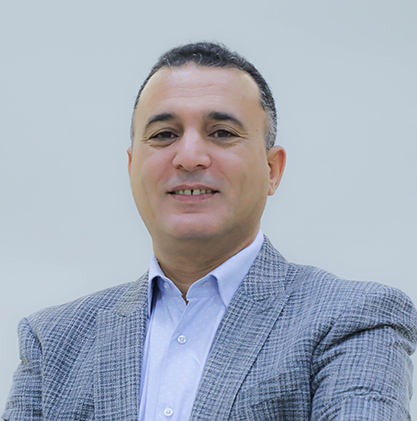
Abdelkabir Kamili
Assistant Professor, Mohammed VI Polytechnic University, Rabat
Abdelkabir Kamili, PhD in Economic and Social Sciences Applied to Agriculture from the Agronomic and Veterinary Institute—Hassan II, also holds a Master’s in Fisheries Economics and Management from the University of Barcelona and an Engineer Diploma in Rural Economics from the National School of Agriculture in Meknes. He teaches National Accounting & Macroeconomic Aggregates, and Global Public Goods & International Aid at Mohammed VI Polytechnic University. A former researcher at the National Fisheries Research Institute, he specializes in bioeconomic and computable general equilibrium (CGE) modelling, promoting sustainable fisheries through his publications on Moroccan fishery systems and contributions to FAO projects. ...

Rim Berahab
Senior Economist
Rim Berahab is Senior Economist at the Policy Center for the New South, which she joined in 2014. She is currently working on themes related to energy issues and their impacts on economic growth and long-term development. Her research areas also cover trade and regional integration challenges in Africa. Previously, she has also worked on questions related to gender inequalities in the labor market of North African countries. Rim spent three months at the International Monetary Fund (IMF), in 2016, in the Commodities Unit of the Research Department. She holds a State Engineering degree from the National Institute of Statistics and Applied Economics (INSEA). ...
RELATED CONTENT

  • October 17, 2025
    Jodie Keane, Principal Research Fellow at the International Economic Development Group, discusses how green trade measures are transforming African economies, stressing the need for faire ...
  • August 7, 2025
    This episode focuses on the Africa Pulse Report 2025, the World Bank’s flagship analysis of economic trends and policy challenges in Sub-Saharan Africa. As the region works to strengthen its recovery while contending with structural and macroeconomic difficulties, Andrew Dabalen, Chief ...
  • July 24, 2025
    This episode explores the potential of debt-for-climate swaps as a strategic tool to address climate challenges and fiscal constraints in developing countries. While implementation has often been slow and fragmented, the conversation examines practical experiences from regions like Lati...
  • July 04, 2025
    This episode explores how poverty, inequality, and climate change fuel insecurity and instability, often pushing fragile states toward militarization at the cost of social welfare. It exa ...
  • Authors
    April 16, 2025
    The second Trump administration’s reversal of federal climate policy is reshaping the U.S. energy and industrial landscape, with significant implications for macroeconomic performance, clean technology competitiveness, and global climate cooperation. While the deregulatory shift and emphasis on fossil-fuel production may generate short-term output gains in selected sectors, the long-term structural transformation necessary for sustained growth in an increasingly low-carbon global ec ...
  • Authors
    June 27, 2024
    The earth’s average surface temperature in May 2024 was higher than any other May on record, marking the twelfth consecutive such record-breaking month. According to the European Union’s Copernicus Climate Change Service, May’s temperature was 1.52 degrees Celsius above the pre-industrial average, while temperatures over the past twelve months have averaged 1.63°C above (Figure 1). Global sea surface temperatures have also set records over the past fourteen months.   Consider ...
  • Authors
    Mannat Jaspal
    June 11, 2024
    Carbon trading have long been touted as a silver bullet to channelise climate finance to African countries lacking the capital to support climate mitigation and adaptation efforts. The erstwhile ‘Kyoto Protocol’ and its successor ‘The Paris Agreement’, though much more comprehensive and wider in scope, both recognize the importance of carbon trading (a form of carbon pricing) in combatting climate change, and in the Paris Agreement the same is enshrined under Article 6 and its sub-c ...
  • November 30, 2023
    In this episode, we dive into the pressing necessity for climate initiatives in Africa. Despite its minimal global emissions, Africa grapples with severe climate challenges and a substantial funding shortfall. Yet, as obstacles persist, including the disconnect between investor expectat...
  • Authors
    Alfonso Medinilla
    September 5, 2023
    This paper was originally published on ecdpm.org   COP27 reached a breakthrough agreement on a new loss and damage fund for vulnerable countries and opened the door for a review of the international financial architecture. Ahead of COP28 at the end of 2023, the AU-EU partnership can help drive global climate change and energy transition agendas forward. A fruitful collaboration between the two continents starts with the following: • Africa and Europe must find comm ...