(FR) Monetary policy and the Moroccan economy

April 29, 2026

Cet épisode revient sur la politique monétaire au Maroc, en soulignant sa capacité à maintenir une inflation faible et stable sur le long terme grâce à un cadre macroéconomique solide. Il met en avant le rôle central des réformes institutionnelles et de la Banque centrale dans le renforcement de la crédibilité et de l’efficacité des décisions monétaires. La discussion aborde également les mécanismes de transmission, dominés par le canal du crédit, ainsi que les limites de la politique monétaire dans la transformation structurelle de l’économie. Enfin, l’épisode analyse les enjeux liés à la transition vers un régime de change plus flexible, notamment en termes de résilience économique et de maîtrise de l’inflation.

Speakers
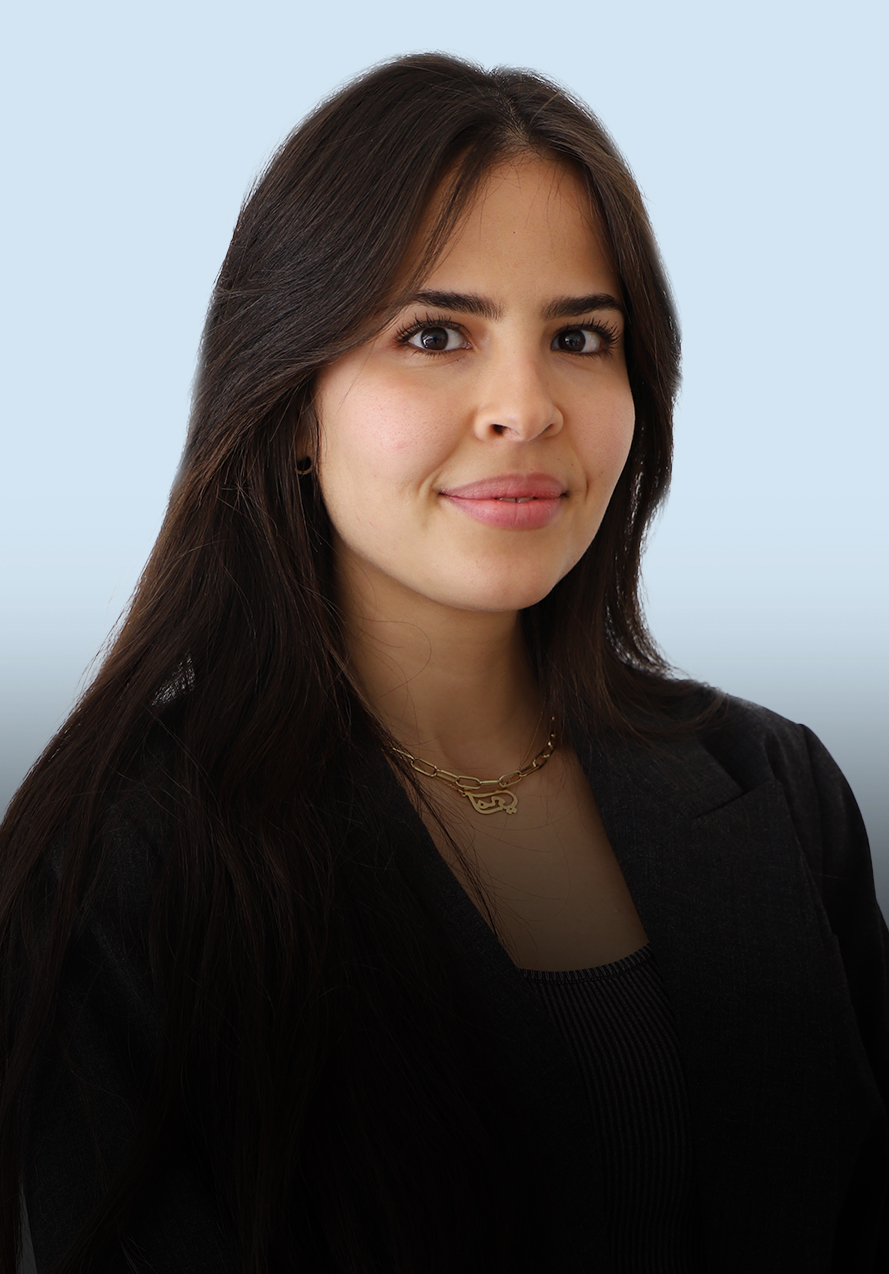
Oumayma Bourhriba
Senior Economist
Oumayma Bourhriba is a Senior Economist at the Policy Center for the New South (PCNS).At the PCNS, which she joined in 2019, Oumayma Bourhriba conducts research focusing on macroeconomic policies and international trade, with a particular emphasis on services.She has contributed to major publications on the Moroccan economy, such as the IMF’s Morocco's Quest for Stronger and Inclusive Growth (2023) and the World Bank’s Trade Policy in Morocco: Taking Stock and Looking Ahead (2023). Beyond her research, she has coordinated the Africa Economic Symposium, one of the flagship convenings organized by the PCNS.Oumayma Bourhriba holds a master’s degree in applied economics from University Mohammed V (UM5), where she is currently a PhD candidate.She is fluent in Arabic, English, ...
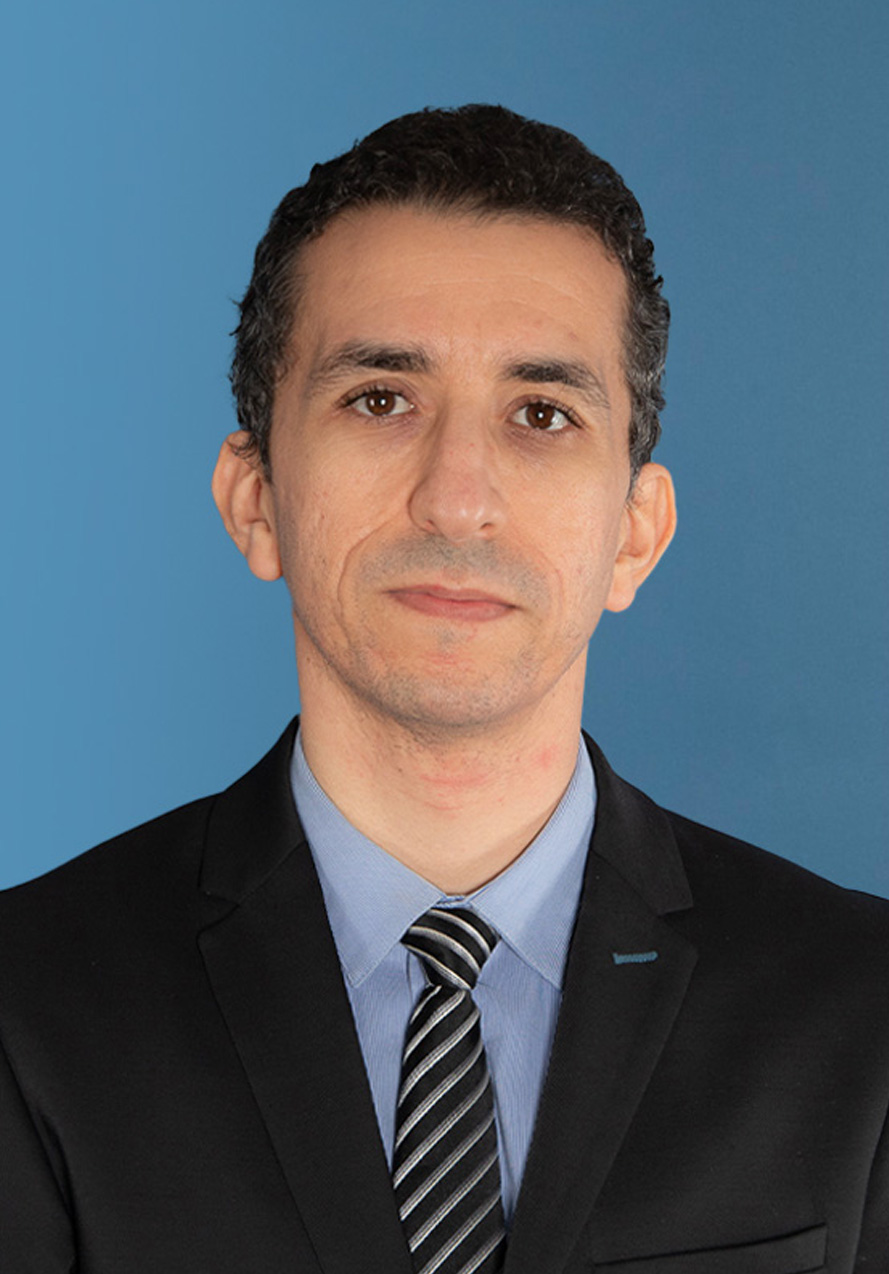
Abdelaaziz Ait Ali
Head - Research in Economics
Abdelaaziz Ait Ali is a principal Economist and head of the Research Department at the Policy Center for the New South. He joined the Center in 2014 after five years of experience at the Central Bank of Morocco. He worked as an economist in the International Studies and Relations Department and was analyzing the real estate price index and financial asset prices for monetary policy and financial stability purposes. Since then, Abdelaaziz has focused on cyclical and structural issues of the Moroccan economy, including macroeconomic management and industrial policy design. He has published articles on the reform of the exchange rate regime in the Moroccan economy and its implications for macroeconomic regulation, as well as on the evolution of the macroeconomic framework over th ...
Faiçal Hossaini
Academic Associate, Mohammed VI Polytechnic University, Rabat
Faiçal Hossaini teaches economics at the Faculty of Governance, Economics and Social Sciences (FGSES) of Mohammed VI Polytechnic University (UM6P) in Benguerir. He holds a Doctorate in Macroeconomics from Mohammed V University, along with a Master’s degree in Economics and a Master’s degree in Finance, both from the University of Quebec in Montreal (UQAM). Prior to joining FGSES, he spent over 10 years as an economist at the Economic Studies Department of the Moroccan Central Bank, where he gained extensive experience in economic policy. He has also taught economics and econometricsin Morocco and abroad. ...
RELATED CONTENT

  • April 29, 2022
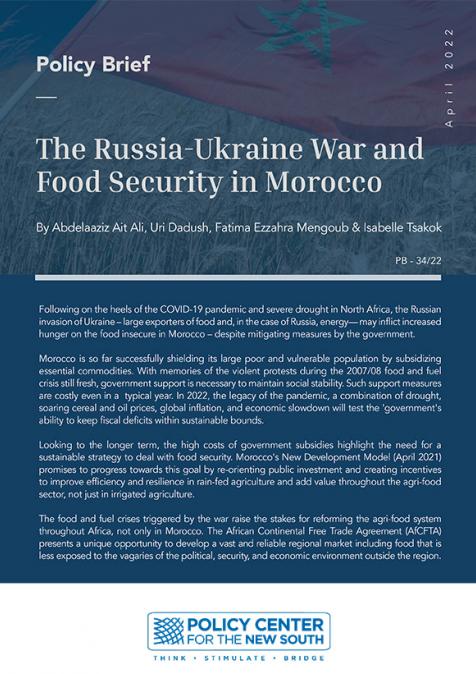
    Following on the heels of the COVID-19 pandemic and severe drought in North Africa, the Russian invasion of Ukraine – large exporters of food and, in the case of Russia, energy— may inflict increased hunger on the food insecure in Morocco – despite mitigating measures by the government. Morocco is so far successfully shielding its large poor and vulnerable population by subsidizing essential commodities. With memories of the violent protests during the 2007/08 food and fuel crisis ...
  • Authors
    February 3, 2022
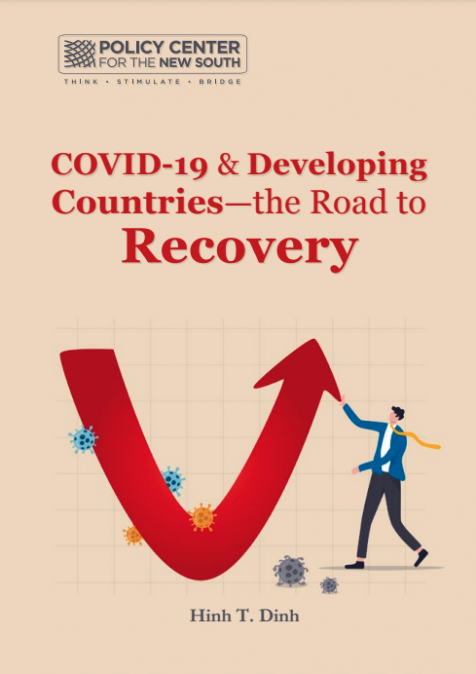
    COVID-19 has ravaged nearly every country in the world, with the globalization of recent decades intensifying its spread. As of mid-2021, the world had spent $16.5 trillion—18% of global GDP—to fight the disease. And that amount does not even include the most important losses such as deaths, mental health effects, restrictions on human freedom, and other nonmonetary suffering. Nearly 90% of this spending was by developed economies, with the rest by emerging market and developing eco ...
  • Authors
    December 21, 2021
    The Policy Center for The New South (PCNS) joined an inter-institutional effort between the Ibero-American General Secretariat (SEGIB), the United Nations Development Program (UNDP) and the International Development Research Centre (IDRC) in an international research project called ‘’Purpose-driven companies and the regulation of the Fourth Sector in Ibero-America’’. As this project grew to cover countries outside of Ibero-America, the PCNS was invited to write a chapter about ...
  • December 17, 2021
    The research project “Purpose-driven companies and the regulation of the Fourth Sector in Ibero- America” is part of an inter-institutional effort involving the Ibero-American General Secretariat (SEGIB), the United Nations Development Program (UNDP) and the International Development Research Centre (IDRC). The project has its origin in the results of a previous research developed by SEGIB (Fourth Sector companies and the SDGs in Ibero-America, 2020), through which we analyzed the i ...
  • Authors
    December 6, 2021
    Between January 2020 and June 2021, the world spent about US $16.5 trillion (18% of world GDP) to fight COVID-19, and this amount does not even include the most important losses such as deaths, mental health effects, restrictions on human freedom, and other nonmonetary suffering. Nearly 90% of this amount was spent by developed economies; the rest by emerging market and developing economies. Low-income countries spent just US $12.5 billion, or less than 0.0001% of the total. Moreove ...
  • August 24, 2021
    تجدون أقوى لحظات حديث الثلاثاء حول المواضيع الاقتصادية لهذه السنة : رؤى استشرافية لما بعد الجائحة، الاقتصاد غير المهيكل، دور القطاع الثالث، المغرب وسلاسل القيمة الاقليمية مع خبراء وباحثين اقتصادين ...
  • June 17, 2021
    Africafé reviens ce jeudi 17 juin à 17h30 avec un nouvel épisode. Présenté par Youssef Tobi, spécialiste en relations internationales, Africafé décrypte l'actualité des organisations africaines et du continent avec des experts africains. Dans cet épisode, Youssef El Jai donne une vision...
  • Authors
    December 30, 2020
    According to this month’s OECD economic outlook, global GDP --- which took a huge hit from the pandemic and is still 3% below its level of a year ago – will not recover its pre-pandemic level until the end of 2021. In a downside scenario, the return could take almost a year longer. The OECD predictions, which imply high and protracted unemployment, are in line with the view of many other official and private organizations. The arrival of effective vaccines such as Pfizer-BioNTech wa ...
  • Authors
    Attioui Abdelali
    Billaudot Bernard
    Chafiq Adnane
    December 30, 2020
    Le présent rapport a pour objet d’analyser les implications sur la croissance et le développement du Maroc de son insertion dans l’économie mondiale. Cette analyse est menée en comparant la dynamique économique observée après 1998 à celle qui l’a été avant. En effet, la période 1998-2018 est celle au cours de laquelle se sont manifestés les effets du choix acté et assumé politiquement de l’ouverture (ou du libre-échange, si on préfère). Pour avant, nous nous en tenons à la période 1 ...
  • Authors
    Sous la direction de
    December 29, 2020
    Dès les premiers cas du Coronavirus relevés en Afrique, les prédictions les plus sombres ont été faites sur la catastrophe sanitaire à venir sur le continent, en raison d’un certain nombre de caractéristiques supposées favoriser la propagation de l’épidémie. Ces prévisions ont été démenties par la rapidité des ripostes des Etats et par divers autres facteurs. La progression de la Covid-19 en Afrique n’est pas le fait d’une dynamique unique mais plutôt de multiples profils de risques ...