(FR) Monetary policy and the Moroccan economy

April 29, 2026

Cet épisode revient sur la politique monétaire au Maroc, en soulignant sa capacité à maintenir une inflation faible et stable sur le long terme grâce à un cadre macroéconomique solide. Il met en avant le rôle central des réformes institutionnelles et de la Banque centrale dans le renforcement de la crédibilité et de l’efficacité des décisions monétaires. La discussion aborde également les mécanismes de transmission, dominés par le canal du crédit, ainsi que les limites de la politique monétaire dans la transformation structurelle de l’économie. Enfin, l’épisode analyse les enjeux liés à la transition vers un régime de change plus flexible, notamment en termes de résilience économique et de maîtrise de l’inflation.

Speakers

Oumayma Bourhriba
Senior Economist
Oumayma Bourhriba is a Senior Economist at the Policy Center for the New South (PCNS).At the PCNS, which she joined in 2019, Oumayma Bourhriba conducts research focusing on macroeconomic policies and international trade, with a particular emphasis on services.She has contributed to major publications on the Moroccan economy, such as the IMF’s Morocco's Quest for Stronger and Inclusive Growth (2023) and the World Bank’s Trade Policy in Morocco: Taking Stock and Looking Ahead (2023). Beyond her research, she has coordinated the Africa Economic Symposium, one of the flagship convenings organized by the PCNS.Oumayma Bourhriba holds a master’s degree in applied economics from University Mohammed V (UM5), where she is currently a PhD candidate.She is fluent in Arabic, English, ...
Abdelaaziz Ait Ali
Head - Research in Economics
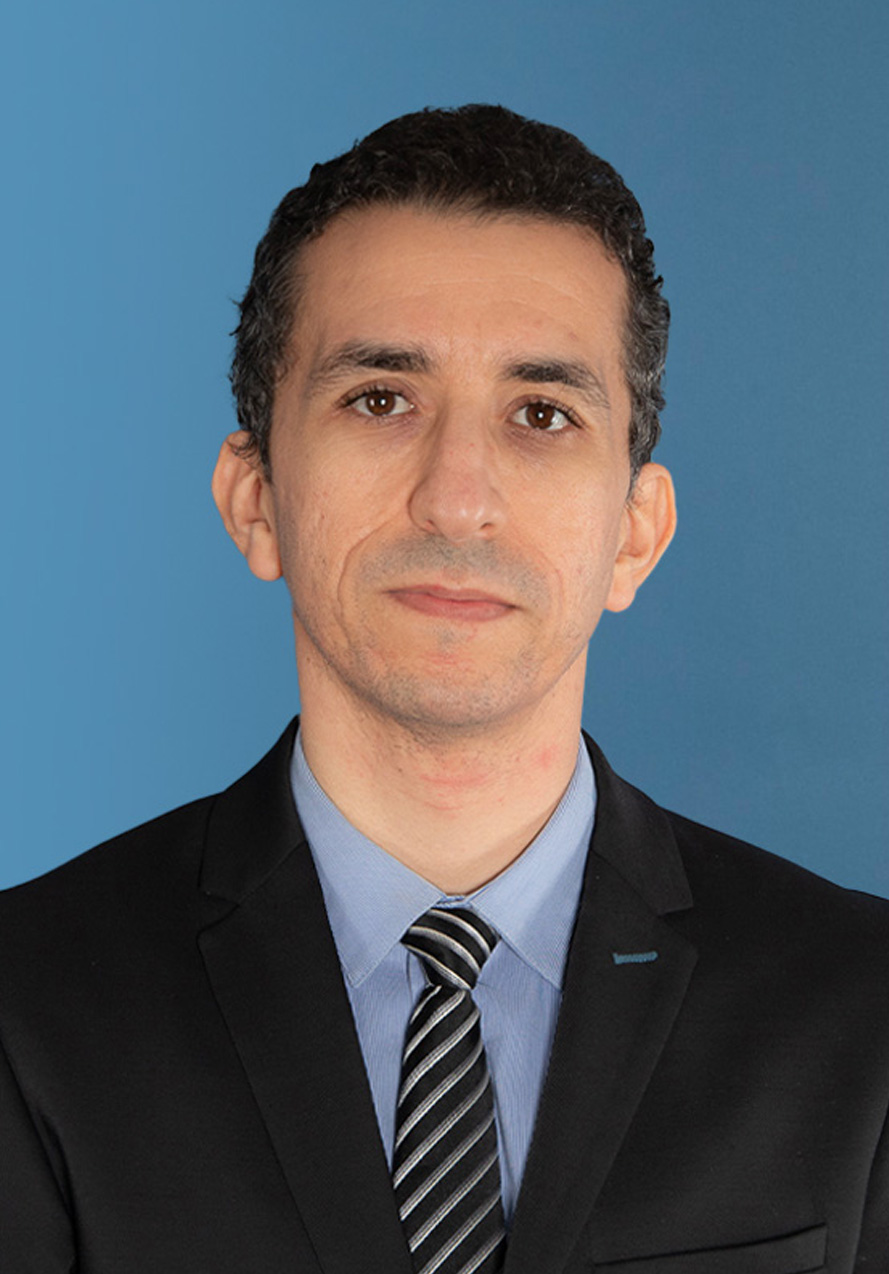
Abdelaaziz Ait Ali is a principal Economist and head of the Research Department at the Policy Center for the New South. He joined the Center in 2014 after five years of experience at the Central Bank of Morocco. He worked as an economist in the International Studies and Relations Department and was analyzing the real estate price index and financial asset prices for monetary policy and financial stability purposes. Since then, Abdelaaziz has focused on cyclical and structural issues of the Moroccan economy, including macroeconomic management and industrial policy design. He has published articles on the reform of the exchange rate regime in the Moroccan economy and its implications for macroeconomic regulation, as well as on the evolution of the macroeconomic framework over th ...

Faiçal Hossaini
Academic Associate, Mohammed VI Polytechnic University, Rabat
Faiçal Hossaini teaches economics at the Faculty of Governance, Economics and Social Sciences (FGSES) of Mohammed VI Polytechnic University (UM6P) in Benguerir. He holds a Doctorate in Macroeconomics from Mohammed V University, along with a Master’s degree in Economics and a Master’s degree in Finance, both from the University of Quebec in Montreal (UQAM). Prior to joining FGSES, he spent over 10 years as an economist at the Economic Studies Department of the Moroccan Central Bank, where he gained extensive experience in economic policy. He has also taught economics and econometricsin Morocco and abroad. ...
RELATED CONTENT

  • Authors
    Mohamed Obaidy
    May 30, 2019
    This paper empirically examines the impact of exchange rate arrangements on current account imbalances within the African context. Following Friedman’s hypothesis (Friedman, 1953), we test the propositions stating that flexible exchange rate regimes limit the magnitude of real external shocks and permit smoother adjustments of external imbalances. Using a new de facto exchange rate regime classification, we employ two empirical methodologies to test this hypothesis: we first apply a ...
  • Authors
    Philippe Chalmin
    February 27, 2019
    Rarement, autant qu’en 2018, les marchés mondiaux de matières premières et de commodités auront été lle jouet non pas des tendances des « fondamentaux » (offre/demande et leur évolution), mais bien des convulsions d’une situation géopolitique mondiale qui, sous la houlette quelque peu déréglée des États-Unis de Donald Trump, a été particulièrement imprévisible. En effet, si 2018 restera dans les annales des marchés, c’est bien parce que les matières premières se sont retrouvées au p ...
  • Authors
    February 20, 2019
    Ce papier évalue les effets asymétriques des cycles économiques sur le chômage et la pauvreté au Maroc, à travers un modèle VAR estimé sur des données trimestrielles allant de 2003 à 2012. Ce modèle inclut les composantes cycliques de quatre variables à savoir : l’output-gap, le salaire minimum réel, le taux de chômage et le taux de pauvreté. Afin de tester la robustesse des résultats, deux versions du modèle VAR ont été estimées, en utilisant les composantes cycliques calculées se ...
  • Authors
    Olalekan Samuel
    Mma Amara Ekeruche
    Adedeji Adeniran
    February 12, 2019
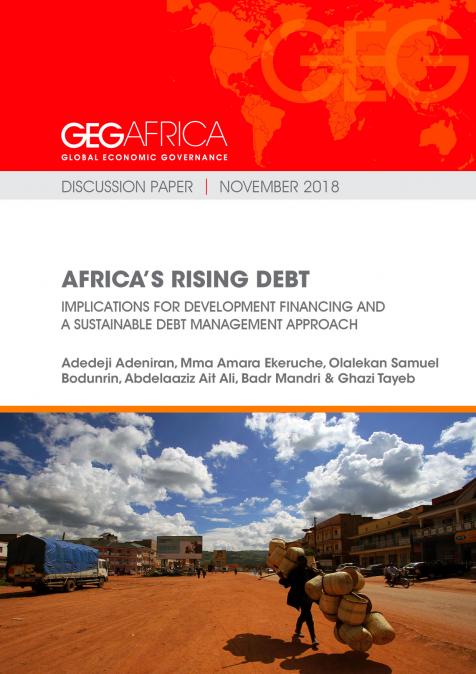
    This study was carried out within the framework of the Global Economic Governance Africa (GEGAfrica) funded by the UK Department for International Development. The GEGAfrica programme is a policy research and stakeholder engagement aimed at strengthening the influence of African coalitions at global economic governance forums and increase, inter alia, the visibility and the outreach of African views at the regional and worldwide levels. Policy Center for the New South was requested ...
  • January 1, 2019
    Morocco has moved towards a more flexible exchange rate system, by widening its currency fluctuation bands to +/- 2.5% around a central price. This transition will, in time, equip the Moroccan economy with a macroeconomic instrument acting as a shock absorber and facilitating rapid adjustment at lower costs. In the absence of such a mechanism, adjustment to macroeconomic shocks at times requires a contraction in demand and thereby a cyclical downturn in growth to restore external ba ...
  • Authors
    August 13, 2018
    Depuis la fin de l’année 2017, le président Donald Trump mène plusieurs batailles commerciales, contre différents partenaires, sous prétextes de sauver des emplois industriels américains et de réduire le déficit commercial des États-Unis. S’il est difficile de se prononcer sur les effets des combats commerciaux amorcés par le président Trump, l’importance des opposants et des échanges pour l’économie mondiale en fait une source de risque pour la croissance, les emplois et les prix à ...
  • December 14, 2017
    Moderator: André Caillé, Board Member, Junex - Eric Festa, Senior Vice President, LNG Business Development, Total - R. Andreas Kraemer, Founder & Chairman, Ecologic Institute - Thione Niang, Co-Founder of Akon Lighting Africa - Simone Tagliapietra, Research Fellow, Bruegel ...